
Salads
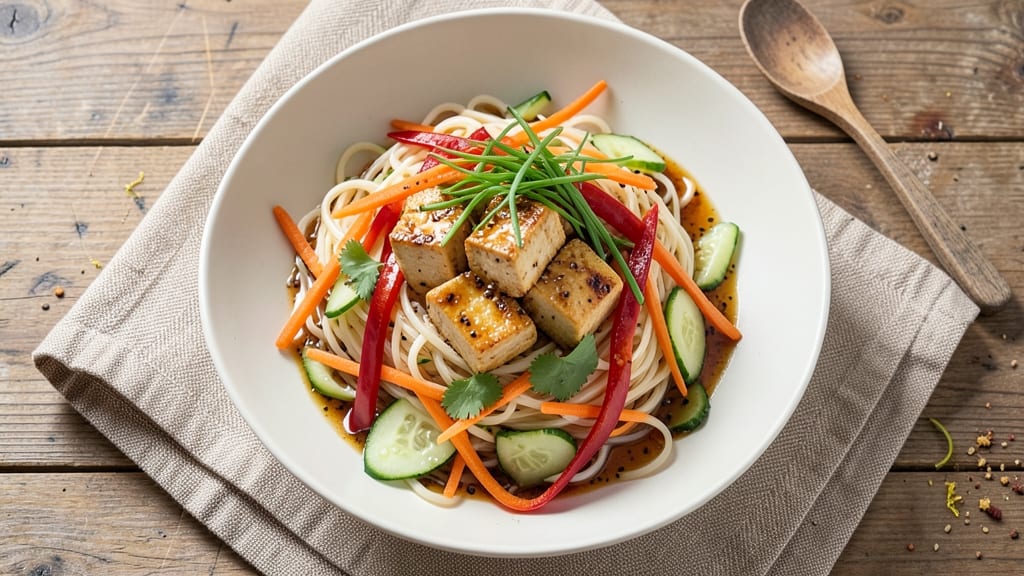
This vegan Asian noodle salad delivers restaurant-quality flavors with crispy rice noodles and a tangy peanut-lime dressing that’s impossible to resist. The secret lies in perfectly cooked noodles that develop a satisfying crunch while absorbing the bold, umami-rich dressing—no wilted texture here.
I’ve tested this recipe countless times to ensure the balance of sweet, spicy, and savory elements stays harmonious, even when made ahead.
The foundation starts with rice noodles that transform from soft to crispy when tossed with a light sesame oil coating and toasted sesame seeds. Crunchy veggies like shredded carrots and cucumber add freshness, while marinated tofu or crispy baked tempeh brings plant-based protein that holds up perfectly.
The dressing—creamy peanut butter meets zesty lime and chili—ties everything together with a sticky, flavor-packed finish.
What you’ll end up with is a visually stunning salad that’s vibrant, satisfying, and packed with texture—crispy noodles, tender veggies, and protein that stays intact. It’s the kind of dish that feels special enough for dinner guests but simple enough for a quick weeknight meal.
The best part? Every bite delivers layers of flavor without relying on animal products.
Perfect for meal prep, potlucks, or a light lunch that still feels indulgent. Let’s get started—your taste buds will thank you.
Ingredients for vegan asian noodle salad
Eight crispy ingredients and a dressing that’ll make your taste buds dance.
| Ingredient | Amount | Notes |
|---|---|---|
| Rice Noodles 🍜 | 8 oz | Dried, medium-width preferred |
| Extra-Firm Tofu 🍱 | 1 lb | Pressed and cubed |
| Carrots 🥕 | 2 medium | Shredded with peeler |
| English Cucumber 🥒 | 1 whole | Seedless, thinly sliced |
| Red Bell Pepper 🌶️ | 1 whole | Thinly sliced, seeds removed |
| Green Onions 🧅 | 3 whole | Thinly sliced, white and green parts |
| Crispy Fried Shallots 🧅 | ¼ cup | For garnish, optional |
| Toasted Sesame Seeds 🌿 | 1 tbsp | Plus extra for garnish |
| Sesame Oil 🫒 | 1 tbsp | For tossing noodles |
| Peanut Butter 🥜 | ½ cup | Creamy, unsweetened |
| Lime Juice 🍋 | ¼ cup | Freshly squeezed |
| Soy Sauce 🥢 | ¼ cup | Tamari for gluten-free |
| Rice Vinegar 🍶 | 1 tbsp | For tangy balance |
| Maple Syrup 🍁 | 1 tbsp | For sweetness |
| Sriracha 🌶️ | 1 tbsp | Adjust for heat preference |
| Garlic Cloves 🧄 | 3 cloves | Minced for marinade |
| Ginger Root 🌿 | 1 tbsp | Freshly grated |
The rice noodles are the star—look for medium-width at Asian markets or the Asian aisle. Thai Kitchen brand is my go-to since they’re consistent, but any dried rice noodles work. Soak them in warm water for 10-12 minutes until pliable but still firm. The tofu? Extra-firm is non-negotiable—press it between paper towels for 20 minutes to remove excess water. For the dressing, creamy peanut butter (not chunky) gives that perfect texture. If you can’t find crispy fried shallots, toasted sesame seeds will still add crunch—just use a bit more.
No sesame oil? Avocado oil works in a pinch, though it won’t have that nutty aroma. Short on lime juice? Substitute lemon juice, but add a pinch of sugar to balance. The dressing can be made ahead—store it in the fridge for up to 1 week. For the veggies, pre-shredded carrots are fine, but fresh-shredded stays crunchier. The red bell pepper? Any color works, but red adds that vibrant pop. If you’re feeling fancy, marinate the tofu in soy sauce, garlic, and ginger for 15 minutes before baking at 400°F for 25 minutes.
This salad keeps beautifully—3-4 days in the fridge if stored in an airtight container. The noodles will soften slightly, so toss them with a little extra sesame oil when serving. For meal prep, pack the dressing separately and mix just before eating. Freezes for 2 months if you portion the dressing and veggies separately. Garnish with extra sesame seeds and fried shallots right before serving—that’s when it gets fancy.
Why You'll Love This Recipe
- No Boil Required: I just rinse the rice noodles in hot water for 30 seconds—no pot, no fuss. They soften perfectly while I crisp the tofu and slice the veggies, and honestly? The texture stays chewy in all the right ways.
- Crispy-Creamy Magic: The tofu gets pan-fried until it’s got that golden, shatterable crust, then tossed in a tangy sesame-ginger dressing that clings to every strand. Between us, that combo is dangerously addictive—my partner sneaks bites straight from the bowl.
- Lunchbox Hero: This keeps amazingly for days in the fridge, and it’s the only salad that doesn’t get soggy. Pack it cold for work or throw it in a thermos—it’s my go-to when I need something fresh but low-maintenance. (Yes, even on a Tuesday night.)
- Budget Brightener: Carrots, bell peppers, and cucumbers stretch this dish for four servings without breaking the bank. Plus, tofu’s cheaper than chicken, and the flavors feel indulgent. It’s my secret weapon for feeding the family without stress.
Step-by-step instructions for crispy vegan Asian noodle salad
Here's how to create perfectly crispy rice noodles with a bold, tangy peanut-lime dressing that ties everything together.
Prepare and Cook the Crispy Tofu
Press the 1 lb extra-firm tofu by wrapping it in a clean kitchen towel and placing a heavy object on top for 30 minutes. This removes excess water so the tofu crisps beautifully. Cut the pressed tofu into 1-inch cubes and pat them completely dry with paper towels—this step is crucial for crispiness.
Heat 1 tablespoon sesame oil in a large skillet over medium-high heat until shimmering. Add the tofu cubes in a single layer, being careful not to overcrowd the pan. Cook undisturbed for 4-5 minutes until golden brown on one side, then flip and crisp for another 4-5 minutes. Transfer the crispy tofu to a paper towel-lined plate to drain excess oil. The tofu should be deep golden with slight char marks—this ensures maximum crunch in your salad.
Cook and Toss the Rice Noodles
Bring a large pot of water to a rolling boil and add 8 oz rice noodles. Cook according to package instructions—usually 4-5 minutes—until the noodles are tender but still slightly firm (they'll finish cooking in the dressing). Drain immediately and rinse under cold water to stop the cooking process and prevent sticking.
While the noodles are still damp, transfer them to a large mixing bowl. Add 1 tablespoon sesame oil and toss vigorously with your hands or tongs until the noodles are evenly coated and slightly glossy. This step prevents them from becoming mushy and adds that signature Asian noodle texture. Let them sit for 2-3 minutes while you prepare the vegetables.
Shred and Slice the Fresh Vegetables
Use a peeler to create long, thin shreds from the 2 medium carrots—this creates beautiful ribbons that hold up well in the salad. Thinly slice the 1 whole English cucumber (remove seeds first) and the 1 whole red bell pepper (remove seeds and membranes). Finally, slice the 3 whole green onions into 1-inch pieces, separating the white and green parts if you prefer different textures.
Add all the prepared vegetables to the bowl with the noodles and toss gently to combine. The vegetables should be evenly distributed but not mashed—you want to maintain their individual textures. This is where the salad starts coming together visually. The bright colors from the carrots, cucumber, and bell pepper will make your dish look as good as it tastes.
Make the Tangy Peanut-Lime Dressing
In a small bowl, whisk together 0.5 cup peanut butter, 0.25 cup lime juice, 0.25 cup soy sauce, 1 tablespoon rice vinegar, 1 tablespoon maple syrup, and 1 tablespoon sriracha. The mixture will be thick, so add 2-3 tablespoons warm water one at a time until it reaches a smooth, pourable consistency—it should coat the back of a spoon but still flow easily.
Add the 3 minced garlic cloves and 1 tablespoon freshly grated ginger root to the dressing and whisk until fully combined. Taste and adjust the balance—add more lime juice for tang, more maple syrup for sweetness, or more sriracha for heat. This dressing is the heart of your salad, so don't be afraid to customize it to your preference. The dressing should be vibrant yellow with a smooth, creamy texture.
Assemble and Garnish the Salad
Pour the peanut-lime dressing over the noodle and vegetable mixture in the large bowl. Toss everything together gently but thoroughly until the noodles are evenly coated and glistening. The dressing should cling to each strand of noodle and vegetable, creating that perfect balance of crunchy, creamy, and fresh textures.
Transfer the salad to a serving platter and sprinkle with 0.25 cup crispy fried shallots and 1 tablespoon toasted sesame seeds (plus extra for garnish). The fried shallots add a delightful crunch, while the sesame seeds contribute a nutty aroma and visual appeal. Serve immediately while the noodles are still crisp and the dressing is fresh. This salad tastes best right away, so don't let it sit too long before serving.
Pro Tips For Making Vegan Asian Noodle Salad
- SOAK NOODLES UNTIL FLEXIBLE: Rice noodles need to be just soft enough to bend without snapping—like a fresh green onion stalk. Toss them in hot (not boiling) water for 5-7 minutes, then drain and rinse under cold water immediately. I used to over-soak them, and they’d turn mushy and clump together like sad spaghetti. The rinse stops the cooking—don’t skip it.
- CUT TOFU INTO EVEN SLICES: Slice the extra-firm tofu thin and uniform—about ¼-inch thick—before pressing. Uneven pieces crisp up at different rates, leaving some raw in the middle while others burn. Press it for 20 minutes first (wrap in a towel, place a heavy pan on top), then slice. This isn’t just about looks; consistent thickness means every bite has that same satisfying crunch.
- SALT THE CUCUMBER BEFORE SLICING: Toss the English cucumber in ½ teaspoon of salt and let it sit for 10 minutes before cutting. This draws out excess water so it doesn’t turn the salad into a soggy mess. I learned this the hard way after my first batch looked like a sad, watery soup. Pat it dry with a paper towel after the salt bath—it makes a real difference.
- SAVE TIME WITH PRE-CUT VEGGIES: Buy pre-shredded carrots and julienned bell peppers from the produce section—yes, even if they’re a dollar more. The time saved chopping is worth it, and the texture’s often better since they’re cut fresh for the store. If you’re feeling fancy, toast the pre-cut peppers in a dry pan for 2 minutes before adding them to the salad for a subtle smoky depth. Your knife (and future self) will thank you.
Creative variations of this recipe
Spicy Thai-Inspired Twist
Swap the peanut-lime dressing for a Thai-inspired chili-lime version by mixing 0.25 cup coconut milk, 0.25 cup lime juice, 2 tbsp soy sauce, 1 tbsp maple syrup, 1 tbsp sriracha, and 1 tsp red curry paste.
Add 1 tbsp fresh cilantro and 1 tsp fish sauce substitute (like coconut aminos) for depth. Toss with rice noodles and top with crushed peanuts and lime zest for a bold, aromatic kick. 🌶️
Japanese-Inspired Sesame-Ginger
For a lighter take, replace the peanut dressing with a sesame-ginger version: blend 0.25 cup tahini, 0.25 cup rice vinegar, 2 tbsp soy sauce, 1 tbsp maple syrup, 1 tbsp grated ginger, and 1 tbsp sesame oil.
Toss with shredded cabbage, edamame, and crispy baked tofu. Garnish with toasted sesame seeds and thinly sliced scallions for a fresh, umami-rich salad. 🌿
Vietnamese-Inspired Vermicelli
Use vermicelli noodles instead of rice noodles for an authentic Vietnamese vibe. Marinate 1 lb firm tofu in 2 tbsp soy sauce, 1 tbsp lime juice, and 1 tsp turmeric before pan-frying.
Toss with vermicelli, thinly sliced cucumber, mint leaves, and bean sprouts. Top with a fish-free nuoc cham (substitute coconut aminos for fish sauce) and crushed peanuts. 🍜
Summer Citrus Version
Brighten up the salad for summer with a citrusy twist: add 1 tbsp orange zest and 2 tbsp orange juice to the peanut-lime dressing. Swap carrots for jicama and cucumber for sugar snap peas. Garnish with toasted coconut flakes and lime wheels for a refreshing, tropical-inspired dish. 🍊
Protein-Packed Edamame
Boost the protein by adding 1 cup shelled edamame (steamed and chilled) to the base. For extra crunch, toss in 1 tbsp crushed roasted peanuts or toasted pumpkin seeds.
The edamame adds a buttery texture that pairs perfectly with the tangy dressing and crispy noodles. Perfect for meal prep! 💪
Meal-Prep Friendly Batch
Double the recipe for easy meal prep: store the dressing separately and assemble the salad in mason jars with noodles at the bottom, veggies in the middle, and dressing on top.
Keep refrigerated for up to 4 days—just shake before eating. Add fresh herbs like cilantro or basil right before serving to keep flavors vibrant. ✨
Nutrition facts
Frequently asked questions
Can I use other types of noodles instead of rice noodles?
Rice noodles are ideal for that signature crispy texture, but you can substitute with vermicelli or udon noodles if needed. For a chewier bite, try soba noodles, but they’ll absorb more dressing. Just reduce cooking time by 1-2 minutes and rinse immediately with cold water to prevent overcooking.
How do I make the dressing thicker or thinner?
For a thicker dressing, reduce the warm water by 1 tablespoon and whisk vigorously. Need it thinner? Add 1 teaspoon at a time until smooth. The dressing should coat the back of a spoon but still flow easily. If it separates, whisk in 1 teaspoon of soy sauce to emulsify.
Can I make this salad ahead of time?
Store the dressing separately and assemble the salad in an airtight container for up to 3 days. The noodles will soften slightly, so toss them with 1 teaspoon extra sesame oil before serving. For best texture, add fresh herbs like cilantro or basil right before eating.
What’s the best way to crisp up the tofu?
Press the tofu thoroughly for 30 minutes to remove excess water, then pat it completely dry with paper towels. Use medium-high heat in a nonstick pan and avoid overcrowding—this ensures even browning. For extra crunch, bake at 400°F for 25 minutes after pan-frying.
Is this recipe gluten-free?
Yes, if you use tamari instead of soy sauce and ensure your noodles are certified gluten-free. Double-check labels on peanut butter and sesame oil for hidden gluten. The recipe’s base is naturally gluten-free, but always verify individual ingredients.