Salads
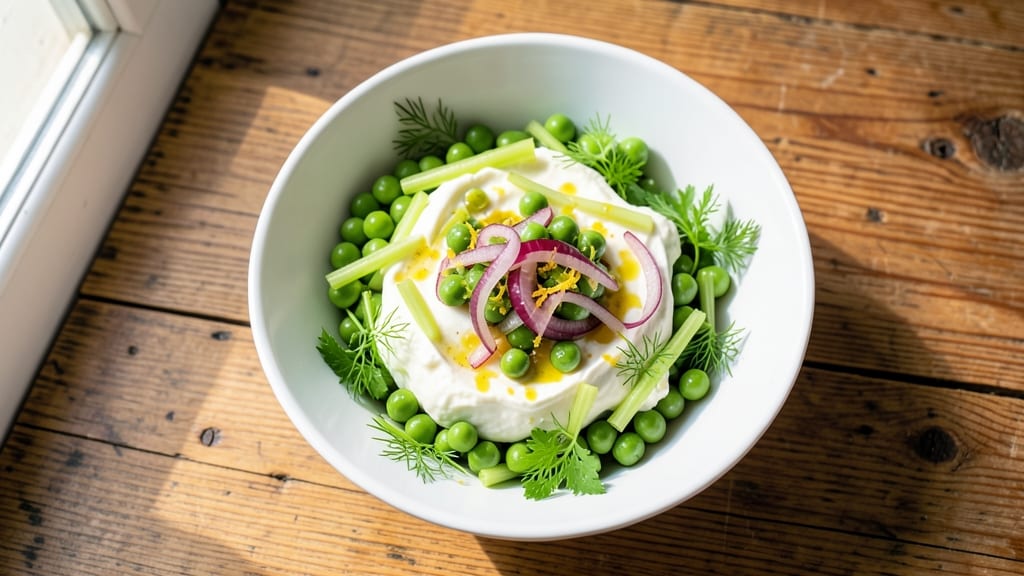
This 3 pea salad recipe transforms humble garden peas into a creamy, herb-packed dish that stands up as a main or side—no mayo in sight.
The secret lies in blending cream cheese with fresh dill and parsley until silky smooth, then folding it into tender peas with just enough vinegar to brighten the richness.
I developed this version after years of testing, because traditional recipes often rely on heavy mayo that can turn soggy or overly rich.
The magic happens in the texture contrast: crunchy celery and red onion cut through the creamy base while adding freshness, and a sprinkle of toasted slivered almonds delivers that satisfying crunch without overpowering.
What makes this salad truly special is how it holds up—flavors meld beautifully overnight, making it perfect for meal prep. The recipe also adapts effortlessly to dietary needs, whether you swap in vegan cream cheese or add crispy bacon for non-vegetarians.
By the time you're done assembling, you'll have a salad that's creamy yet light, herby yet balanced, and packed with protein from the peas and almonds. It's the kind of dish that works equally well as a light lunch, picnic centerpiece, or elegant side for summer dinners.
The best part? It comes together in just 20 minutes with minimal effort, yet tastes like you spent hours in the kitchen.
Store leftovers in the fridge for up to 5 days, though I rarely have any lasting that long—this salad disappears just as quickly as it's made. Serve chilled or at room temperature, and don't forget to garnish with extra herbs before serving for that restaurant-quality finish.
Here's how to make it perfectly every time.
Ingredients for 3 pea salad
Fresh peas, creamy cheese, and crunchy almonds make this salad shine without mayo.
| Ingredient | Amount | Notes |
|---|---|---|
| Fresh Garden Peas 🌱 | 2 cups | Thawed if frozen, no need to peel |
| Cream Cheese 🧀 | 8 oz | Full-fat for best texture |
| Fresh Dill 🌿 | ⅓ cup | Chopped, stems removed |
| Fresh Parsley 🌿 | ¼ cup | Chopped, flat-leaf preferred |
| Celery Sticks 🧅 | 1 ½ cups | Thinly sliced, crisp |
| Red Onion 🧅 | ¼ cup | Thinly sliced, sharp flavor |
| Slivered Almonds 🥜 | ½ cup | Toasted, skin-on preferred |
| White Vinegar 💧 | 1 tbsp | For brightness |
| Extra-Virgin Olive Oil 🫒 | 2 tbsp | For drizzling |
| Salt 🧂 | ½ tsp | Kosher or sea salt |
| Black Pepper 🌶️ | ¼ tsp | Freshly ground |
| Lemon Juice 🍋 | 1 tsp | Freshly squeezed |
The cream cheese is the foundation here—full-fat gives the best texture, so don't skimp. Philadelphia brand is my go-to because it's smooth and consistent, but any good-quality cream cheese works. Fresh dill and parsley are non-negotiable for that herby punch. I always grab a bunch of fresh dill from the grocery store's produce section—it's cheaper than pre-chopped and way more flavorful. For the celery, look for crisp stalks with no brown spots; those sad limp ones at the back of the bin won't cut it. Red onion adds a nice bite, so slice it thinly—mandoline if you're fancy, knife if you're not—and let it sit for 10 minutes before adding to mellow the sharpness.
No fresh dill? Dried dill at one-third the amount works in a pinch, but honestly, it's not the same. Running out of parsley? Fresh cilantro can sub at the same quantity, though it'll change the flavor profile slightly. The almonds are key for crunch—raw or toasted, but toasted adds that extra depth. No almonds? Toasted walnuts or pecans work too. For the vinegar, apple cider vinegar adds a nice sweetness if you prefer. And if you're making this vegan, vegan cream cheese (like Kite Hill) is the way to go—just add a splash of plant milk to help it blend smooth.
This salad keeps beautifully—5 days in the fridge, though I rarely let it last that long. The flavors actually improve overnight as everything melds together. Store it in an airtight container with a layer of olive oil on top to keep the peas from drying out. For meal prep, I portion it into small jars with the dressing on the side so you can toss it fresh when ready to eat. Garnish with extra herbs and a drizzle of olive oil before serving for that restaurant-quality finish. And trust me, the toasted almonds are worth the extra minute in the pan—they make all the difference.
Why You'll Love This Recipe
- No-Fuss Freshness: I swear by this salad when my garden peas are overflowing—just snap them, mix in softened cream cheese, and fold in herbs. No blender, no fuss, just pure garden-to-table satisfaction.
- Herb-Packed Zing: That bright dill and parsley combo? It’s like a little flavor explosion in your mouth, cutting through the creaminess of the peas. The celery sticks add just enough crunch to keep it interesting.
- Lunchbox Legend: Between us, this is my go-to for packed lunches or potlucks. It holds up for days in the fridge, and the cream cheese keeps it creamy without getting soggy. My kids ask for it every week.
- Budget Brightener: Fresh peas are often cheaper than canned, and cream cheese stretches farther than you’d think. Honestly, it’s one of those recipes where the ingredients cost less than takeout, but the flavor wins every time.
Step-by-step instructions for herb-infused cream cheese pea salad
This creamy, crunchy salad comes together in minutes with no mayo—just rich cream cheese and bright herbs.
Prepare the Cream Cheese Base
In a medium bowl, combine the 8 oz cream cheese with the 2 tbsp extra-virgin olive oil and 1 tsp lemon juice. Use a hand mixer or whisk until completely smooth—you should end up with a thick, creamy mixture that looks like soft butter. This is your flavor foundation, so take your time here.
Next, fold in the 0.5 tsp salt and 0.25 tsp black pepper. Taste and adjust if needed—this is where the seasoning starts. The cream cheese should be well incorporated, with no lumps remaining. If it feels too thick, add 1 tsp water to loosen it slightly. Set this mixture aside while you prep the vegetables.
Toast the Almonds and Slice Vegetables
Heat a dry skillet over medium heat and add the 0.5 cup slivered almonds. Toast them for 3-4 minutes, stirring constantly, until they turn a light golden color and smell nutty. Remove them immediately—they'll continue cooking from residual heat. Let them cool slightly before adding to the salad.
While the almonds toast, slice the 1.5 cups celery sticks into thin half-moons and the 0.25 cup red onion into paper-thin rings. I like to use a sharp chef's knife for this—it gives you clean, even slices. You'll want these to be bite-sized so they distribute evenly throughout the salad. Place them in a large mixing bowl.
Add Herbs and Acid for Freshness
To the bowl with sliced vegetables, add the 2 cups fresh garden peas (thawed if frozen), 0.33 cup fresh dill, and 0.25 cup fresh parsley. Gently toss everything together with your hands or a spatula—this keeps the peas intact while mixing in the herbs. The fresh dill and parsley will add bright, herbal notes that cut through the richness of the cream cheese.
Pour the 1 tbsp white vinegar over the vegetables and toss again. This adds a subtle tang that balances the creaminess. The vinegar also helps tenderize the celery slightly, making every bite more pleasant. Taste a small spoonful—you should notice the fresh herbs and the bright acidity.
Combine and Chill for Best Texture
Add the cream cheese mixture to the vegetable bowl and gently fold everything together until fully combined. The peas should be evenly coated, and the celery and onion should be well distributed. If the salad feels too thick, add 1-2 tablespoons of cold water to loosen it to your desired consistency.
Cover the bowl and refrigerate for at least 30 minutes before serving. This chilling time allows the flavors to meld together, and the cream cheese to firm up slightly, giving the salad a more appealing texture. The longer it chills, the better the flavors will develop—up to 4 hours works perfectly.
Toast Almonds and Serve
Just before serving, reheat the toasted almonds in a dry skillet for 30 seconds to crisp them up again. Sprinkle them over the salad just before eating—they add a delightful crunch that contrasts beautifully with the creamy peas.
Serve this salad chilled, either as a side dish or as a light main course with crusty bread. The combination of creamy, crunchy, and fresh elements makes it incredibly satisfying. Store leftovers in an airtight container in the refrigerator for up to 3 days, though it's best enjoyed fresh.
Pro Tips For Making 3 Pea Salad
- Shock the Peas: Dump frozen peas straight from the freezer into boiling water—no thawing needed. They’ll cook faster and stay vibrant, while room-temp peas turn mushy. (I used to thaw them first, then wondered why my salad tasted flat.)
- Dice Celery Small: Cut celery sticks into ¼-inch pieces, not thin matchsticks—this prevents them from turning to mush when mixed with the cream cheese. (Yes, it takes 2 minutes longer, but the texture stays crisp.)
- Mix Cold Cream Cheese: Soften the cream cheese in the fridge, not at room temperature—it blends smoother and won’t melt into a gloppy mess. (I learned this after one disastrous batch where the salad looked like a dip.)
- Pulse Herbs Lightly: Only give the dill and parsley 2-3 quick pulses in the food processor, or you’ll turn them into paste. A few rough choppy bits make the salad taste fresher. (I’ve ruined salads with over-blending—trust me.)
Common mistakes when making perfect results
Over-Mixing the Dressing
The cream cheese base is delicate—over-mixing after adding the herbs and vegetables will break down the peas and make your salad mushy. I’ve learned the hard way that gentle folding is key.
Use a spatula or even your hands to combine everything just until the cream cheese is evenly distributed. The peas should stay intact, not mashed into a purée. 🥗
Skipping the Chill Time
Rushing to serve this salad right after mixing is a mistake. The flavors need time to meld, and the cream cheese needs to firm up slightly for the perfect texture.
I always let mine chill for at least 30 minutes—sometimes I forget and serve it immediately, and the result is a sad, runny mess. Trust the process!
Using Stale or Poor-Quality Ingredients
Freshness matters here, especially with the herbs and cream cheese. If your dill or parsley looks wilted, or your cream cheese has been sitting in the fridge for weeks, your salad will taste off.
I always check the "best by" date on cream cheese and buy fresh herbs from the grocery store’s produce section. Swap out any ingredients that don’t smell vibrant.
Ignoring the Almond Toasting
Raw almonds add no crunch—they just make the salad taste bland. Toasting them until golden is non-negotiable for that satisfying texture contrast. I’ve made this mistake and regretted it every time.
Toast them in a dry skillet for 3-4 minutes, stirring constantly, until they’re fragrant and lightly golden. Let them cool slightly before adding to the salad.
Adding Too Much Liquid
The cream cheese base is already rich, and adding extra liquids like water or vinegar can dilute the flavors and make the salad watery. Start with the 1 tbsp vinegar called for and adjust only if absolutely necessary.
I’ve ruined a batch by doubling the vinegar—now I measure carefully and taste as I go.
Not Prepping Vegetables Evenly
Unevenly sliced celery and onion mean some pieces will be too large and others too small, leading to an inconsistent texture. I always slice the celery into thin half-moons and the onion into paper-thin rings.
A sharp knife or mandoline makes this easier, but even a good chef’s knife works if you take your time. 🌟
Nutrition facts
Frequently asked questions
Can I use canned peas instead of fresh?
Yes! Canned peas work perfectly—just drain and rinse them well to remove excess sodium. For best texture, choose high-quality canned peas (like Del Monte or Green Giant) and avoid the mushy varieties. The recipe will still turn out creamy and delicious, though fresh peas have a slightly sweeter flavor.
How do I make this salad vegan?
Swap the cream cheese for vegan cream cheese (like Kite Hill) and use vegan olive oil if needed. The texture stays creamy, though you may need to add 1-2 tsp plant-based milk to help blend it smoothly. For extra richness, stir in 1 tbsp vegan butter with the cream cheese base. The salad keeps all its herby brightness while being fully plant-based.
Can I add protein to make it a main dish?
For a heartier meal, fold in ½ cup cooked chicken breast (diced), ¼ cup crumbled feta, or 2 hard-boiled eggs (chopped). If adding bacon, use 2 oz cooked and crumbled for a smoky twist. Just toss the protein in with the vegetables before adding the cream cheese mixture. The salad holds up beautifully with extra protein.
Why does my salad taste bland?
Most likely, your herbs weren't fresh enough or you skipped the almond toasting. Always use bright, fragrant dill and parsley (buy fresh bunches, not pre-chopped). Toast the almonds until golden and fragrant—raw almonds add no flavor. Also, taste the cream cheese base before mixing—if it needs more salt or lemon juice, adjust it now. A pinch of garlic powder or smoked paprika can also add depth.
How long can I store leftovers?
This salad keeps well for 5 days in an airtight container in the fridge. For best texture, store the dressing separately and mix just before serving. If the peas soften too much, add a splash of cold water to revive them. Freezing isn't recommended—the cream cheese and herbs won't hold up well after thawing.