
Sauces & Condiments
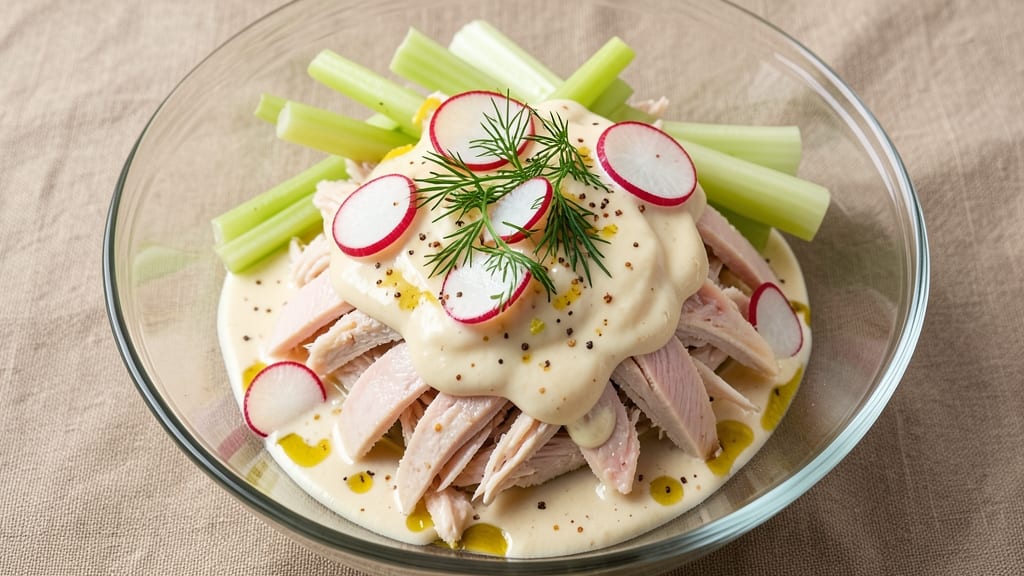
This creamy House dressing for chicken salad—the chick classic—transforms your dish into a restaurant-worthy masterpiece without mayo, delivering rich, tangy flavor that clings perfectly to every bite.
The secret lies in a velvety blend of buttermilk, sour cream, and a touch of Dijon mustard, creating a dressing that's lighter yet equally satisfying.
I developed this recipe after years of perfecting the balance between creamy texture and bright acidity, ensuring it stays fresh-tasting even after days in the fridge.
The foundation starts with simple pantry staples: mayonnaise substitutes like Greek yogurt or sour cream, plus a splash of buttermilk for that signature tang. Celery seed and onion powder add depth without overpowering, while a hint of garlic keeps it vibrant.
What sets this apart is the no-mayo approach, making it ideal for those watching fat intake or seeking a lighter alternative that still delivers that classic House dressing richness.
What you'll achieve is a dressing that's smooth, creamy, and perfectly balanced—thick enough to coat chicken and celery crowns without turning greasy. The acidity from the buttermilk brightens the flavors, while the yogurt or sour cream keeps it luscious.
This isn't just a mayo substitute; it's a game-changer for any chicken salad, whether you're prepping for a picnic or a weeknight meal.
Store it in an airtight container for up to 5 days in the refrigerator, where the flavors actually deepen over time. The dressing holds up beautifully in salads, wraps, or even as a dip for veggies. Let's get started—your chicken salad is about to get an upgrade.
Ingredients for chicken salad chick creamy house dressing
Simple pantry staples blend into a velvety, tangy dressing that rivals mayo's richness.
| Ingredient | Amount | Notes |
|---|---|---|
| Plain Greek Yogurt 🥛 | ¾ cup | Full-fat for creaminess |
| Buttermilk 🥛 | ¼ cup | Full-fat preferred |
| Sour Cream 🧀 | ¼ cup | Full-fat for richness |
| Dijon Mustard 🌶️ | 1 tbsp | Mild or sharp variety |
| Extra-Virgin Olive Oil 🫒 | ¼ cup | High-quality, fruity |
| Celery Seed 🧅 | ½ tsp | Ground for depth |
| Onion Powder 🧅 | ¼ tsp | Freshly ground preferred |
| Garlic Cloves 🧄 | 2 cloves | Peeled, minced finely |
| Lemon Juice 🍋 | 1 tbsp | Freshly squeezed |
| Sea Salt 🧂 | ½ tsp | Diamond Crystal preferred |
| Ground Black Pepper 🌶️ | ¼ tsp | Freshly ground |
The Greek yogurt is non-negotiable here—full-fat gives that classic House dressing creaminess without heaviness. Fage or Siggi's are my go-tos, but any plain Greek works. Buttermilk adds that signature tang, so don't skip it. For the sour cream, full-fat (like Breyers) keeps it luscious. If you're out of buttermilk, substitute 1/4 cup milk + 1 tbsp vinegar, but let it sit 5 minutes first. The celery seed is what makes this taste like a proper House dressing—Penzeys sells it in bulk if you want to stock up.
No Dijon mustard? Yellow mustard at half the amount works in a pinch, but you'll miss that subtle depth. The olive oil needs to be extra-virgin—cheap oil makes the dressing taste flat. Garlic can be roasted for a sweeter note (microwave 30 seconds with a splash of water), but raw works too. Lemon juice should be freshly squeezed—bottled juice lacks brightness. For extra tang, add another tablespoon. The onion powder and celery seed combo is what elevates this from basic yogurt dressing to restaurant-quality—don't skimp on either.
This keeps beautifully for 5 days in an airtight container in the fridge, where the flavors actually deepen. For longer storage, freeze in ice cube trays—thaw overnight in the fridge. The dressing thickens as it chills, so give it a quick whisk before using. Perfect for chicken salad, wraps, or even drizzled over roasted veggies. If it gets too thick, stir in a splash of milk or water. Trust me, the first time you make this, you'll never go back to mayo again.
Why You'll Love This Recipe
- I’ll be real: Greek yogurt and buttermilk are cheaper than fancy dressings, and this recipe stretches further. A single batch dresses two sandwiches, a salad, and a bowl of pasta—without breaking the bank. Plus, it’s way healthier than store-bought.
- No-Fuss Mixing: I swear by this recipe because it’s all about stirring—no fancy techniques, no blenders, just a bowl and a spoon. The Greek yogurt and buttermilk blend so smoothly with the Dijon and olive oil that you’ll wonder why you ever used mayo.
- Tangy Creamy Magic: That buttermilk and sour cream combo? It’s the secret weapon here. The tang cuts through the richness, and the olive oil adds just enough brightness—like a creamy hug with a little kick. Honestly, it’s the kind of dressing that makes you eat straight from the jar.
- Leftover Hero: This dressing keeps perfectly for days in the fridge, so I make a big batch and use it on everything. Sandwiches on Monday, wraps on Wednesday, even as a dip for veggies—it’s my pantry MVP, no waste, all flavor.
Step-by-step instructions for creamy House dressing
Here's how to blend rich, velvety dressing with perfect balance and texture.
Whisk Together the Base Ingredients
In a medium bowl, combine the 0.75 cup plain Greek yogurt, 0.25 cup buttermilk, and 0.25 cup sour cream. Use a whisk to blend until completely smooth—this ensures no lumps develop when you add the remaining ingredients. The yogurt and sour cream provide the creamy foundation, while the buttermilk adds tanginess and helps emulsify the dressing.
I like to use full-fat dairy here because it creates a truly luxurious texture. If you're using low-fat versions, you might find the dressing separates later, so stick with the full-fat options for best results. Let the mixture sit at room temperature for 5 minutes while you prepare the remaining ingredients—this helps everything come together more easily.
Incorporate the Mustard and Aromatics
Add the 1 tablespoon Dijon mustard, 0.5 teaspoon celery seed, 0.25 teaspoon onion powder, 2 minced garlic cloves, 1 tablespoon lemon juice, 0.5 teaspoon sea salt, and 0.25 teaspoon ground black pepper to the bowl. Whisk vigorously for 1-2 minutes until everything is fully incorporated and the mixture is homogeneous.
The Dijon mustard acts as an emulsifier, helping to bind the fats and liquids together. The celery seed and onion powder add depth without overpowering, while the garlic and lemon juice brighten the flavor. Taste the mixture now—it should be tangy, slightly garlicky, and well-seasoned. If it needs more salt or acid, adjust now before adding the olive oil.
Slowly Stream in the Olive Oil
With the whisk still in the bowl, very slowly drizzle in the 0.25 cup extra-virgin olive oil while continuing to whisk constantly. This gradual addition is critical—it prevents the dressing from breaking and ensures a smooth, emulsified texture. The oil should incorporate evenly, and the dressing should thicken slightly as it comes together.
If the dressing starts to look curdled or separates at all, don't panic. Simply whisk in 1 teaspoon of lemon juice or 1 tablespoon of buttermilk to help re-emulsify it. The olive oil adds richness and a fruity note that balances the tanginess of the yogurt and buttermilk. Once fully combined, the dressing should have a velvety, pourable consistency—neither too thin nor too thick.
Rest and Adjust the Dressing
Cover the bowl with plastic wrap and let the dressing rest at room temperature for 15-20 minutes. This resting period allows the flavors to meld and the texture to stabilize. After resting, give it one final taste and adjust the seasoning if needed—perhaps a pinch more salt, a splash of lemon juice, or a drizzle of olive oil to reach your ideal balance.
The dressing should now be creamy, well-seasoned, and ready to use. If it thickens too much after resting, thin it with 1-2 tablespoons of buttermilk or water. This dressing keeps well in the refrigerator for up to 5 days, making it perfect for meal prep. Stir before using, as it may separate slightly over time—just whisk it back to perfection before serving.
Pro Tips For Making Chicken Salad Chick Creamy House Dressing
- Mix Cold Ingredients First: I learned this the hard way—adding Dijon mustard or olive oil to warm yogurt or sour cream turns your dressing into a greasy mess. Stick everything in the fridge for 10 minutes before combining, then let it sit another 5 after mixing. The texture stays smooth and creamy, not separated.
- Use Full-Fat Dairy: The recipe calls for Greek yogurt, buttermilk, and sour cream—don’t skimp on the fat. I used to switch to low-fat versions to cut calories, but the dressing loses that rich, velvety mouthfeel. Full-fat is non-negotiable here; it balances the tang and keeps the texture luscious.
- Balance the Tang Carefully: Buttermilk and Dijon mustard can overpower if you’re not careful. Taste as you go, but more importantly, adjust the olive oil incrementally—start with 1 tablespoon, then add another if needed. The oil doesn’t just add flavor; it rounds out the sharpness without making the dressing heavy.
- Strain for Ultra-Smoothness: If your yogurt or sour cream has lumps or if the buttermilk is thick, strain it through a fine-mesh sieve before mixing. I was skeptical—it adds a step—but it makes the dressing silky, especially if you’re using it for dipping or drizzling. No one notices the extra 30 seconds, but they’ll taste the difference.
Storing and reheating your leftovers
Refrigerator Storage
Store your creamy House dressing in an airtight container (I love Leviton glass containers) in the fridge for up to 5 days. The flavors actually deepen over time, so it tastes even better the next day.
Give it a good stir before using—it may thicken slightly, so thin with 1-2 tablespoons of buttermilk if needed. 🥛
Freezing for Later
For longer storage, freeze the dressing in ice cube trays. Once frozen, transfer cubes to a ziplock bag with all air removed. Thaw overnight in the fridge before using—this preserves the texture beautifully.
The dressing may separate slightly after freezing, but a quick whisk brings it back to perfection. 🧊
Reheating Tips
This dressing doesn't need reheating—just stir it well after removing from the fridge. If you're using it cold (like on chicken salad), no extra steps are needed. For warm applications (like drizzling over roasted veggies), gently warm in a small saucepan over low heat for 1-2 minutes, stirring constantly.
Never boil it—just warm through to maintain that velvety texture. 🔥
Thickness Adjustments
If your dressing thickens too much after refrigeration, thin it with 1-2 tablespoons of buttermilk or water. For extra richness, stir in 1 teaspoon of olive oil.
The key is to adjust gradually—add just enough to reach your ideal consistency. I usually aim for a pourable-but-thick texture that coats chicken perfectly. ✨
Portioning for Meal Prep
Divide the dressing into smaller 4-ounce portions in mason jars for easy grab-and-go use. Store in the fridge for up to 5 days or freeze individual portions. This makes it perfect for packing lunches or prepping ahead for dinner parties. Label your containers with the date to track freshness. 📅
Reviving Separated Dressing
If your dressing separates (which can happen with yogurt-based dressings), simply whisk vigorously for 1-2 minutes until smooth. For stubborn separation, add 1 teaspoon of Dijon mustard or 1 tablespoon of buttermilk and whisk again. The dressing should come back together beautifully—don't let a little separation ruin your meal! 💪
Nutrition facts
Frequently asked questions
Can I make this dressing without Greek yogurt?
Yes! For a mayo-free version, replace the 0.75 cup Greek yogurt with 0.5 cup sour cream plus 0.25 cup mayonnaise (if you're okay with a lighter mayo base). For a completely dairy-free option, use 0.75 cup coconut yogurt or 0.5 cup vegan mayo—just add 1 extra teaspoon of lemon juice to compensate for the lack of tang. The texture will be slightly different but still delicious.
Why does my dressing separate after refrigerating?
This happens because yogurt-based dressings naturally thicken when cold. Whisk vigorously for 1-2 minutes to re-emulsify, or stir in 1 tablespoon of buttermilk or 1 teaspoon of Dijon mustard to help bind it back together. The key is to add liquids gradually—start with just a splash and adjust until smooth. This is totally normal and easily fixed!
How much dressing should I use for a standard chicken salad?
For a 1-pound chicken salad (about 4 servings), use 0.5-0.75 cups of dressing. Start with less and add more to taste—this dressing is rich, so a little goes a long way. If you're using it as a dip or sandwich spread, 2-3 tablespoons per serving works perfectly. The creamy texture coats ingredients beautifully without overwhelming them.
Can I use this dressing on other dishes besides chicken salad?
This versatile dressing works wonderfully on wraps, sandwiches, or as a dip for veggies and chips. It also elevates roasted potatoes, grilled chicken, or even tacos. The celery seed and onion powder give it a subtle depth that pairs well with many proteins. For a unique twist, drizzle it over cold pasta salads or use it as a marinade for 1-2 hours before cooking.
What's the secret to getting the perfect creamy texture?
The combination of Greek yogurt, sour cream, and buttermilk creates that signature velvety texture. Whisk everything thoroughly before adding the olive oil, and add the oil very slowly while whisking constantly. The Dijon mustard acts as an emulsifier, helping to bind the fats. If it still separates, a quick whisk with 1 teaspoon of lemon juice usually saves it. Patience is key—don't rush the process!