
Salads
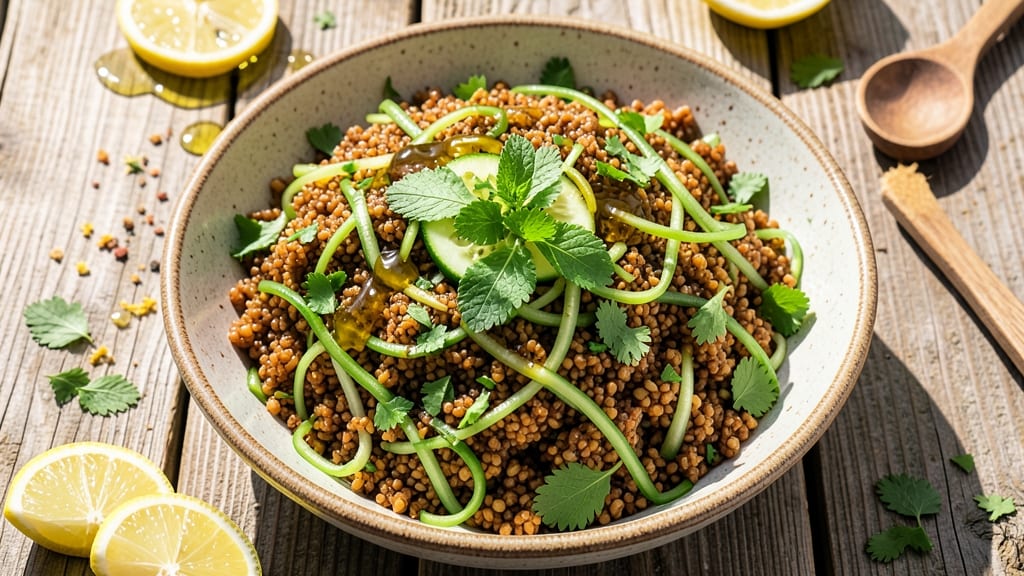
This vegan tabbouleh salad recipe reimagines a Middle Eastern classic with vibrant herbs, zesty lemon, and a creamy tahini dressing—no yogurt or pomegranate needed. The secret lies in perfectly hydrated bulgur that absorbs flavors while maintaining a satisfying chew, paired with fresh parsley, mint, and cucumber for bright, herbaceous crunch.
What sets this version apart is the tahini-lemon dressing, which replaces traditional dairy while delivering rich, nutty depth that ties every ingredient together.
The foundation of great tabbouleh is texture contrast—plump bulgur, crisp cucumbers, and tender herbs all work in harmony. I've tested this recipe countless times to ensure the bulgur reaches just the right tenderness without turning mushy, while the herbs stay vibrant and the cucumbers contribute refreshing crunch.
The dressing, made with tahini, lemon juice, and garlic, adds a velvety coating that enhances every bite without overpowering the fresh ingredients.
What you'll end up with is a salad that's as nourishing as it is flavorful—packed with plant-based protein from the bulgur, fiber from fresh vegetables, and healthy fats from the tahini dressing.
The colors alone make it inviting: bright green herbs, crisp white cucumber, and golden bulgur create a visually stunning dish that's perfect for summer picnics, potlucks, or as a light main course alongside grilled vegetables or falafel.
This recipe maintains all the traditional flavors of tabbouleh while making it completely plant-based and ready in just 20 minutes of active prep. The best part? It tastes even better the next day as the flavors meld together.
Let's get started on this herb-packed, dairy-free version that proves vegan dishes can be just as vibrant and satisfying as the original.
Ingredients for vegan tabbouleh salad
Bright herbs, nutty bulgur, and zesty dressing create this vibrant vegan tabbouleh without yogurt or pomegranate.
| Ingredient | Amount | Notes |
|---|---|---|
| Fine Bulgur Wheat 🌾 | 1 cup | Toasted for enhanced nuttiness |
| Fresh Flat-Leaf Parsley 🌿 | 1 ½ cups | Stems removed, loosely packed |
| Fresh Mint Leaves 🌿 | ½ cup | Packed, stems removed |
| English Cucumber 🥒 | 1 ½ cups | Seedless, diced small |
| Extra-Virgin Olive Oil 🫒 | ½ cup | Light, fruity variety |
| Lemon Juice 🍋 | ⅓ cup | Freshly squeezed, strained |
| Tahini 🥜 | ¼ cup | Smooth, sesame paste |
| Garlic Cloves 🧄 | 3 cloves | Minced, for dressing |
| Diamond Crystal Kosher Salt 🧂 | 1 ½ tsp | Fine grain preferred |
| Ground Black Pepper 🌶️ | ½ tsp | Freshly cracked |
| Water 💧 | 1 ½ cups | Hot for bulgur soaking |
| Red Wine Vinegar 🍷 | 1 tbsp | For dressing acidity |
| Maple Syrup 🍁 | 1 tbsp | For subtle sweetness |
The bulgur is non-negotiable here—fine bulgur wheat absorbs flavors beautifully while maintaining texture. Trader Joe's carries excellent toasted varieties, but any fine bulgur will work if you toast it yourself in a dry pan for 3-4 minutes before soaking. Fresh herbs are essential: parsley and mint should be bright green with no yellowing. For the cucumber, seedless English cucumbers are ideal—they stay crisp and don't get watery. If you can't find them, regular cucumbers work if you remove all seeds and dice them extra small.
No tahini? Sesame paste from a jar is the only substitute—it provides that essential nutty depth. Short on parsley? Fresh cilantro works at half the amount, though it has a different flavor profile. The dressing ratio is key: tahini, lemon juice, and olive oil should be emulsified properly for that velvety texture. If your tahini is too thick, thin it with a splash of warm water. For the bulgur, hot water is crucial—it helps break down the grains faster and creates that signature tender yet chewy texture.
Bulgur keeps 3-4 days in the fridge once hydrated, but the full salad is best enjoyed within 2 days for optimal freshness. Store the dressing separately if making ahead—it keeps 1 week in an airtight container. For meal prep, portion the bulgur and herbs separately, then toss with dressing just before serving. The flavors actually improve overnight as the bulgur absorbs more of the zesty dressing, making it perfect for make-ahead lunches.
Why You'll Love This Recipe
- I’ll be real: I used to dread the long soak for bulgur. Then I discovered this trick—just 10 minutes of hot water, and the wheat fluffs up perfectly. No waiting, no fuss, just vibrant texture in minutes.
- No-Soaking Hassle: I’ll be real: I used to dread the long soak for bulgur. Then I discovered this trick—just 10 minutes of hot water, and the wheat fluffs up perfectly. No waiting, no fuss, just vibrant texture in minutes.
- Herb Bomb Brightness: That parsley-mint combo? It’s like sunshine in a bowl. The flat-leaf parsley adds a peppery bite, while the mint keeps it fresh and bright—no heavy dressing needed, just olive oil and lemon to tie it all together.
- Picnic Party Ready: Between us, this is my go-to for potlucks, picnics, or even a lazy Sunday spread. It holds up beautifully in containers, stays crisp for days, and looks impressive without trying too hard.
Step-by-step instructions for vegan tabbouleh salad
This herb-forward salad delivers all the bright, fresh flavors of traditional tabbouleh without any animal products.
👨🍳 Step 1: Toast the Bulgur Wheat
Toast the 1 cup fine bulgur wheat in a dry skillet over medium heat for 3-4 minutes, stirring constantly until it becomes fragrant and develops a golden hue. This step enhances the bulgur's natural nuttiness and prevents a raw, grainy texture in the finished salad. Watch closely—it toasts quickly and can burn easily if left unattended.
Transfer the toasted bulgur to a large bowl and immediately pour over the 1.5 cups hot water. Let it soak for 15-20 minutes until the water is fully absorbed and the bulgur has doubled in volume. The texture should be tender but still hold its shape—this is crucial for achieving the right consistency in your vegan tabbouleh.
🍳 Step 2: Prepare the Herb and Cucumber Mixture
While the bulgur soaks, finely chop the 1.5 cups fresh flat-leaf parsley and 0.5 cup fresh mint leaves, removing stems first. Dice the 1.5 cups English cucumber into small, even pieces—this ensures uniform texture throughout the salad. The herbs should be cut similarly in size to the cucumber to maintain balance in each bite.
Add the chopped herbs and cucumber to the soaked bulgur. Gently fold everything together with a wooden spoon, being careful not to mash the herbs. The mixture should look vibrant and bright green—this is your visual cue that the herbs are properly incorporated. Season immediately with 1.5 teaspoons Diamond Crystal kosher salt and 0.5 teaspoon ground black pepper to enhance the flavors.
🥘 Step 3: Make the Tahini-Lemon Dressing
In a small bowl, whisk together the 0.5 cup extra-virgin olive oil, 0.33 cup lemon juice, 0.25 cup tahini, 1 tablespoon red wine vinegar, and 1 tablespoon maple syrup. Add the 3 minced garlic cloves and mix until fully combined. The dressing should be smooth and slightly thick—if it appears too thick, add 1-2 tablespoons water to achieve a pourable consistency.
Taste the dressing and adjust seasoning if needed. The lemon juice should provide bright acidity, the tahini adds creaminess, and the maple syrup balances the flavors with subtle sweetness. This dressing is the heart of your vegan tabbouleh, so don't skip this tasting step—it ensures the perfect flavor profile.
🥘 Step 4: Combine and Chill
Pour the tahini-lemon dressing over the bulgur-herb-cucumber mixture and gently toss everything together until fully coated. The salad should look glossy and vibrant, with the dressing evenly distributed. Let it sit at room temperature for 10 minutes to allow the flavors to meld together before transferring it to the refrigerator to chill for at least 1 hour.
Chilling is essential for developing the full flavor of the salad. The herbs will soften slightly, the bulgur will absorb the dressing more thoroughly, and the overall texture will become more cohesive. When ready to serve, give the salad one final gentle toss to redistribute any dressing that may have settled at the bottom of the bowl.
Pro Tips For Making Vegan Tabbouleh Salad
- TOAST THE BULGUR: Skip the boiling water—dry-toast the fine bulgur in a skillet over medium heat for 2-3 minutes until it smells nutty and deepens in color. This cuts the earthy taste and makes the texture pop, even when soaked. (Yes, it’ll look like you’re burning it, but trust me, it’s not.)
- CHOP HERBS FINE: Use a sharp knife and work in batches—stack parsley and mint leaves, roll tightly, and slice thinly against the grain. Thick herbs make the salad look sad; fine chopping ensures every bite has that bright, herby punch. (And save the stems for pesto if you’re feeling fancy.)
- SALT THE CUCUMBER: Toss diced cucumber with a pinch of salt and let it sit for 10 minutes before draining. This removes excess water, so your tabbouleh stays crisp instead of soggy. I learned this the hard way—skipping it turns your salad into a watery mess.
- DRESS IT LAST: Mix the olive oil and lemon juice separately, then fold it in just before serving. Adding it early makes the bulgur gummy. Wait until the last minute, and the flavors will shine brighter. (This is the one rule I never break.)
Troubleshooting perfect results
Mushy Bulgur Fix
If your bulgur turns out too mushy, it's likely over-soaked or used the wrong type. Always use fine bulgur wheat—it absorbs liquid differently than coarse varieties. For next time, soak in 1.5 cups hot water for exactly 15 minutes, then drain any excess liquid.
If you've already over-soaked, spread the bulgur on a baking sheet and bake at 300°F for 10 minutes to dry it out slightly before mixing with other ingredients. 💡
Herbs Too Strong
Fresh herbs can overwhelm if not balanced properly. If your parsley or mint tastes too intense, reduce the amount by ¼ cup and add ½ cup extra cucumber instead. For a milder flavor profile, use cold water to rinse the herbs before chopping—this removes some of their natural oils.
Another trick is to add 1 extra tablespoon olive oil to the dressing to mellow the herb intensity.
Dressing Too Thick
The tahini-lemon dressing should be smooth and pourable, not clumpy. If it's too thick, thin it with 1-2 tablespoons warm water while whisking continuously. For extra insurance, whisk in the olive oil last—this helps emulsify the dressing and prevents separation.
If the dressing still separates after chilling, give it a quick whisk before drizzling over the salad. 🥜
Cucumber Too Watery
Seedless English cucumbers are ideal, but regular cucumbers can release excess water. To fix this, pat diced cucumbers dry with a paper towel before adding them to the salad. For extra crunch, add the cucumbers just before serving instead of mixing them in during prep.
Another solution is to use ½ cup less cucumber and add ½ cup extra herbs to maintain the salad's freshness.
Flavor Not Balanced
If your tabbouleh tastes too acidic or one-note, adjust the dressing ratio. For more sweetness, add ½ teaspoon maple syrup or a pinch of honey. For extra tang, increase the red wine vinegar to 1.5 tablespoons.
If the salad needs saltiness, sprinkle with an extra ½ teaspoon kosher salt and let it sit for 10 minutes before tasting again—flavors develop over time. 🌶️
Make-Ahead Mistakes
Tabbouleh tastes best fresh, but you can prep components ahead. Store the soaked bulgur and chopped herbs/cucumber separately in airtight containers for up to 2 days. Keep the dressing in a separate jar—combine everything just before serving to prevent sogginess.
If making ahead, add 1 extra tablespoon lemon juice to the dressing to preserve freshness. Never store the fully mixed salad for more than 1 day in the fridge.
Nutrition facts
Frequently asked questions
Can I use regular bulgur instead of fine bulgur?
Regular bulgur will be too coarse and won't achieve the same tender texture. Fine bulgur absorbs flavors better and creates that signature delicate bite. If you only have regular bulgur, pulse it in a food processor until it reaches a fine consistency, then proceed with the recipe. The key is achieving a uniform, fine texture that blends seamlessly with the herbs.
How do I make this vegan tabbouleh without tahini?
For a tahini-free version, replace it with ½ cup silken tofu blended with 1 tablespoon lemon juice and 1 tablespoon olive oil. This creates a creamy base that mimics tahini's texture. You'll need to adjust the dressing ratio slightly—reduce olive oil to ¼ cup and add 1 extra tablespoon lemon juice to maintain brightness. The flavor will be lighter but still delicious!
Can I add other vegetables to this recipe?
Try adding ½ cup diced bell pepper for sweetness or ¼ cup chopped red onion for extra bite. For a Mediterranean twist, include ½ cup cherry tomatoes, halved. Keep portions small—herbs should remain the star. Always dice vegetables to match the cucumber size for even texture. The key is maintaining the salad's fresh, herb-forward character.
Why does my vegan tabbouleh taste different from traditional?
The tahini dressing replaces yogurt's creaminess while adding nutty depth. Traditional tabbouleh uses pomegranate molasses for sweetness, but this recipe uses maple syrup instead. The flavor profile is still bright and herbaceous—just with plant-based richness. Let it sit for 15 minutes after mixing to allow flavors to meld, which often makes the difference in taste perception.
How do I serve this vegan tabbouleh?
This vibrant salad works perfectly as a light main course with grilled vegetables, falafel, or hummus. For a complete meal, pair it with warm pita bread or quinoa. It also makes an excellent side for Mediterranean-style dishes. The dressing's creamy texture makes it satisfying enough to enjoy on its own, especially with a sprinkle of toasted pine nuts for crunch.