
Salads
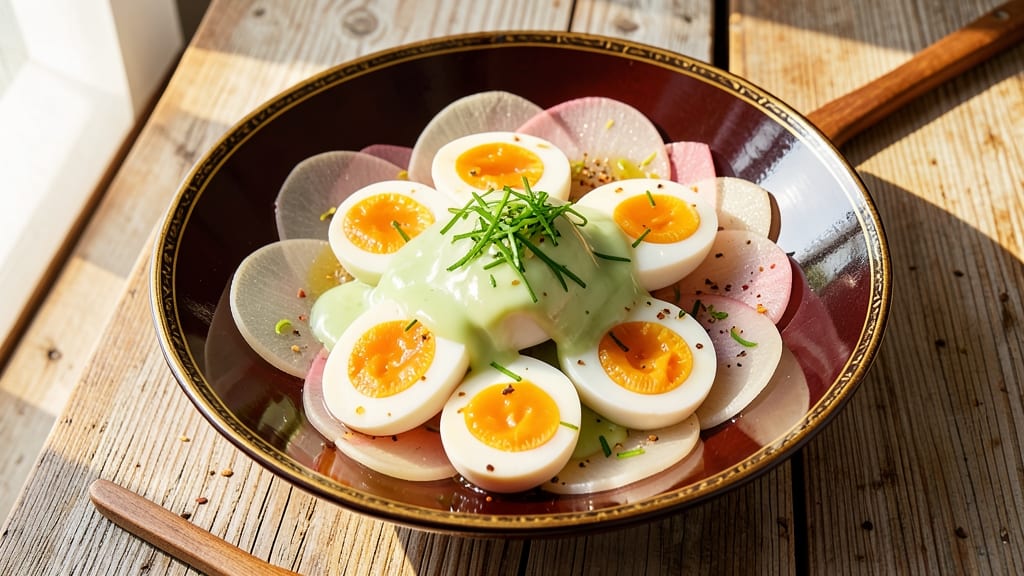
This traditional Japanese egg salad recipe transforms humble ingredients into a delicate, flavorful dish that balances creamy yolk with bright soy-ginger notes. The secret lies in perfectly soft-boiled eggs—just runny enough to create that signature luxurious texture—paired with a tangy dressing that’s both refreshing and complex.
Unlike Western egg salads, this version relies on rice vinegar, sesame oil, and a touch of sugar to create harmony rather than sharpness.
The preparation follows precise Japanese techniques: eggs are boiled in their shells for exactly 6 minutes to achieve that signature custardy center, then gently sliced and folded with a mayonnaise-based dressing infused with grated daikon and fresh ginger.
The result is a salad that’s creamy yet light, with each bite offering a contrast of silky yolk and crisp vegetables.
What makes this dish truly special is its versatility—serve it chilled over steamed rice for a classic tamago meshi experience, or pair with pickled vegetables for a complete bento-style meal.
The soy-ginger dressing elevates simple ingredients, proving that tradition doesn’t require complexity. This is comfort food with cultural depth, perfect for both everyday lunches and special occasions.
The key to authenticity lies in the balance: the dressing should be just sweet enough to complement the eggs’ richness without overpowering, while the daikon adds a subtle crunch that cuts through the creaminess.
Once mastered, this recipe becomes a staple in your Japanese-inspired repertoire, offering a taste of home with every forkful.
Ingredients for traditional japanese egg salad
Eight essential ingredients create this delicate balance of creamy yolk and bright soy-ginger harmony.
| Ingredient | Amount | Notes |
|---|---|---|
| Large Eggs 🥚 | 8 whole | Room temperature for even cooking |
| Rice Vinegar 🍶 | ⅓ cup | Seasoned preferred for depth |
| Sesame Oil 🫒 | 2 tbsp | Toasted for nutty aroma |
| Mayonnaise 🥫 | ½ cup | Japanese-style preferred |
| Fresh Ginger 🧄 | 1 tbsp | Finely grated, skin on |
| Daikon Radish 🥕 | ½ cup | Finely grated, skin on |
| Granulated Sugar 🍚 | 1 tbsp | Adjust to taste |
| Soy Sauce 🍜 | 2 tbsp | Light or regular variety |
| Green Onions 🧅 | 3 whole | Thinly sliced, white and green parts |
| Japanese Mayonnaise 🥫 | ¼ cup | Kewpie brand recommended |
| Toasted Sesame Seeds 🌾 | 1 tbsp | For garnish |
| White Rice 🍚 | 1 ½ cups | Cooked, for serving |
The eggs are the foundation, so quality matters. Pasture-raised eggs yield richer yolks, but any large eggs will work. For the perfect soft-boil, use a timer—6 minutes from a rolling boil ensures that signature runny center. Mitsukan or Kewpie mayonnaise adds authentic Japanese flavor, though regular mayo suffices. Daikon radish is crucial for texture; look for firm, pale roots at Asian markets or well-stocked grocery stores. Fresh ginger should smell aromatic and have a vibrant color—no mold or soft spots.
No rice vinegar? Apple cider vinegar with a pinch of sugar mimics the tang. Substitute daikon with jicama or cucumber for crunch, though texture differs. If you lack sesame oil, toasted sesame seeds ground with neutral oil work in a pinch. For extra richness, add 1 tbsp of mirin to the dressing. The Japanese mayonnaise can be swapped for regular, but reduce the soy sauce slightly to balance saltiness. Green onions can be omitted if unavailable, though they add freshness.
Store hard-boiled eggs in the fridge for 3-4 days submerged in ice water. The dressing keeps for 5 days in an airtight container. For best texture, assemble the salad just before serving. If prepping ahead, store components separately—mix only when ready to eat. Garnish with toasted sesame seeds immediately before serving to preserve their crunch. Leftover rice can be refrigerated for 4 days or frozen for 3 months in a sealed container.
Why You'll Love This Recipe
- No-Fuss Assembly: Honestly, this comes together faster than a microwave burrito. Hard-boil eggs while you chop ginger (10 minutes), then toss with mayo, vinegar, and sesame oil—no fancy techniques, just a fork and a bowl. The hardest part is deciding whether to eat it immediately or wait for the flavors to mingle.
- Umami Magic: That sesame oil and ginger? It’s the secret weapon. The vinegar cuts through the richness of the mayo while the ginger adds a bright, zesty kick—like a tiny flavor explosion in every bite. Not too sweet, not too heavy, just right.
- Lunchbox Hero: Between us, this is my go-to for packed lunches or bento boxes. Keeps well for days in the fridge, holds its shape, and tastes just as good cold as it does at room temp. Sprinkle with sesame seeds for extra flair—my kids still ask for it even when they’re "too cool" for egg salad.
- Budget Stretch: Eggs are cheap, and this recipe uses them all. No wasted yolks or whites—everything gets used, and the other ingredients are pantry staples. I’ve made this for 12 people at potlucks, and it’s always the first to disappear. Plus, leftovers taste better the next day.
Step-by-step instructions for traditional Japanese egg salad
Master this delicate balance of textures and flavors for an authentic Japanese egg salad experience.
Prepare the Soft-Boiled Eggs
Place the 8 whole Large Eggs into a saucepan and cover them with cold water by about 1 inch. Bring to a gentle boil over medium heat—this prevents cracking—and immediately reduce to low heat. Cook for exactly 6 minutes from the moment water returns to a boil. The yolks should remain creamy and runny, while the whites set completely.
Transfer the eggs to an ice bath for 5 minutes to stop the cooking process. Peel carefully under cool running water, reserving the 6-minute cook time as your guide for perfect doneness. The key here is precision: overcooked yolks will break during mixing, ruining the salad's luxurious texture.
Create the Soy-Ginger Dressing
In a mixing bowl, combine the 0.5 cup Mayonnaise, 0.25 cup Japanese Mayonnaise, 2 tbsp Soy Sauce, 1 tbsp Granulated Sugar, and 1 tbsp finely grated Fresh Ginger (skin on). Whisk until completely smooth—this forms the base of your dressing. The ginger's sharpness will mellow as it sits, but starting with fresh ensures proper flavor development.
Add the 0.33 cup Rice Vinegar and 2 tbsp Sesame Oil next, whisking continuously. The vinegar brightens the flavors while the sesame oil adds depth. Taste and adjust seasoning—you may need an additional ½ teaspoon of sugar or soy sauce to balance the acidity. This dressing should be thick but pourable, coating the back of a spoon without dripping.
Mix the Egg Salad Components
Gently chop the 8 peeled eggs into ½-inch chunks, being careful not to break the yolks. Add them to the dressing along with the 0.5 cup finely grated Daikon Radish (skin on) and 3 thinly sliced Green Onions (white and green parts). Fold everything together using a silicone spatula—cutting motions destroy the eggs' delicate texture.
For the perfect consistency, add 1-2 tablespoons of water if the mixture feels too thick. The salad should cling together when spooned but remain light and airy. Real talk: don't overmix or the eggs will turn mushy. The daikon radish adds subtle sweetness that complements the soy-ginger dressing beautifully.
Serve with Authentic Presentation
Transfer the egg salad to a serving bowl and sprinkle with 1 tbsp Toasted Sesame Seeds for both texture and visual appeal. Serve immediately over 1.5 cups of warm White Rice—the contrast of warm rice and cool egg salad creates a satisfying bite. Garnish with additional green onion slices if desired.
This dish is traditionally enjoyed as a light lunch or bento box component, where the soft-boiled yolks remain intact until the first bite. The balance of creamy eggs, crisp daikon, and umami-rich dressing makes this far more sophisticated than Western egg salad—don't skip the proper rice accompaniment to experience it authentically.
Pro Tips For Making Traditional Japanese Egg Salad
- CHILL EGGS PROPERLY: Dump freshly boiled eggs straight into ice water for 5 minutes—this stops cooking and makes peeling effortless. I used to skip this, and half the time, the whites would stick like glue to the yolks. Cold eggs also hold their shape better when chopped.
- GRATE GINGER FINE: Use the smallest holes on your grater or pulse in a food processor—you want it almost like a paste, not chunks. My first few attempts had visible ginger bits, and it ruined the smooth texture. A teaspoon of freshly grated (not powdered) is enough.
- MIX VINEGAR LAST: Toss in rice vinegar right before serving—it brightens the flavors but makes the salad soggy if added too early. I learned this after watching my first batch turn watery within 20 minutes. Add just enough to taste (start with 1 tablespoon).
- USE COLD MAYO: Chill your mayo in the fridge for 15 minutes before mixing—it blends smoother and keeps the salad from turning greasy. I used to just grab it straight from the fridge, and the texture always ended up uneven. Room-temperature mayo also dilutes faster.
Flavor customization for these flavors
Sweet & Tangy Twist
Add 1 tablespoon of mirin to the dressing for a sweeter, more refined flavor profile that mimics Kyoto-style preparations. The mirin enhances the soy sauce’s umami while adding a delicate floral note.
For extra brightness, swap 1 teaspoon of rice vinegar with lemon juice—this works especially well if you’re serving it as a light summer dish. 🌸
Spicy Kick
For a bold Osaka-inspired variation, stir in ½ teaspoon of grated fresh chili (like shishito or Thai bird’s eye) or ¼ teaspoon of red pepper flakes into the dressing.
The heat cuts through the richness of the eggs beautifully, creating a fiery contrast. Garnish with extra chili flakes on top for a dramatic finish. 🌶️
Herb-Infused Freshness
Swap the green onions for ½ cup finely chopped shiso leaves or mint to infuse a fragrant, herbaceous note. Shiso, in particular, pairs wonderfully with the soy-ginger dressing, adding a subtle citrusy aroma.
Use 1 tablespoon of chopped cilantro for a more Mexican-inspired twist that still feels authentic to Japanese flavors. ✨
Smoky Depth
For a smoky variation, replace 1 tablespoon of sesame oil with 1 tablespoon of toasted nori flakes (finely ground) or ½ teaspoon of smoked paprika. The nori adds a briny, oceanic depth, while the paprika introduces a subtle charred note.
This works especially well if you’re serving the salad alongside grilled fish or tofu. 🔥
Creamy Avocado Fusion
Add ½ ripe avocado, mashed, to the dressing for a luxurious, velvety texture that’s still light enough for summer. The avocado’s natural fats complement the eggs beautifully while adding a fresh, buttery richness. For extra flair, top with toasted coconut flakes for a tropical-inspired twist. 🥑
Crunchy Vegetable Boost
Incorporate ½ cup thinly sliced cucumber or jicama into the salad for added crunch. The cucumber’s crispness contrasts perfectly with the creamy eggs, while jicama offers a slightly sweet, starchy bite. Both work well when served chilled, making them ideal for hot summer days. 🥒
Nutrition facts
Frequently asked questions about traditional Japanese egg salad
Why do Japanese egg salads use soft-boiled eggs instead of hard-boiled?
The signature runny yolk creates a luxurious texture that's central to this dish. When properly soft-boiled for 6 minutes, the yolks remain creamy and custardy, offering a delightful contrast to the crisp daikon and tangy dressing. This technique is inspired by tamagoyaki, where egg texture plays a key role in the final dish.
Can I make this egg salad ahead of time?
It's best served fresh, but you can prep components separately. Store peeled eggs in an airtight container in the fridge for 1 day maximum, and keep the dressing separate for 5 days. Mix just before serving to preserve the perfect egg texture. The rice should always be served warm alongside.
What's the difference between this and Western egg salad?
Japanese versions focus on balance and texture rather than sharpness. While Western salads often use mustard and vinegar for tang, this recipe relies on soy sauce, ginger, and rice vinegar for umami depth. The daikon radish adds sweetness, and the soft-boiled eggs create a silky contrast missing from most Western versions.
How do I adjust the dressing if I don't have Japanese mayonnaise?
Regular mayo works fine, but reduce the soy sauce by ½ teaspoon to prevent saltiness. For extra richness, add ½ teaspoon of honey or 1 teaspoon of mirin to mimic the sweetness of Japanese mayo. The key is balancing the soy's saltiness with subtle sweetness to complement the eggs.
What are the best sides to serve with this dish?
Traditionally served over warm rice (tamago meshi), but also pairs beautifully with:
- Pickled vegetables (tsukemono) for acidity
- Steamed greens for freshness
- Grilled fish or tofu for protein
- Miso soup for a complete meal