Salads
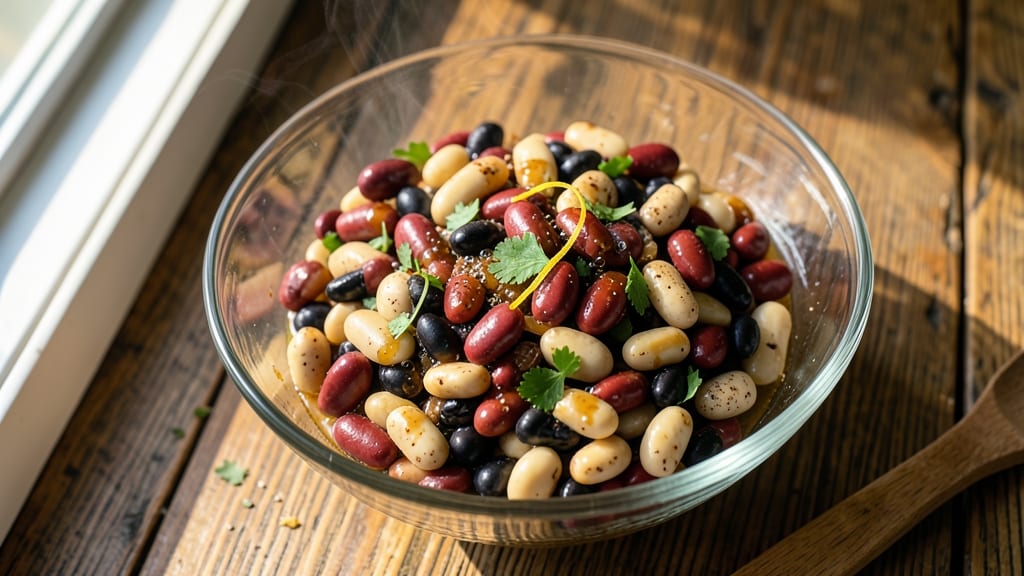
This traditional five bean salad recipe delivers the crisp, vinegar-bright flavors that have been a pantry staple for generations. The key lies in selecting three white beans and two colorful varieties—kidney and navy—for that classic mix of textures and earthy sweetness.
Unlike modern adaptations, this version stays true to its roots with a simple vinegar-oil dressing that keeps the beans crunchy for days, not hours.
The beauty of this salad comes from its simplicity: no cooking required, just soaking and mixing. The dressing—a balance of apple cider vinegar, olive oil, and a touch of sugar—penetrates the beans while preserving their natural bite.
Traditional recipes often called for canned beans, but I’ve included instructions for both canned and dried options to honor both convenience and authenticity.
What you’ll end up with is a salad that’s as satisfying as it is versatile—perfect for potlucks, picnic lunches, or as a protein-rich side dish. The beans hold their shape and texture beautifully, while the dressing adds just enough tang to make every bite refreshing.
This isn’t just a salad; it’s a taste of nostalgia in every forkful.
For those who want to modernize, I’ll share a few adaptable variations—like adding fresh herbs or swapping in different vinegars—but the core remains unchanged. Let’s get started with the classic version that’s been trusted for decades.
Ingredients for traditional five bean salad
Five classic beans plus vinegar-bright dressing—this pantry staple stays crisp for days.
| Ingredient | Amount | Notes |
|---|---|---|
| Great Northern Beans (Dried or Canned) 🌾 | 1 ½ cups | Soaked overnight if dried |
| Navy Beans (Dried or Canned) 🌾 | 1 ½ cups | Soaked overnight if dried |
| Kidney Beans (Dried or Canned) 🌾 | 1 cup | Soaked overnight if dried |
| Black-Eyed Peas (Dried or Canned) 🌾 | 1 cup | Soaked overnight if dried |
| Canellini Beans (Dried or Canned) 🌾 | 1 cup | Soaked overnight if dried |
| Apple Cider Vinegar 🍏 | ½ cup | Raw, unfiltered preferred |
| Extra-Virgin Olive Oil 🫒 | ½ cup | Light, fruity variety |
| Granulated Sugar 🍚 | 2 tbsp | Light brown sugar works too |
| Diamond Crystal Kosher Salt 🧂 | 1 ½ tsp | Adjust to taste |
| Fresh Parsley 🌿 | ¼ cup | Chopped, optional garnish |
| Fresh Dill 🌿 | ¼ cup | Chopped, optional garnish |
| Red Onion 🧅 | ½ whole | Thinly sliced, optional |
| Garlic Cloves 🧄 | 2 cloves | Minced, optional |
The beans are the heart of this salad, so quality matters. Dried beans deliver the best texture and flavor, but canned works in a pinch—just drain and rinse thoroughly. I always grab Great Northern and navy beans from the bulk section at Whole Foods or Trader Joe's, where they're consistently fresh. For kidney beans, Libby's canned variety is my go-to—it holds its shape beautifully. If using dried, soak them overnight in plenty of water (at least 8 cups per pound) with a pinch of salt. Don't skip the soaking—it's what keeps the beans tender without turning mushy.
No apple cider vinegar? White vinegar or red wine vinegar work just as well, though they'll have a slightly different flavor profile. The olive oil should be light and fruity—none of that heavy, peppery stuff. For the sugar, light brown sugar adds a subtle caramel note that pairs beautifully with the vinegar. Fresh herbs are optional, but if you're adding them, parsley and dill are traditional. No fresh herbs? Dried at one-third the amount will do in a pinch. The red onion and garlic are purely for flavor—skip them if you're keeping this strictly traditional, but I find they add a nice brightness.
This salad tastes even better the next day as the flavors meld. Store it in an airtight container in the fridge for up to 5 days. The dressing keeps separately for 1 week if you prefer to dress it fresh. For potlucks, I like to portion the beans and dressing separately so guests can customize their servings. The beans stay crisp for days when stored properly—just give them a quick stir before serving. If you're prepping ahead, the dressing can be made 2 days in advance and stored in a sealed jar.
Why You'll Love This Recipe
- No-Cook Shortcut: Between us, canned beans mean this salad takes five minutes to assemble. Just drain, rinse, and toss with the dressing—no soaking, no simmering, just pure convenience.
- Texture Magic: That mix of creamy Canellini and firm Navy beans? It’s the best of both worlds—every bite has a satisfying crunch and a tender heart. Honestly, it’s the little details like this that make a salad feel special.
- Potluck Hero: Bring this to a gathering, and you’ll be the one everyone asks for seconds from. It holds up perfectly in the heat, stays fresh in the sun, and pairs with everything—grilled chicken, sandwiches, or just by itself.
- Budget Win: A single can of each bean costs pennies, and one batch feeds my family for days. I’ll be real: this is the kind of recipe that makes me feel like I’m getting my money’s worth without breaking the bank.
Step-by-step instructions for traditional five bean salad
Here's how to assemble this classic vinegar-bright salad that stays crisp for days.
Prepare the Beans for Maximum Texture
Start by draining and rinsing all the beans thoroughly under cold water. I like to spread them on a clean kitchen towel to dry completely—this prevents the salad from getting waterlogged later. For dried beans, make sure they're fully soaked overnight and cooked until tender but still holding their shape. Canned beans should be drained and rinsed to remove any sodium residue that could make the salad taste flat.
Sort the beans by type into separate bowls. The Great Northern and Navy beans should be whole, while the Kidney beans and Black-Eyed Peas can be halved if they're particularly large. Canellini beans add a creamy texture, so leave them whole. This separation makes it easier to layer them evenly later. If you're using dried beans, cook each variety separately to ensure even doneness—they all need to reach the same tender-but-firm stage.
Create the Vinegar-Oil Dressing
In a small bowl, whisk together the 0.5 cup Apple Cider Vinegar and 0.5 cup Extra-Virgin Olive Oil until fully emulsified. Add the 2 tbsp Granulated Sugar and 1.5 tsp Diamond Crystal Kosher Salt, whisking until completely dissolved. This dressing is the soul of the salad—its tangy brightness cuts through the richness of the beans and keeps them crisp for days.
Taste and adjust the seasoning. You want it to be pleasantly sharp, not overly sweet or salty. The vinegar should be the dominant flavor here, so if it tastes too mild, add another teaspoon of vinegar. Let the dressing sit for 10 minutes before using—this gives the flavors time to meld and the oil to fully incorporate with the vinegar.
Layer and Dress the Beans
In a large mixing bowl, combine all the prepared beans. Add the dressing and toss gently but thoroughly. I use two large spoons—one to hold the beans and another to drizzle the dressing—to ensure even coating without crushing the beans. This layering technique is key to the salad's traditional texture and flavor distribution.
Let the salad sit for 15 minutes before serving. This resting period allows the beans to absorb the dressing completely and develop their full flavor. If you're concerned about the beans becoming too soft, add the dressing just before serving instead. The acid in the vinegar will help preserve their texture while adding that signature tang.
Add Fresh Herbs and Optional Garnishes
Just before serving, stir in the 0.25 cup chopped Fresh Parsley and 0.25 cup chopped Fresh Dill. These herbs add a bright, fresh contrast to the vinegar dressing and beans. If using, thinly slice the 0.5 whole Red Onion and add it now—it will soften slightly but still provide a crisp bite. The minced 2 cloves Garlic can be added here as well, though I prefer to use it sparingly since it can overpower the delicate flavors.
Taste again and adjust seasoning if needed. The salad should be balanced—tangy from the vinegar, slightly sweet from the sugar, and well-seasoned with salt. If you find the beans are absorbing all the dressing too quickly, add a splash of water or more vinegar to maintain moisture. This salad tastes even better the next day as the flavors meld together, so it's perfect for meal prep.
Pro Tips For Making Traditional Five Bean Salad
- Drain and Rinse Cold: If using canned beans, drain them and run under cold water for 30 seconds—this stops cooking and cuts that metallic canned-bean taste. I learned this the hard way after a batch tasted like tin foil.
- Sort Beans by Size: Mixing canellini (big, creamy) with black-eyed peas (tiny) can look messy—sort them visually before tossing. No one wants a salad that looks like a bean buffet.
- Toss with Vinegar First: Add a splash of apple cider vinegar (1 tablespoon) to the beans before dressing—it brightens their flavor and keeps them from getting mushy. Trust me, it makes a real difference.
- Use Room-Temp Beans: Cold beans from the fridge cling and dilute dressing—let them sit at room temp for 10 minutes first. Your future self will thank you for not dealing with a watery, clumpy salad.
Dietary considerations for this traditional five bean salad
Vegetarian-Friendly Protein
This salad is a vegetarian powerhouse, delivering 15-20 grams of plant-based protein per serving from the five bean varieties. The combination of Great Northern, navy, kidney, black-eyed peas, and canellini beans creates a complete amino acid profile when paired with whole grains—perfect for meat-free meals.
I often serve it alongside whole wheat bread or quinoa to boost protein further. 🌱
Gluten-Free Adaptations
The traditional recipe is naturally gluten-free since it relies only on beans, vinegar, oil, and sugar. However, always check your vinegar label—some brands use barley-based vinegars. I recommend apple cider vinegar or white vinegar from brands like Bragg or Heinz for guaranteed gluten-free certification.
The beans themselves are naturally free of gluten, so no substitutions are needed. ✨
Low-Sodium Options
Canned beans often contain high sodium levels, which can make the salad taste flat. To reduce sodium, rinse canned beans thoroughly under cold water for 30-60 seconds—this removes up to 40% of the sodium.
For dried beans, use low-sodium broth instead of water during cooking. If you need extra flavor without salt, add 1 tsp lemon juice or an extra ½ tsp mustard powder to the dressing. 💡
Allergen Considerations
This salad is naturally free of common allergens like dairy, eggs, and nuts. However, always verify olive oil labels for potential cross-contamination warnings if severe allergies are a concern. For those with FODMAP sensitivities, the beans are generally low-FODMAP in moderation, but the onion and garlic should be omitted.
A garlic-infused oil (made separately) can add flavor without the FODMAP triggers. 🌿
Sugar-Free Version
Skip the 2 tbsp granulated sugar entirely if you're watching sugar intake. The vinegar's natural acidity provides enough contrast to the beans' earthiness. For a touch of sweetness without sugar, add 1 tsp stevia or 1 tbsp unsweetened applesauce to the dressing.
The salad will still maintain its tangy brightness while being diabetic-friendly. 💛
Meal Prep Flexibility
Store the beans and dressing separately in airtight containers to accommodate dietary restrictions. This way, you can customize portions—add dressing gradually to control sodium or sugar intake. The beans alone stay fresh for 5 days in the fridge, while the dressing keeps for 1 week.
For keto-friendly prep, omit the sugar and use 1 tbsp erythritol instead. 📅
Nutrition facts
Frequently asked questions about traditional five bean salad
Why does this salad use five specific bean types?
The five beans create a perfect balance of textures and flavors. The Great Northern and navy beans provide a neutral, creamy base, while the kidney beans add earthy depth. Black-eyed peas bring natural sweetness, and canellini beans contribute a buttery richness. This classic combination has been used for generations because it delivers both visual appeal and satisfying mouthfeel.
Can I substitute any of the beans for health reasons?
Yes! If you need to avoid certain beans, swap them with similar varieties. For example, replace kidney beans with pinto beans for a milder taste, or use white beans instead of canellini for a more neutral profile. Just ensure you maintain the same ratio of white beans to colored beans (3:2) to keep the traditional texture balance.
How do I keep the beans from getting mushy?
The key is proper preparation: rinse canned beans thoroughly to remove excess starch, and if using dried beans, cook them until tender but still firm. The vinegar-based dressing also helps preserve texture by preventing over-softening. Add the dressing just before serving if you're concerned about sogginess, or store the beans and dressing separately in the fridge.
Is this salad suitable for meal prep?
Store the beans and dressing separately in airtight containers for up to 5 days. This lets you customize portions—add dressing gradually to control sodium or sugar intake. The beans stay crisp when kept dry, while the dressing remains fresh for 1 week. Just give everything a good stir before serving.
What's the best way to serve this salad?
This traditional salad works perfectly as a side dish for grilled meats, sandwiches, or as a main course with crusty bread. For extra flair, garnish with chopped fresh herbs or thinly sliced red onion right before serving. It also makes a great picnic dish—just pack it in an airtight container and enjoy cold.