
Salads
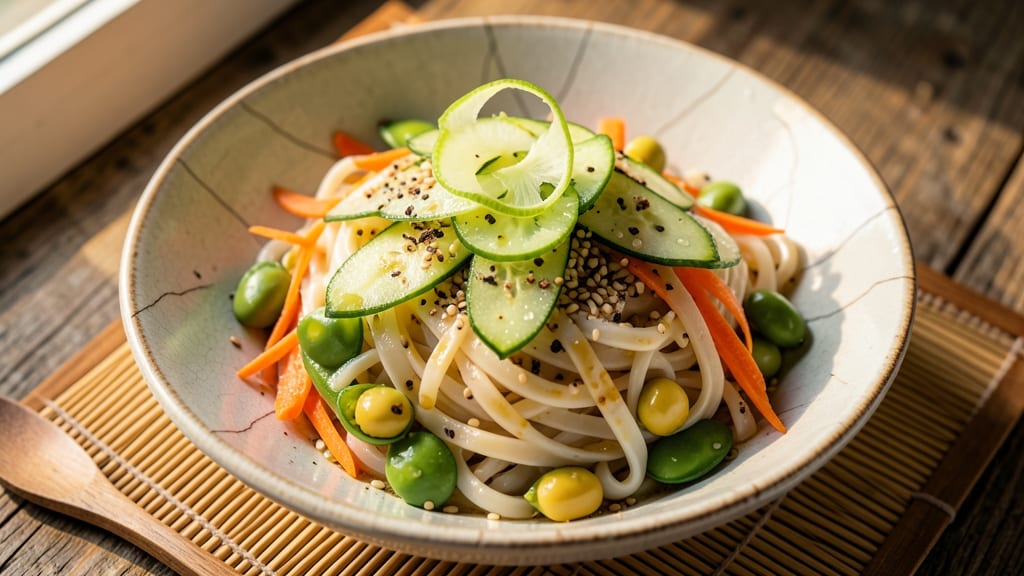
This cold udon salad recipe transforms simple noodles into a refreshing, crunchy dish packed with sesame-ginger zing—perfect for hot days or quick lunches. The secret lies in pre-cooling the udon and balancing textures: tender noodles, crisp vegetables, and a tangy dressing that keeps everything fresh.
I developed this version after craving something lighter than traditional hot noodle dishes but still packed with umami depth. What makes this salad special is the sesame-soy dressing, which infuses the udon with nutty, savory notes while keeping it light.
You’ll need just 15 minutes of prep (plus chilling time) to assemble layers of cucumber, shredded carrots, and edamame, all tossed with the dressing. Optional protein like tofu or shrimp adds substance, but the salad shines even without it.
The result is a dish that’s crisp, cool, and satisfying—ideal for meal prep or impromptu gatherings. Garnish with toasted sesame seeds and nori strips for extra texture and visual appeal. Serve with miso soup or grilled fish for a complete meal that feels both restaurant-worthy and effortless.
This recipe delivers restaurant-quality crunch without requiring fancy ingredients. The udon stays al dente when chilled, and the dressing clings perfectly to each strand. Trust me: once you try this, store-bought salad kits won’t compare.
Ingredients for cold udon salad
Fresh udon, crisp veggies, and a zesty sesame-ginger dressing—this salad is all about texture and balance.
| Ingredient | Amount | Notes |
|---|---|---|
| Udon Noodles 🍜 | 8 oz | Fresh or dried, chilled before serving |
| Sesame Oil 🫒 | 2 tbsp | Toasted for nutty aroma |
| Carrots 🥕 | 1 medium | Shredded into fine julienne |
| Cucumber 🥒 | 1 whole | Seedless, thinly sliced |
| Edamame 🌱 | ½ cup | Shelled, thawed if frozen |
| Fresh Ginger 🌿 | 1 tbsp | Finely grated, peeled |
| Soy Sauce 🍶 | 3 tbsp | Low-sodium preferred |
| Rice Vinegar 🍶 | 2 tbsp | Seasoned preferred |
| Sesame Seeds 🥜 | 2 tsp | Toasted for garnish |
| Toasted Nori Strips 🍣 | 2 pieces | Cut into thin ribbons |
| Green Onions 🧅 | 3 whole | Thinly sliced, for garnish |
| Sesame-Ginger Dressing 🫒 | ¼ cup | Homemade or store-bought |
| Sesame-Ginger Dressing Ingredient: Honey 🍯 | 1 tbsp | For balance (optional) |
| Sesame-Ginger Dressing Ingredient: Toasted Sesame Oil 🫒 | 1 tbsp | For richness |
| Sesame-Ginger Dressing Ingredient: Garlic 🧄 | 1 clove | Minced for punch |
The udon is non-negotiable here. Fresh udon from the Asian market stays chewier when chilled, but dried works too—just cook it al dente and rinse with cold water. For the dressing, Kikkoman soy sauce is my go-to, but any low-sodium brand works. The ginger needs to be fresh—no powdered substitutes. I grab mine at Trader Joe's or my local Asian grocery. Toast your sesame seeds in a dry pan for 30 seconds—they’ll smell amazing and add crunch. The nori strips? Look for sheets, not flakes—they hold shape better when sliced.
No fresh ginger? Powdered works at half the amount, but it lacks that bright kick. Short on edamame? Substitute shelled peas or snow peas—same crisp texture. The dressing can be made ahead—keep it in the fridge for up to 5 days. If you’re feeling lazy, Trader Joe’s sesame-ginger dressing is a solid shortcut. The carrots should be shredded with a peeler for that restaurant-style julienne. And if you’re adding protein, quick-pickled shrimp or marinated tofu pairs perfectly—just toss them in after assembling.
This salad keeps beautifully for 2-3 days in the fridge, but the udon gets softer over time. To prep ahead, cook and chill the noodles separately, then toss with dressing and veggies right before serving. The dressing clings best when everything’s at room temperature—let it sit 10 minutes before mixing. For extra crunch, store the sesame seeds and nori separately and sprinkle fresh. Garnish with green onions and a drizzle of extra sesame oil right before eating—trust me, it’s worth it.
Why You'll Love This Recipe
- No-Cook Magic: I swear by this trick—just boil the udon, rinse it cold, and toss. Zero frying, zero waiting for sauces to simmer. That sesame oil? One drizzle, and suddenly you’ve got restaurant-level depth with zero effort.
- Crunchy-Creamy Balance: Here’s what sold me—the carrot ribbons and cucumber slices stay crisp, while the edamame adds that buttery, protein-packed bite. The udon soaks up just enough dressing to make every forkful satisfying, not soggy.
- Lunchbox Hero: Between us, this is my go-to for work lunches or picnics. Pack the dressing separately, and it stays fresh for days. Kids? They’ll eat it. Teens? They’ll ask for it. Even my partner, who hates salads, finishes his bowl.
- Budget Meal Prep: Udon’s cheap, veggies last forever, and a little sesame oil goes a long way. I make a big batch on Sundays—half for dinner, half for leftovers that taste just as good reheated (or cold, no judgment). Minimal waste, maximum flavor.
Step-by-step instructions for cold udon salad
This refreshing udon salad comes together in minutes with crisp textures and bold flavors.
Prepare the Udon Noodles
Cook the 8 oz udon noodles according to package instructions until al dente—typically 4-5 minutes in boiling water. Drain immediately and rinse under cold water to stop the cooking process. This chilling step is crucial; it prevents the noodles from becoming mushy and gives them that satisfying bite.
Transfer the drained noodles to a large mixing bowl and toss with 2 tbsp sesame oil while still warm. The oil will coat each strand, enhancing flavor and preventing sticking. Let the noodles cool completely to room temperature before proceeding—this ensures they hold their shape when mixed with the dressing later.
Shred and Slice the Vegetables
Using a julienne peeler or a sharp knife, shred the 1 medium carrot into fine, matchstick-thin strips. For the 1 whole cucumber, slice it lengthwise and then thinly crosswise into ⅛-inch slices. Remove any seeds to keep the texture crisp. The goal is uniform, bite-sized pieces that will hold up well in the salad.
Peel and finely grate the 1 tbsp fresh ginger, then add it to the bowl with the noodles. The ginger's zesty aroma will infuse the entire dish as you mix. If using frozen 0.5 cup edamame, thaw it first and pat dry with a paper towel to remove excess moisture—this prevents a watery salad.
Assemble the Salad Base
In the same bowl with the noodles, add the shredded carrots, cucumber slices, and edamame. Drizzle in 3 tbsp soy sauce and 2 tbsp rice vinegar, then gently toss everything together with tongs or clean hands. The acidity from the vinegar will brighten the flavors, while the soy sauce adds depth. Let the mixture sit for 5 minutes to allow the vegetables to absorb some of the seasoning.
Cut the 2 pieces toasted nori strips into thin ribbons and the 3 whole green onions into 1-inch pieces. Fold these into the salad last—their delicate textures and flavors should remain vibrant. The nori adds a subtle oceanic umami note, while the green onions provide a fresh finish.
Finish with Dressing and Garnish
Pour the 0.25 cup sesame-ginger dressing over the salad and toss gently to coat evenly. The dressing should cling to the noodles and vegetables without pooling at the bottom. If it's too thick, add 1 tsp water to loosen it slightly. Taste and adjust seasoning—you may want to add a pinch more soy sauce or vinegar depending on your preference.
Sprinkle the 2 tsp sesame seeds evenly over the top for a nutty crunch and visual appeal. Serve immediately while everything is still crisp. For best results, store any leftovers in an airtight container in the refrigerator for up to 2 days, but the texture will be best when enjoyed fresh.
Pro Tips For Making Cold Udon Salad
- Boil Udon Until Al Dente: Cold udon salad needs noodles with bite—don’t overcook them past 2 minutes in boiling water. I learned this the hard way after mushy, sad noodles ruined a batch; drain immediately and rinse under cold water to stop cooking.
- Shave Carrots Thin: Skip the julienne peeler—use a mandoline set to 1-2mm for even, crisp shreds that hold up in the dressing. Thicker slices turn soggy, and nobody wants a watery salad.
- Salt the Edamame: Toss shelled edamame with ¼ tsp salt right after blanching—it keeps them from turning bitter and makes them taste like they came from a restaurant. (Yes, even if you’re impatient like me.)
- Dress Noodles Separately: Toss the dressing with the veggies first, then mix in the noodles last. This keeps the udon from absorbing too much liquid and turning limp. Works especially well if you’re prepping ahead.
Flavor customization for this cold udon salad
Spicy Kick
Add 1 tsp gochujang or ½ tsp red pepper flakes to the dressing for heat lovers. The Korean fermented chili paste (gochujang) adds depth, while red pepper flakes give a quick, bright kick.
I like to balance it with an extra ½ tbsp honey to soften the heat slightly. Taste as you go—this is where your personal heat threshold comes in! 🌶️
Citrus Brightness
Boost freshness with 1 tbsp lime or yuzu juice added to the dressing. The acidity cuts through the richness of the sesame oil and brightens the entire dish. I find that ½ tsp lime zest sprinkled on top right before serving adds an aromatic lift.
Yuzu, if available, has a more complex flavor profile that pairs beautifully with the ginger. 🍋
Creamy Twist
For a richer texture, stir in 1 tbsp tahini or 2 tbsp Greek yogurt to the dressing. The tahini adds a nutty depth, while yogurt provides a cool, creamy contrast to the warm spices.
I recommend thinning it slightly with 1 tsp water to maintain the salad's crispness. This works especially well with spicy variations. 🥛
Smoky Depth
Infuse the dressing with ½ tsp smoked paprika or a dash of liquid smoke for a subtle smoky note. This pairs wonderfully with the umami from the nori and soy sauce.
I like to toast 1 tsp sesame seeds in a dry pan until fragrant, then add them to the salad for extra smoky crunch. 🔥
Sweet-Tangy Balance
For a sweeter dressing, add 1 tbsp mirin or ½ tbsp maple syrup to the sesame-ginger base. The sweetness enhances the caramelized notes from the sesame oil and balances the tangy vinegar. I often use this variation when serving to kids or guests who prefer milder flavors. 🍯
Herbaceous Freshness
Finish with 2 tbsp chopped cilantro or 1 tbsp minced mint for a vibrant herbal note. The cilantro brightens the dish, while mint adds a refreshing coolness. I like to fold these in just before serving so they retain their crisp texture.
For an extra touch, add a few thinly sliced Thai basil leaves for a floral aroma. 🌿
Nutrition facts
Frequently asked questions
Can I use dried udon noodles instead of fresh?
Dried udon works perfectly—just cook it 1 minute less than package instructions for al dente texture. Rinse immediately with cold water to stop cooking, then proceed with the recipe. The key is keeping them cool to maintain that satisfying bite.
How do I prevent the salad from getting soggy?
Keep the udon and veggies separate until the last minute, and pat everything dry before mixing. For veggies, use a salad spinner or paper towels to remove excess moisture. The dressing should coat lightly—add it just before serving. Also, store components separately in the fridge if prepping ahead.
What's the best way to make this gluten-free?
Replace udon with rice noodles (like soba or gluten-free udon) and check your soy sauce for gluten. Use tamari instead. For the dressing, ensure sesame oil and vinegar are certified gluten-free. The recipe maintains all other flavors while adapting to dietary needs.
Can I add protein to this salad?
Yes! Try quick-pickled shrimp, marinated tofu, or grilled chicken. For shrimp, marinate in soy sauce, rice vinegar, and a touch of honey for 10 minutes before adding. Tofu should be pressed and pan-fried until crispy. Add proteins last to keep them warm and tender.
How long can I store leftovers?
Keep leftovers in an airtight container for up to 2 days, but the udon will soften over time. For best texture, store components separately: noodles in one container with dressing, veggies in another. Re-crisp veggies by tossing with a pinch of salt before serving.