
Salads
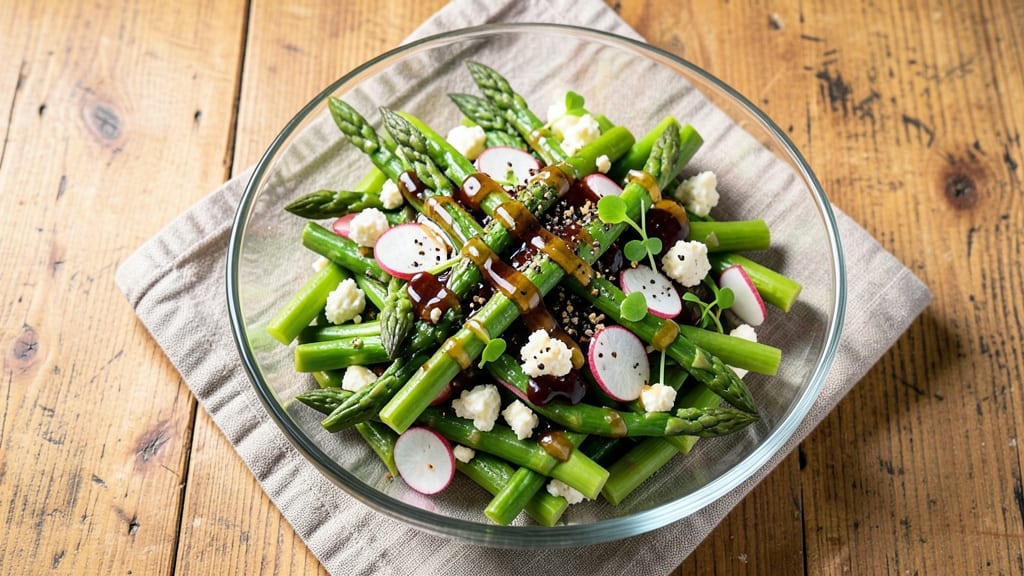
This cold asparagus salad with balsamic vinegar transforms spring's most delicate vegetable into a restaurant-worthy dish that's ready in under 30 minutes. The secret lies in perfectly crisp asparagus stems—blanched just enough to soften while maintaining their natural snap—paired with a bright, tangy dressing that balances sweet and sharp.
I developed this recipe during a particularly busy week when I needed something that felt special but required minimal effort, and it's become my go-to spring salad ever since.
The foundation of this salad is the asparagus itself, which we prepare by blanching the stems for exactly 2 minutes before shocking them in ice water. This preserves their vibrant green color and crisp texture while making them tender enough to eat.
The dressing combines balsamic vinegar with olive oil, Dijon mustard, and a touch of honey to create that perfect balance of tangy, sweet, and umami notes that complements the asparagus beautifully.
What makes this salad truly shine is the contrast of textures—crisp asparagus, creamy goat cheese, and crunchy toasted nuts all working together in harmony.
What you'll end up with is a visually stunning salad that's as satisfying to look at as it is to eat. The bright green asparagus stems create a beautiful contrast against the creamy white goat cheese and golden toasted nuts, while the glossy balsamic dressing ties everything together.
This salad is perfect for spring lunches, picnic baskets, or as a refreshing starter for summer dinners. The flavors develop beautifully when assembled ahead of time, making it an ideal make-ahead dish for entertaining.
For an extra touch of sophistication, I recommend plating the salad on a large platter and arranging the asparagus stems in a circular pattern with the goat cheese crumbles and nuts scattered throughout. A drizzle of the balsamic dressing just before serving adds that final restaurant-quality touch.
This salad proves that even the simplest ingredients can become something extraordinary with the right technique and attention to detail.
Ingredients for cold asparagus salad recipe balsamic vinegar
Spring's finest vegetable meets tangy dressing and crunchy texture in this vibrant salad.
| Ingredient | Amount | Notes |
|---|---|---|
| Fresh Asparagus 🌱 | 1 ½ lb | Medium spears, trimmed ends |
| Balsamic Vinegar 🍷 | ⅓ cup | High-quality aged variety |
| Extra-Virgin Olive Oil 🫒 | ½ cup | Light fruity flavor preferred |
| Dijon Mustard 🌶️ | 1 tbsp | Mild or strong to taste |
| Honey 🍯 | 1 ½ tbsp | Wildflower or clover preferred |
| Goat Cheese 🧀 | 4 oz | Soft, crumbled variety |
| Walnuts 🥜 | ½ cup | Toasted, roughly chopped |
| Red Wine Vinegar 🍷 | 1 tsp | For dressing brightness |
| Salt 🧂 | ½ tsp | Kosher or sea salt |
| Black Pepper 🌶️ | ¼ tsp | Freshly ground preferred |
| Ice Cubes ❄️ | 2 cups | For shocking asparagus |
| Lemon Juice 🍋 | 1 tsp | Freshly squeezed |
Asparagus is the star here, so pick fresh, firm spears with tightly closed tips. Whole Foods or local farmers markets usually have the best selection—look for bright green, not wilted. I always grab 1.5 pounds for four servings, but adjust based on how hungry your crowd is. The blanching step is crucial—don't skip it. It's what gives those stems that perfect crisp-tender texture. For extra flavor, trim the tough ends with a sharp knife instead of snapping them. The goat cheese should be creamy, not crumbly—check the expiration date since it's best used within a week of opening.
No balsamic glaze? Mix 2 tbsp balsamic vinegar with 1 tsp honey and reduce by half for a quick substitute. Want more crunch? Toasted pecans or candied walnuts work beautifully. The dressing can be made a day ahead—it actually tastes better once the flavors meld. If you're short on time, pre-cut the asparagus and store it in a sealed container with a damp paper towel to keep it crisp. The walnuts can be toasted in a dry skillet over medium heat for 3-4 minutes until fragrant—don't walk away or they'll burn. For a sweeter touch, swap half the honey for maple syrup.
This salad keeps beautifully for 3 days in the fridge, though the asparagus gets slightly softer each day. Store the dressing separately and toss just before serving. For make-ahead entertaining, assemble everything except the dressing the night before—it stays crisp and ready to go. The goat cheese will separate slightly, but that's normal and adds texture. If you're serving this for a crowd, double the dressing—people always want seconds. The nuts can be toasted fresh the morning of or stored in an airtight container for up to 2 weeks at room temperature.
Why You'll Love This Recipe
- No-Cook Magic: I swear, this salad takes zero active cooking—just snap, trim, and toss. The asparagus stays crisp, the balsamic glaze thickens overnight, and honestly? I’ve made it while scrolling through emails.
- Sweet-Savory Balance: That honey-Dijon swirl is where it gets good—tangy, rich, and just enough sweetness to cut through the earthy asparagus. The olive oil keeps it luscious, not greasy, and the balsamic? It’s like a little flavor bomb.
- Picnic to Potluck: Pack it in a jar for lunch or bring it to a BBQ—it holds up perfectly for days. My roommates still ask for seconds after three days in the fridge, and it’s just as welcome on a spring picnic as a summer cookout.
- Budget Brightener: Fresh asparagus is pricey, but this recipe uses just what you need—no wasted stems or sad leftovers. A little goes a long way, and the dressing costs pennies. My wallet and I both approve.
Step-by-step instructions for crisp asparagus salad
Here's how to create a vibrant salad with perfectly crisp asparagus and a balanced dressing.
Shock the Asparagus for Maximum Crispness
Fill a large bowl with the 2 cups ice cubes and add the 1.5 lb fresh asparagus (trimmed ends removed). Let them sit for 5 minutes—this shocking process preserves their vibrant green color and keeps them crisp rather than wilted. You'll notice the spears look perky and bright after this treatment.
Drain the asparagus and pat them dry with paper towels. This step is crucial because any remaining moisture will make your dressing slide off instead of cling beautifully. The asparagus should feel cool to the touch and look fresh, almost like they just came from the garden.
Toast the Walnuts for Added Crunch
In a dry skillet over medium heat, add the 0.5 cup walnuts and toast them for 3-4 minutes, stirring constantly. You'll smell their nutty aroma filling your kitchen—that's your cue they're ready. Watch carefully—they go from pale to golden brown in seconds.
Transfer the toasted walnuts to a plate to cool completely. This cooling step prevents them from releasing oil when you mix them with the dressing later. Once cooled, roughly chop them with a knife—you want bite-sized pieces that'll add texture to every bite of your salad.
Whisk Together the Tangy Dressing
In a small bowl, combine the 0.33 cup balsamic vinegar, 1 tbsp Dijon mustard, 1.5 tbsp honey, 1 tsp red wine vinegar, and 1 tsp lemon juice. Whisk vigorously for 30 seconds until the honey dissolves completely and the mixture becomes smooth.
Slowly drizzle in the 0.5 cup extra-virgin olive oil while continuing to whisk. The dressing should emulsify into a silky consistency—almost like a light vinaigrette. Taste and adjust seasoning with 0.5 tsp salt and 0.25 tsp black pepper if needed. This is where the magic happens—the perfect balance of sweet, tangy, and savory flavors.
Assemble the Salad with Crumbled Goat Cheese
In a large serving bowl, gently toss the shocked asparagus with half of the dressing (about 2 tablespoons). Add the toasted, chopped walnuts and crumble the 4 oz goat cheese over the top. The cheese should be distributed evenly—you want each bite to have that creamy, tangy flavor.
Gently fold everything together with a wooden spoon, being careful not to overmix so the asparagus stays crisp. Drizzle with the remaining dressing just before serving. The salad should look vibrant with bright green asparagus, golden walnuts, and creamy white goat cheese scattered throughout.
Serve Immediately for Best Texture
Divide the salad among plates and drizzle with any remaining dressing. The asparagus should still have that satisfying crunch—if it's starting to soften, serve it immediately. This salad tastes best when the asparagus is fresh and crisp, not wilted.
For an extra touch, garnish with fresh cracked black pepper and a few extra walnut pieces. The contrast of textures—crisp asparagus, crunchy walnuts, and creamy goat cheese—makes this salad truly special. Serve with crusty bread to soak up any remaining dressing.
Pro Tips For Making Cold Asparagus Salad Recipe Balsamic Vinegar
- TRIM THE WOODY ENDS: Blanch the asparagus first, then snap off the tough bottoms with your fingers—no need for a knife. The crisp-tender spears hold up better in the salad, and you’ll avoid that bitter, fibrous bite that ruins the whole dish.
- SALT THE SPEARS BEFORE DRESSING: Toss the blanched asparagus with a pinch of salt while still warm—it seasons the fibers and keeps them from tasting bland under the dressing. I used to skip this, and the salad always felt flat until I tried it.
- WHISK THE DRESSING THIN: Mix the balsamic, olive oil, Dijon, and honey in a 3:2 ratio (3 parts oil to 2 parts vinegar) to avoid a cloying, syrup-heavy texture. A thin dressing coats the asparagus evenly and lets the flavors shine—thick dressings just pool at the bottom.
- LET THE DRESSING REST: Wait at least 10 minutes after mixing before tossing it with the asparagus. The flavors meld, and the honey softens the balsamic’s sharpness—trust me, it’s the difference between a salad and a great salad. (Yes, even if you’re impatient like me.)
Troubleshooting this dish
Asparagus Too Soft?
If your asparagus stems feel limp after blanching, you likely overcooked them. The key is timing—exactly 2 minutes in boiling water, no more. I once rushed and left mine in for 3 minutes, and they turned to mush.
Start a timer immediately when you add them to the water. For extra crispness, shock them in ice water for 5 minutes after blanching. This preserves their texture better than any other method. 🌱
Dressing Too Thin?
If your dressing separates or feels too watery, you might have added the olive oil too quickly. I learned this the hard way—my first attempt ended up with a sad, broken emulsion.
Instead, whisk the vinegar, mustard, honey, and lemon juice together first, then very slowly drizzle in the olive oil while whisking continuously. For extra stability, add ½ tsp xanthan gum to the vinegar mixture before emulsifying. This trick works like magic for thick, creamy dressings. 🍯
Goat Cheese Too Crumbly?
If your goat cheese breaks apart too easily, it might be too dry. I always check the expiration date—older cheese loses moisture. For a creamier texture, crumble it directly over the salad just before serving.
If you prefer a smoother consistency, blend 2 oz goat cheese with 1 tbsp olive oil and 1 tsp lemon juice until smooth, then dollop it on top. This creates a creamy sauce that clings beautifully to the asparagus. 🧀
Walnuts Burning?
Walnuts toast quickly and can go from perfect to burnt in seconds. Keep a close eye on them—3-4 minutes over medium heat is ideal. I use a 10-inch cast-iron skillet for even heat distribution.
If they start to darken too quickly, remove them immediately and finish cooling on a plate. For extra flavor, add a pinch of sea salt while they toast—it enhances their natural nuttiness. 🥜
Dressing Too Sweet?
If your dressing tastes cloyingly sweet, you might have used too much honey. Start with 1.5 tbsp and adjust to taste. For a more balanced flavor, reduce the honey to 1 tbsp and add ½ tsp Dijon mustard for depth.
The mustard adds a subtle tang that cuts through the sweetness. I also like adding 1 tsp red wine vinegar to brighten the dressing without overpowering it. 🍷
Salad Too Dry?
If your salad lacks moisture, it’s likely because the asparagus wasn’t properly dressed. Toss the asparagus with the dressing immediately after shocking and drying—this helps the flavors cling. For extra juiciness, add 1 tbsp lemon juice to the dressing.
If the salad still feels dry, drizzle with a little more dressing just before serving. The key is to work quickly and keep everything chilled until the last minute. ❄️
Nutrition facts
Frequently asked questions
Can I use white asparagus instead of green?
White asparagus works beautifully in this salad, though it has a slightly milder flavor. Just follow the same blanching method—2 minutes in boiling water—and shock in ice water. The texture will be just as crisp, though the color contrast with the goat cheese and walnuts will be more subtle. For extra flavor, add a pinch of salt to the blanching water.
How do I store leftovers?
Store the salad in an airtight container in the fridge for up to 3 days. Keep the dressing separate and toss it with the asparagus just before serving to maintain crispness. The asparagus will soften slightly over time, so it's best enjoyed fresh. If storing overnight, add the goat cheese just before serving to prevent it from getting soggy.
Can I make this salad ahead of time?
Yes! Prepare the dressing and toast the walnuts a day ahead—they keep well in separate containers. Assemble the salad without the dressing just before serving to preserve texture. The asparagus stays crisp when stored dry in the fridge for 1 day. This makes it perfect for meal prep or entertaining!
What if I don't have goat cheese?
No problem! Feta cheese crumbles beautifully as a substitute, though it's saltier. For a dairy-free option, use ¼ cup vegan cream cheese or avocado slices for creaminess. The key is to maintain that creamy contrast with the crisp asparagus—just adjust seasoning to taste.
How can I make this salad more substantial?
Add protein with grilled chicken, chickpeas, or white beans. For extra heartiness, fold in ½ cup cooked quinoa or ½ cup diced avocado. The salad will still be light but more filling—great for a complete meal. Just add these ingredients after tossing with the dressing to avoid sogginess.