
Salads
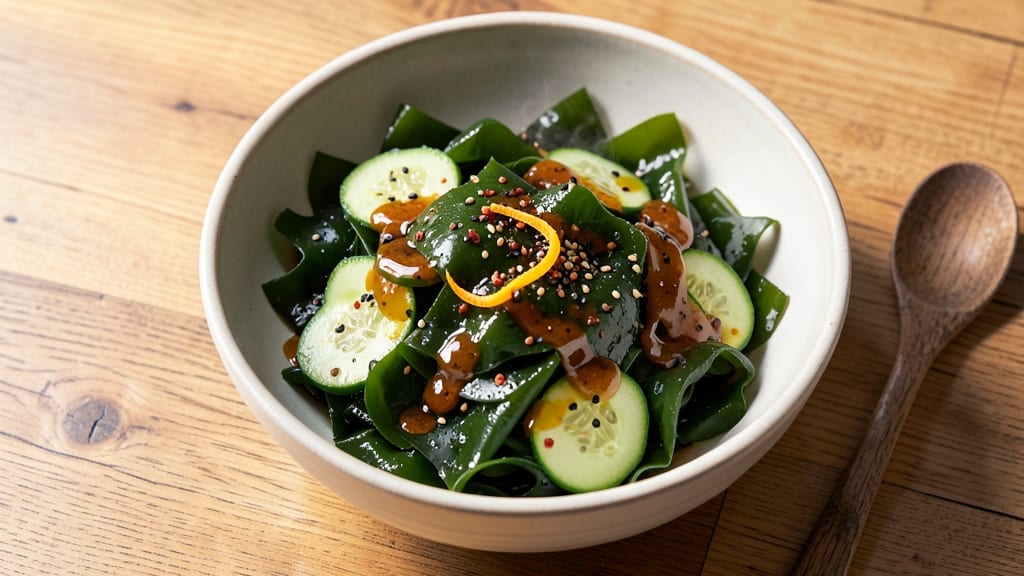
This chuka wakame salad transforms simple ingredients into a vibrant, umami-rich dish that balances crisp textures with tangy brightness. The secret lies in rehydrated wakame seaweed—chewy, mineral-packed, and brimming with oceanic flavor—that pairs perfectly with chuka sauce's signature sweet-tart profile.
What makes this salad special is how effortlessly it comes together: just 15 minutes of prep yields a dish that feels both rustic and refined, ideal for pescatarians, vegans, or anyone craving a light yet satisfying meal.
The foundation of this salad is the wakame, which soaks up the chuka sauce's tangy-sweet essence while adding a satisfying crunch. I like to include thinly sliced cucumber for freshness, toasted sesame seeds for nutty depth, and optional protein like tofu or shrimp for heartiness.
The key technique? Rehydrating the wakame properly—just a few minutes in warm water unlocks its full texture and flavor potential. This isn't just a side dish; it's a complete meal in a bowl, packed with umami and crunch that keeps every bite exciting.
What you'll end up with is a salad that's visually stunning—deep greens and purples from the wakame, bright white cucumber slices, and golden sesame seeds scattered on top—and bursting with layered flavors.
The chuka sauce ties everything together, its balance of sweetness and acidity cutting through the seaweed's brininess while enhancing its natural umami. This dish works as a standalone lunch, a side for grilled fish, or even a topping for sushi bowls.
It's the kind of recipe that proves healthy eating can be both nutritious and deeply satisfying.
For those new to wakame, start with the basic ratio of 1 cup rehydrated seaweed to 2 tablespoons chuka sauce, then adjust to taste.
The beauty of this salad is its flexibility—swap in avocado for creaminess, add shredded carrots for extra crunch, or drizzle with sesame oil for another layer of flavor. Serve it immediately for the crispiest texture, or let it sit for 10 minutes to allow the flavors to meld even more.
Here's how to make it perfectly every time.
Ingredients for chuka wakame salad
The wakame and chuka sauce are your flavor anchors—everything else builds on their umami magic.
| Ingredient | Amount | Notes |
|---|---|---|
| Dried Wakame Seaweed 🌊 | ½ oz | Dried, for rehydration |
| Chuka Sauce 🍶 | ½ cup | Store-bought or homemade |
| English Cucumber 🥒 | 1 whole | Thinly sliced, seeds removed |
| Sesame Seeds 🌰 | 2 tbsp | Toasted for nutty flavor |
| Sesame Oil 🫒 | 1 tbsp | For drizzling |
| Rice Vinegar 🍶 | 1 tbsp | For extra tanginess |
| Toasted Sesame Oil 🫒 | 1 tbsp | For finishing |
| Extra-Firm Tofu 🍱 | ½ lb | Optional protein, cubed |
| Shrimp 🦐 | ½ lb | Optional protein, cooked |
| Red Bell Pepper 🌶️ | ¼ cup | Thinly sliced, optional |
| Avocado 🥑 | ½ whole | Sliced, optional for creaminess |
| Salt 🧂 | ½ tsp | Sea salt for seasoning |
| Black Pepper 🌶️ | ¼ tsp | Freshly ground |
| Lime Wedges 🍋 | 2 whole | For serving |
Wakame is the star here, and Japanese specialty stores or the Asian aisle at Whole Foods carry the best dried varieties. Look for deep green, vibrant strands with no sliminess—those are your telltale signs of freshness. The wakame needs just 5 minutes in warm water to rehydrate properly, so don't over-soak it. For chuka sauce, Kikkoman or S&B Golden are reliable brands, but any quality soy-based sauce will work. If you're using tofu, extra-firm holds up best to slicing and marinating, while shrimp should be cooked just until opaque—overcooking makes it rubbery.
No chuka sauce? Substitute with a mix of soy sauce, rice vinegar, and a touch of sugar—about 2 tbsp soy sauce, 1 tbsp vinegar, and 1 tsp sugar per 0.5 cup. Swap sesame seeds for toasted pumpkin seeds if you're avoiding sesame. The cucumber can be replaced with shredded carrots or jicama for a different crunch. For extra protein, grilled chicken or edamame work beautifully. The avocado adds creaminess but can be omitted if you prefer a lighter texture. If you're feeling adventurous, toss in thinly sliced scallions for a fresh kick.
Wakame keeps well in the fridge for up to 3 days once rehydrated, but it's best used fresh. Store it in its soaking water to maintain texture. Sesame seeds and toasted sesame oil last 6 months in a cool, dark place. Prep the cucumber and any optional veggies just before serving to keep them crisp. This salad tastes even better the next day as the flavors meld—perfect for meal prep. Portion into containers with a little chuka sauce on the bottom to keep everything fresh for 2 days in the fridge.
Why You'll Love This Recipe
- Five-Minute Soak: I swear by this trick—just toss the dried wakame into warm water for five minutes while I slice the cucumber. No fancy rehydrating, no waiting around. The seaweed softens perfectly, and honestly? That’s half the battle won before I even mix anything.
- Umami Bomb: The chuka sauce does all the heavy lifting here—tangy, slightly sweet, with that deep garlic kick. Add the wakame? Instant ocean-meets-garlic magic. I’ll be real: I’ve eaten this salad straight from the bowl with chopsticks, and it’s still crave-worthy.
- Lunchbox Legend: This keeps stunning for days in the fridge, no sad wilted greens in sight. Pack it in a jar, and the layers stay crisp—cucumber on top, wakame settled at the bottom. My kids actually finish their lunches now. (Small victories.)
- Pocketbook Performer: Sesame seeds and oil are the only splurges, but they make this taste like a fancy bento. The rest? Cucumber, wakame, and chuka sauce—all budget-friendly staples. I’ve made this for $3 per serving, and it still feels like a restaurant dish.
Step-by-step instructions for chuka wakame salad
Assemble this vibrant salad with layers of umami, crunch, and brightness—each step builds flavor and texture.
Rehydrate the Dried Wakame Seaweed
Place the 0.5 oz dried wakame seaweed in a small heatproof bowl and cover it with 2 cups hot water (just off boil). Let it soak for 5-7 minutes until it expands and becomes tender. Drain thoroughly using a fine-mesh strainer, pressing gently to remove excess water—this keeps your salad from becoming soggy.
Here's the thing—wakame absorbs water aggressively. If you skip draining completely, your salad will turn mushy. I like to rinse it briefly under cold water afterward to remove any grit. The rehydrated wakame should be bright green and pliable, not brittle or waterlogged.
Prepare the Protein Components
For the 0.5 lb extra-firm tofu, press it between two paper towels for 15 minutes to remove excess moisture. Cut into ½-inch cubes and set aside. For the 0.5 lb shrimp, peel and devein them, leaving the tails on for presentation. Pat them completely dry with paper towels—this ensures they crisp up perfectly when cooked.
Heat 1 tablespoon sesame oil in a nonstick skillet over medium-high heat. Add the shrimp first and cook for 2-3 minutes per side until they turn pink and opaque. Remove and set aside. In the same pan, add the cubed tofu and cook for 4-5 minutes until golden brown on all sides. Season both proteins with 0.25 teaspoon black pepper and 0.25 teaspoon salt while hot.
Assemble the Vegetable Base
Using a mandoline or sharp knife, slice the 1 whole English cucumber into ⅛-inch thick rounds. Remove the seeds to prevent a watery salad. Thinly slice the 0.25 cup red bell pepper into matchsticks—this adds color and a satisfying crunch. Halve the 0.5 whole avocado and slice it into ¼-inch thick pieces, saving some for garnish.
In a large mixing bowl, combine the cucumber slices, red bell pepper, and avocado. Gently toss with 0.5 cup chuka sauce and 1 tablespoon rice vinegar. The sauce should coat the vegetables evenly, but don't overmix—you want to preserve the individual textures. Taste and adjust seasoning with additional salt if needed.
Combine All Components
Add the rehydrated wakame seaweed, cooked shrimp, and tofu to the vegetable mixture. Gently fold everything together with a silicone spatula, being careful not to break the shrimp or avocado. Sprinkle 2 tablespoons toasted sesame seeds over the top for added crunch and nutty depth.
This is where the magic happens—the wakame's oceanic flavor marries with the chuka sauce's savory notes, while the sesame seeds add a toasty finish. The cucumber and avocado provide freshness, balancing the umami richness. Let the salad sit for 5 minutes before serving to allow the flavors to meld.
Finish and Serve
Drizzle the salad with 1 tablespoon toasted sesame oil and toss lightly just before serving. The oil should glisten on the surface, enhancing the visual appeal and adding another layer of flavor. Serve immediately with the 2 whole lime wedges on the side for a bright citrus finish.
For the best presentation, divide the salad among four plates and garnish with additional sesame seeds and avocado slices. The contrast of crisp vegetables, tender seaweed, and protein creates a satisfying bite every time. Enjoy while everything is fresh—this salad doesn't keep well once assembled.
Pro Tips For Making Chuka Wakame Salad
- SOAK WAKAME COLD: Dried wakame expands fast—toss it in ice water for 5 minutes instead of warm, or it’ll turn to mush. I learned this the hard way after slurping a bowl of overhydrated seaweed sludge.
- SLICE CUCUMBER THIN: Use a mandoline or sharp knife for paper-thin slices—thick ones get soggy under chuka sauce. Trust me, the crunch matters more than you think.
- TEMPER SESAME OIL: Add it last, just before serving, or the heat from the salad will make it taste bitter. A few drops over warm dressing is better than drowning the whole thing in it.
- DRESS JUST BEFORE EATING: Chuka sauce clings to everything, so toss everything together right before serving. If you mix it too early, the cucumber wilts and the wakame loses its snap.
Essential equipment for this dish
Wakame Rehydration Tools
Start with a small heatproof bowl—I use a 3-cup glass Pyrex bowl—to hold the dried wakame while it soaks. The bowl should be wide enough to accommodate the seaweed's expansion.
A fine-mesh strainer (like the OXO Good Grips brand) is essential for draining excess water without breaking the wakame strands. For extra convenience, I keep a small colander nearby to rinse the wakame under cold water afterward. 🌊
Protein Prep Essentials
For the tofu and shrimp, a nonstick skillet (I recommend Made In or GreenPan) prevents sticking and ensures even cooking. A sharp chef's knife and cutting board are must-haves for prepping the tofu into uniform cubes.
For the shrimp, a small fish spatula helps flip them without tearing. Don't forget paper towels—they're crucial for patting shrimp dry before cooking. 🦐
Vegetable Prep Tools
A mandoline slicer (like the OXO Good Grips model) makes quick work of slicing the cucumber into even rounds, but a sharp Japanese knife works just as well if you prefer hand-cutting.
For the red bell pepper, a vegetable peeler helps create thin matchsticks. A large mixing bowl (at least 8-inch diameter) ensures enough space to toss all ingredients without spillage. 🥒
Sauce and Garnish Tools
Use a small measuring cup (like Pyrex 4-ounce) for precise chuka sauce and rice vinegar measurements. A whisk helps blend the sauce evenly if you're making a homemade version. For the sesame seeds, a toasted sesame oil spray bottle (like Kikkoman) lets you drizzle evenly without overdoing it.
A small spoon works best for sprinkling sesame seeds on top. 🌰
Serving Presentation
For plating, I use wide, shallow bowls (like Corelle stoneware) to showcase the salad's vibrant layers. A lime juicer (or just a fork) helps express fresh lime wedges for serving.
For extra flair, a small tweezers set makes it easy to garnish with additional sesame seeds or avocado slices without crushing them. 🍋
Nutrition facts
Frequently asked questions
Can I make this wakame salad without chuka sauce?
Yes! If you don't have chuka sauce, mix 2 tablespoons soy sauce, 1 tablespoon rice vinegar, and 1 teaspoon sugar per 0.5 cup to mimic its tangy-sweet profile. For extra depth, add a splash of sesame oil—it enhances the umami. The salad will still taste delicious, though the original sauce's complexity is hard to replicate.
How do I store leftover wakame salad?
Store the salad in an airtight container with a paper towel pressed on top to absorb excess moisture. Keep it refrigerated for up to 2 days, but eat it within 12 hours for the best texture. The wakame and avocado soften over time, so it's best enjoyed fresh. For longer storage, keep the dried wakame and sauce separate until ready to assemble.
What's the best way to rehydrate wakame?
Use 2 cups hot water (just off boil) for 0.5 oz dried wakame and soak for 5-7 minutes—no longer, or it turns mushy. Drain thoroughly and rinse briefly under cold water to remove grit. The wakame should be bright green and tender, not brittle. Pro tip: Soak it in a heatproof bowl to prevent cracking.
Can I make this salad vegan?
Skip the shrimp and use extra-firm tofu or marinated tempeh for protein. Check your chuka sauce label—most store-bought versions are vegan, but some contain fish-based additives. For extra richness, add avocado slices or toasted cashews. The wakame and sesame seeds keep it fully plant-based and packed with umami.
Why does my wakame salad taste too salty?
Chuka sauce is already salty, so start with 3 tablespoons instead of 0.5 cup and taste as you go. If using shrimp, reduce the salt in the cooking water. For balance, add lime wedges or extra rice vinegar—both cut through saltiness. The wakame itself is naturally mineral-rich, so less sauce often works better.