
Salads
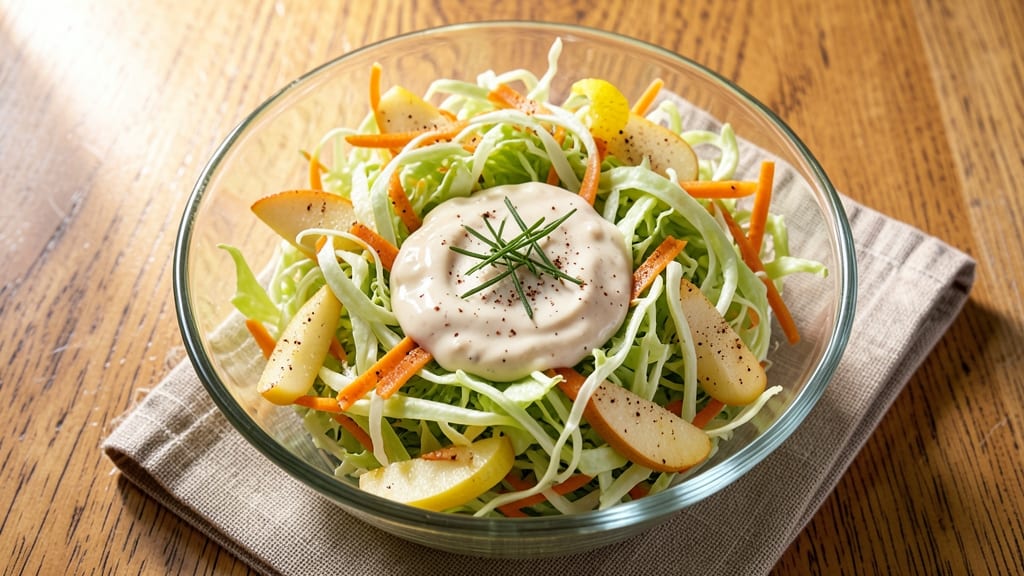
This Chinois salad recipe delivers the perfect balance of crisp vegetables, creamy herb dressing, and that signature French crunch. The secret lies in thinly sliced cabbage, carrots, and apples tossed with a rich mayonnaise-herb dressing that binds everything together into a satisfying bite.
I developed this version after years of perfecting the technique—it’s lighter than traditional versions but still packed with texture and flavor.
The foundation of a great Chinois salad is in the preparation: julienned carrots, finely shredded cabbage, and crisp apples create the perfect crunch. A creamy herb dressing made with Dijon mustard, fresh tarragon, and chives elevates the dish from simple to restaurant-quality.
This recipe stays true to classic French techniques while offering flexibility for modern twists like adding toasted nuts or grilled chicken.
What makes this salad truly special is how effortlessly it comes together—just 15 minutes of prep and 10 minutes to chill before serving. The dressing clings to every vegetable, creating a harmonious blend of textures and flavors.
Whether you serve it as a light lunch, side dish, or appetizer, it’s guaranteed to impress.
For added protein, consider grilling chicken breast or boiling eggs to include. Vegetarians can use tofu or chickpeas for a plant-based option. The beauty of this salad lies in its adaptability—each bite delivers that classic French crunch with a modern, satisfying twist.
Ingredients for chinois salad
These crisp vegetables and rich herb dressing create the perfect French-inspired salad with satisfying crunch.
| Ingredient | Amount | Notes |
|---|---|---|
| Green Cabbage 🥬 | 4 cups | Shredded, outer leaves removed |
| Carrots 🥕 | 2 medium | Julienned, peeled |
| Apples 🍎 | 1 medium | Granny Smith, julienned |
| Mayonnaise 🥫 | ¾ cup | High-quality, unsweetened |
| Dijon Mustard 🌶️ | 1 tbsp | Mild, for tangy balance |
| Fresh Tarragon 🌿 | 2 tbsp | Chopped, stems removed |
| Fresh Chives 🌱 | 2 tbsp | Finely chopped, mild flavor |
| White Wine Vinegar 🍷 | 1 tbsp | Dry, for brightness |
| Granulated Sugar 🍚 | ½ tsp | Balances acidity |
| Salt 🧂 | ½ tsp | Diamond Crystal kosher |
| Black Pepper 🌶️ | ¼ tsp | Freshly ground |
| Walnuts 🥜 | ½ cup | Toasted, roughly chopped |
| Extra-Virgin Olive Oil 🫒 | 1 tbsp | For drizzling |
The cabbage and carrots are the heart of this salad, so choose firm, vibrant heads—avoid any with yellowing or wilted leaves. Whole Foods or local markets carry the freshest options, but standard grocery store cabbage works fine if it's crisp. For the apples, Granny Smith provides the ideal tartness, but Honeycrisp or Fuji will work too. Julienne the carrots and apples uniformly for even texture—a mandoline slicer makes this task effortless. The walnuts should be toasted just until fragrant—3-4 minutes in a dry pan—to enhance their natural flavor without burning. Fresh herbs like tarragon and chives elevate the dish, so prioritize these over dried alternatives.
No Dijon mustard? Yellow mustard thinned with water works in a pinch, though the flavor will differ slightly. Running out of white wine vinegar? Apple cider vinegar provides a similar brightness, while lemon juice adds a citrusy twist. For a lighter dressing, reduce the mayonnaise to half a cup and add an extra tablespoon of olive oil. Vegetarians can easily adapt this by omitting the optional protein additions mentioned in the introduction—tofu or chickpeas work beautifully when lightly seasoned and tossed in. The sugar in the dressing might seem counterintuitive, but it's essential for balancing the vinegar's acidity—skip it only if you prefer a sharper flavor profile.
Store the dressing separately in an airtight container for up to 5 days in the fridge, though it's best used within 3 days for optimal freshness. The vegetables hold their crunch for 2-3 days when refrigerated in a sealed container, but the salad truly shines when served immediately after tossing. For make-ahead convenience, pre-shred the cabbage and julienne the carrots and apples up to 2 days ahead, storing them separately in the fridge. The walnuts can be toasted and stored in a sealed container for up to 2 weeks at room temperature, though they'll lose some crispness over time.
Why You'll Love This Recipe
- No-Sharp-Knife Night: I swear by this one—just thinly slice the cabbage and carrots with a big knife (no mandoline drama). The apples? Halved and tossed whole. My hands stay clean, and the prep flies by while I chat with whoever’s in the kitchen.
- Sweet-Savory Magic: That creamy mayo-Dijon mix cuts through the crunch like a dream. The sharpness of the mustard wakes up the sweet apples, while the cabbage holds its edge. Honestly, it’s the kind of salad that makes you forget it’s “just” veggies.
- Lunchbox Legend: Between us, this is my go-to for work lunches or kids’ school snacks. Pack it in a jar, and it stays crisp for days. (Yes, even on a Tuesday night when I’m too tired to think.) The apples keep it from getting soggy, and the mayo keeps it interesting.
- Pantry Staple Power: I make this with whatever’s in the fridge—no fancy shopping needed. Cabbage lasts forever, carrots are cheap, and apples? You can use whatever’s on sale. It’s the kind of recipe that turns $5 worth of ingredients into something that feels like a special occasion.
Step-by-step instructions for Chinois salad
This classic French salad delivers perfect texture contrast through precise preparation and technique.
Prepare the Vegetable Components
Begin by thoroughly washing and drying the 4 cups of green cabbage. Remove any outer leaves and quarter the cabbage before shredding it into fine, even strips using a mandoline or sharp knife. The strips should be approximately 1/8-inch wide for optimal texture. Transfer to a large mixing bowl as you work.
Next, peel and julienne the 2 medium carrots into matchstick-thin strips. For the 1 medium Granny Smith apple, cut it in half and remove the core before julienning it alongside the carrots. This technique ensures all vegetables are cut uniformly, which is critical for even distribution in the final salad. Work quickly to prevent the apple from browning.
Toast the Walnuts
Spread the 0.5 cup walnuts on a dry baking sheet and toast them in a 350°F oven for 8-10 minutes, stirring once halfway through. Watch closely—they should develop a rich golden color and become fragrant. Remove from the oven and let cool for 2 minutes before roughly chopping them with a knife. The toasted walnuts will add essential crunch and nutty depth to the salad.
Real talk: Don't skip toasting. Raw walnuts lack the complexity needed to balance the creamy dressing and fresh vegetables. The heat enhances their flavor and prevents them from becoming soggy when combined with the mayonnaise.
Make the Creamy Herb Dressing
In a medium bowl, combine the 0.75 cup mayonnaise, 1 tablespoon Dijon mustard, 2 tablespoons chopped fresh tarragon, 2 tablespoons finely chopped fresh chives, 1 tablespoon white wine vinegar, 0.5 teaspoon granulated sugar, 0.5 teaspoon salt, and 0.25 teaspoon freshly ground black pepper. Whisk vigorously for 1-2 minutes until the dressing is completely smooth and emulsified.
The sugar balances the acidity from the vinegar while the Dijon mustard adds subtle tang. This dressing should be thick enough to coat the vegetables but still pourable. If it's too thick after mixing, add 1-2 teaspoons of cold water to reach your desired consistency.
Combine and Chill
Add the shredded cabbage, julienned carrots, and apples to the bowl with the dressing. Gently fold everything together with a wooden spoon, being careful not to crush the vegetables. Add the toasted walnuts and mix just until evenly distributed. The salad should look vibrant with layers of green, orange, and white.
Transfer the salad to an airtight container and refrigerate for at least 2 hours, preferably overnight. This chilling time allows the flavors to meld perfectly and the vegetables to soften slightly while maintaining their crisp texture. The longer it chills, the better the flavor balance becomes.
Serve with Final Touches
Before serving, give the salad one final gentle toss. Drizzle with the 1 tablespoon extra-virgin olive oil and toss again just until the oil is evenly distributed. This final step adds a luxurious finish and helps bind all the components together.
Serve immediately while the salad is still chilled. The perfect Chinois salad should have crisp cabbage, tender carrots and apples, crunchy walnuts, and a creamy herb dressing that coats every bite without overwhelming the fresh vegetable flavors. The contrast between textures and temperatures makes each bite satisfying.
Pro Tips For Making Chinois Salad
- SHRED SMALLER THAN YOU THINK: That giant shredded cabbage look? It’s a crunchy mess. Aim for matchstick-thin strips—about 1/8-inch wide—so every bite has texture without chewing forever. I used to eyeball it and ended up with a salad that tasted like a mouthful of hay.
- SOAK CARROTS 10 MINUTES: Raw carrots bleed bitter juice that turns your dressing murky. Toss shredded carrots in ice water for 10 minutes before draining, then pat very dry. This keeps them crisp and stops the salad from turning into a sad, watery puddle.
- USE COLD APPLES ONLY: Warm apples? They turn mushy and release too much juice, drowning the salad. Grab them straight from the fridge—even slightly frozen works—and slice them thin. Cold apples stay crisp and add the perfect bite.
- DRESSING RATIO 3:1: Too much mayo? Your salad gets greasy. Too little? It’s bland. Stick to 3 parts mayo to 1 part Dijon (about 1/2 cup mayo + 1 tbsp mustard for a standard head of cabbage). Taste before tossing—adjust with lemon juice if needed.
Common mistakes when making perfect results
Over-Shredding Vegetables
One of the biggest mistakes is shredding the cabbage or julienning the carrots and apples too thin. When vegetables become too fine, they lose their structural integrity and turn mushy after mixing with the dressing.
Aim for 1/8-inch wide strips—thicker than traditional coleslaw but not chunky. I’ve found that using a mandoline slicer with a julienne attachment gives the most consistent results. 🥬
Skipping the Chill Time
Rushing the salad by serving it immediately after tossing means you’ll miss the magic of flavor development. The vegetables need at least 2 hours in the fridge to soften slightly while keeping their crunch.
This step also lets the dressing fully coat the ingredients, creating that signature French texture. I’ve learned the hard way—skipping this step results in a salad that’s just a sad, soggy mess.
Using Low-Quality Ingredients
Cheap cabbage with yellowing leaves or wilted carrots will compromise the salad’s freshness and texture. Invest in firm, crisp vegetables from a trusted source like Whole Foods or your local farmers' market. For the dressing, high-quality mayonnaise makes a noticeable difference—brands like Hellmann’s or Duke’s deliver a smoother, richer result.
Don’t skimp on the fresh herbs either; dried tarragon or chives won’t provide the same vibrant flavor.
Over-Tossing the Salad
Aggressive mixing crushes the delicate vegetables, turning crisp cabbage into limp strands. Instead, use a wooden spoon to gently fold the ingredients together, just until everything is evenly coated.
The goal is to preserve the texture contrast—crisp cabbage, tender carrots, and crunchy walnuts. I’ve seen many salads ruined by over-tossing, so resist the urge to mix vigorously. 🥗
Ignoring the Walnut Toasting
Raw walnuts lack the depth of flavor needed to balance the creamy dressing and fresh vegetables. Toasting them for 8-10 minutes at 350°F enhances their natural nuttiness and prevents them from becoming soggy.
I’ve tried skipping this step, and the result is a salad that feels flat and uninspired. Toast the walnuts just until fragrant—they should be golden, not burnt.
Wrong Dressing Consistency
The dressing should be thick enough to coat the vegetables but still pourable. If it’s too thick, add 1-2 teaspoons of cold water to loosen it up. If it’s too thin, whisk in an extra ½ tablespoon of mayonnaise.
The ideal consistency ensures every bite has that creamy, herbaceous coating without being overwhelming. I’ve had salads where the dressing separated or was too runny—always taste and adjust before combining with the vegetables. ✨
Nutrition facts
Frequently asked questions
Can I make this salad without walnuts?
Walnuts add crunch, but you can substitute with toasted pecans, almonds, or even crispy fried shallots for a different texture. For a nut-free option, try adding crunchy croutons or toasted breadcrumbs. Just ensure you're adding something to balance the creamy dressing.
How can I make this salad vegetarian or vegan?
For a vegetarian version, simply omit the optional protein additions. For vegan, replace the mayonnaise with vegan mayo (like Just Mayo) and use vegan butter in place of any butter in the dressing. Add tofu cubes, chickpeas, or avocado slices for protein. The salad remains delicious without animal products!
Why does my Chinois salad get watery after mixing?
This usually happens when the vegetables release too much moisture or the dressing is too thin. Try draining any excess liquid from the cabbage before adding it to the salad. For the dressing, ensure it's thick enough to coat the vegetables—if it's too runny, whisk in an extra ½ tablespoon of mayonnaise or 1 teaspoon of cornstarch mixed with water.
Can I prepare this salad ahead of time?
Yes, but with a few adjustments. Prep all the vegetables and store them separately in the fridge for up to 2 days. Make the dressing separately and keep it refrigerated. When ready to serve, combine everything and let it chill for at least 1 hour before eating. The flavors will still meld beautifully, though the texture might be slightly softer than if made fresh.
What's the best way to store leftovers?
Store leftovers in an airtight container in the fridge for up to 3 days. The salad will keep its crunch best if consumed within 2 days. When reheating (if needed), gently toss with a little extra olive oil and warm for 30 seconds in the microwave—just enough to revive the flavors without making the vegetables soggy.