
Salads
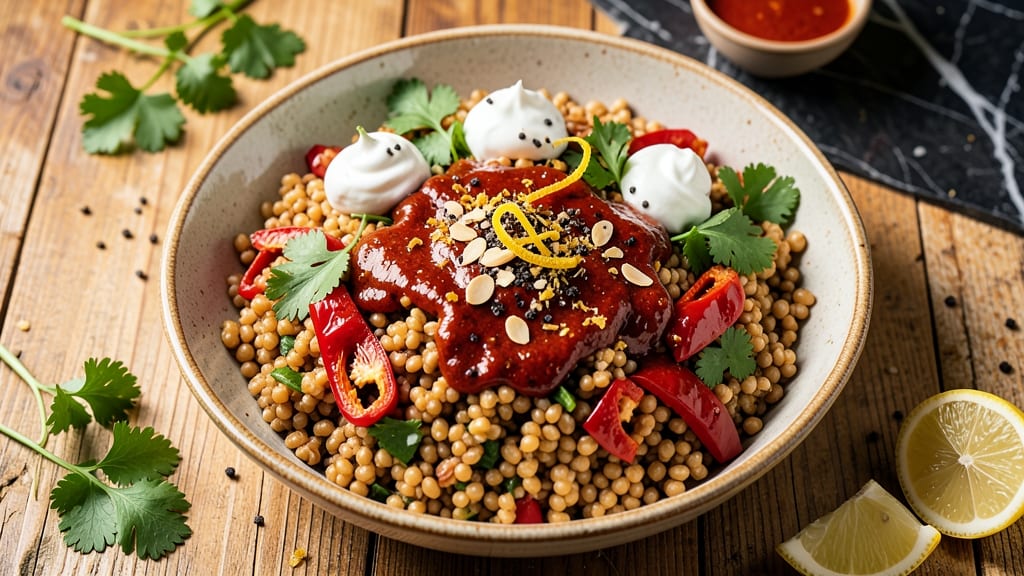
This Central Market Moroccan barley salad brings vibrant flavors and textures to your table with every bite. The slow-cooked barley forms the heart of this dish, infused with warm spices like cumin and coriander, while bright harissa and citrus create a tangy, aromatic dressing.
I developed this recipe after discovering how perfectly toasted barley absorbs flavors—transforming simple ingredients into something deeply satisfying.
The key to this salad lies in its balance: chewy barley holds up to the bold harissa dressing, while crisp vegetables and fresh herbs add freshness. You'll start by toasting the barley until nutty and fragrant, then sautéing vegetables until tender-crisp.
The harissa-lemon dressing ties everything together with its signature spicy-sweet depth, making this salad both hearty and refreshing.
By the time you serve this dish, you'll have a visually stunning salad with layers of color and texture—golden barley, vibrant vegetables, and creamy yogurt or feta if you choose. It's the perfect balance of traditional Moroccan flavors and modern ease, making it ideal for weeknight dinners or elegant gatherings.
The slow-cooked barley ensures it stays tender and flavorful, while the harissa dressing adds a restaurant-quality touch.
Serve this salad as a main dish with grilled proteins or as a side to complement roasted meats. The versatile flavors work beautifully in warm or cool weather, and it keeps well in the fridge for up to three days.
Here's how to make it—simple steps for a dish that feels special.
Ingredients for central market moroccan barley salad
Golden barley meets bold harissa and citrus for a salad that tastes like a Moroccan market.
| Ingredient | Amount | Notes |
|---|---|---|
| Pearl Barley 🌾 | 1 cup | Rinsed thoroughly before cooking |
| Vegetable Broth 💧 | 3 cups | Low-sodium preferred for flavor control |
| Harissa Paste 🌶️ | 2 tbsp | High-quality, spicy variety |
| Fresh Lemon Juice 🍋 | ¼ cup | Freshly squeezed, seeds strained |
| Extra-Virgin Olive Oil 🫒 | ½ cup | Lightly fruity, not bitter |
| Plain Greek Yogurt 🧀 | ½ cup | Full-fat for creaminess |
| Red Bell Pepper 🍆 | 1 whole | Diced, seeds removed |
| Yellow Bell Pepper 🍆 | 1 whole | Diced, seeds removed |
| Cucumber 🥒 | 1 whole | Diced, peeled if preferred |
| Fresh Parsley 🌿 | ¼ cup | Chopped, stems removed |
| Fresh Mint 🌿 | 0.15 cup | Chopped, stems removed |
| Ground Cumin 🌿 | 1 tsp | Freshly toasted for depth |
| Ground Coriander 🌿 | ½ tsp | Freshly ground preferred |
| Sea Salt 🧂 | 1 ½ tsp | Diamond Crystal preferred |
| Black Pepper 🌶️ | ½ tsp | Freshly cracked |
The barley is the star here—pearl barley holds its shape beautifully after slow cooking. Central Market usually carries it in their bulk section, but any grocery store with a world foods aisle will have it. Look for pearl, not quick-cooking barley—it's the chewy texture that makes this salad special. Toast it lightly in olive oil before adding broth to build those nutty flavors. If you can't find pearl barley, farro works in a pinch, but it cooks faster and has a different texture.
Harissa can be tricky to find outside specialty stores, but Trader Joe's and Whole Foods usually stock it. If you can't locate it, mix 1 tbsp smoked paprika with 1 tsp cayenne for a quick substitute. The Greek yogurt adds creaminess—full-fat is worth it here for that rich mouthfeel. Fresh herbs are non-negotiable; dried just won't cut it. For the peppers, roasted and peeled adds extra depth, but raw works fine if you're short on time. The bell peppers should be firm and vibrant—avoid any with soft spots.
This salad keeps beautifully—3-4 days in the fridge, actually tastes better as flavors meld. Store dressing separately if possible to keep the barley from getting soggy. For meal prep, I double the recipe and portion into containers with dressing on the side. The harissa dressing can be made 3 days ahead—just stir before using. If you're serving it as a main, add grilled halloumi or chickpeas for extra protein. The flavors only get better the next day, so don't hesitate to make extra.
Why You'll Love This Recipe
- No-Fuss Cooking: I swear by this recipe because it’s actually hands-off. Toss the barley with broth and harissa, then let it simmer while you chop veggies or stir-fry chicken—no babysitting required. The harissa does all the flavor work for you, and by the time you’re done with the rest of dinner, the barley’s perfectly tender.
- Harissa Magic: That little jar of harissa transforms everything. The heat lingers just enough to wake up your taste buds, but the lemon juice and olive oil smooth it out into something ridiculously balanced. Honestly, I’ve made this salad with just the basic ingredients, and it still tastes like a restaurant dish.
- Weeknight to Party: This salad is my secret weapon for lazy nights and when I’m hosting. Toss it with roasted veggies for a casual lunch, or pile it high on a platter with grilled meat for a dinner party. The barley holds up for days, so it’s always there when you need it—no last-minute stress.
- Budget-Friendly Staple: Pearl barley is dirt cheap, and a single bag lasts me forever. Between us, I’ve stretched this salad into three meals with zero waste: first as a side, then in wraps, and finally as a filling for stuffed peppers. Plus, the harissa adds depth without breaking the bank—just a spoonful makes the whole thing sing.
Step-by-step instructions for Central Market Moroccan barley salad
Here's how to transform simple ingredients into a vibrant, spice-infused salad that captures North African flair.
Cook the Pearl Barley to Al Dente Perfection
Rinse the 1 cup of pearl barley thoroughly under cold water until the water runs clear. This removes excess starch that can make the barley gummy. In a medium saucepan, combine the rinsed barley with the 3 cups of vegetable broth and bring to a boil over high heat.
Once boiling, reduce heat to medium-low and cover with a tight-fitting lid. Simmer for exactly 25 minutes, stirring gently once halfway through. You'll know it's done when the barley is tender but still has a slight bite—it should hold its shape when pressed between fingers but be fully cooked through. Drain any remaining liquid and let the barley cool completely before proceeding.
Toast the Spices and Create the Harissa Dressing
In a small dry skillet over medium heat, toast the 1 teaspoon of ground cumin and 0.5 teaspoon of ground coriander for 1 minute until fragrant. This step deepens their flavor significantly—you'll smell the warm, earthy aroma. Immediately transfer to a small bowl and let cool.
In a separate bowl, whisk together the 2 tablespoons of harissa paste, 0.25 cup of fresh lemon juice, 0.5 cup of extra-virgin olive oil, and the toasted spices. The harissa should create a vibrant red dressing with a smooth, slightly spicy consistency. Taste and adjust seasoning with additional sea salt if needed, but be careful—the harissa is already quite flavorful.
Prepare the Fresh Vegetable Medley
Dice the 1 whole red bell pepper and 1 whole yellow bell pepper into small, even pieces—about ¼-inch cubes. Remove seeds and membranes for cleaner flavor. Similarly, cut the 1 whole cucumber into ¼-inch dice, peeling if you prefer a less watery texture. Transfer all vegetables to a large mixing bowl.
Add the cooled pearl barley to the vegetable mixture. The vegetables should be evenly distributed throughout the barley, creating a colorful base for the salad. Sprinkle with the 0.25 cup of chopped fresh parsley and 0.15 cup of chopped fresh mint, reserving a small amount for garnish. The herbs will add bright, fresh notes that balance the warm spices.
Combine and Marinate the Salad
Pour the harissa dressing over the barley and vegetable mixture, tossing gently but thoroughly to coat each component evenly. The dressing should cling to the barley and vegetables, creating a glossy appearance. Add the 0.5 cup of plain Greek yogurt and mix again, incorporating it smoothly into the salad.
Season generously with the remaining 1.5 teaspoons of sea salt and 0.5 teaspoon of black pepper. Let the salad marinate in the refrigerator for at least 30 minutes, or up to 2 hours. This resting period allows the flavors to meld beautifully, with the spices infusing the barley and the citrus brightening the vegetables. The longer it sits, the more vibrant and cohesive the flavors become.
Serve with Fresh Herbs and Crisp Elements
Before serving, give the salad one final toss and garnish with the reserved fresh parsley and mint. The herbs should be sprinkled lightly on top, adding both visual appeal and a fresh finish. Serve immediately while the salad is still chilled and the vegetables retain their crisp texture.
For an elevated presentation, serve this Moroccan barley salad as a side dish with grilled meats or as a main course with warm pita bread. The combination of warm spices, bright citrus, and creamy yogurt creates a dish that's both satisfying and refreshing—perfect for summer gatherings or weeknight dinners.
Pro Tips For Making Central Market Moroccan Barley Salad
- SOAK THE BARLEY FIRST: Pearl barley swells faster and cooks more evenly if you rinse it well and soak for at least 30 minutes before cooking—especially in this salad where texture matters. I used to skip this, and the result was always chewy, no matter how long I simmered it.
- USE LOW AND SLOW HEAT: This isn’t a race. Simmer the barley in vegetable broth at a gentle bubble—just enough to keep it moving—until it’s tender but still holds its shape. After burning three batches at high heat, I finally realized the broth needs to whisper, not shout.
- TOAST THE HARISSA: Before mixing, lightly toast the harissa paste in a dry pan for 30 seconds until it smells deeper and slightly caramelized. Sounds weird, but it works—it mellows the heat and adds a smoky richness that cuts through the lemon’s brightness.
- FINISH WITH COLD OIL: Let the barley cool completely before drizzling with extra-virgin olive oil, or it’ll turn into a greasy mess. I learned this after serving a lukewarm, oily salad that no one wanted to eat—now I wait patiently, and the oil coats each grain perfectly.
Common mistakes when making perfect results
Overcooking the Barley
Pearl barley is delicate when cooked—overcooking turns it mushy, destroying its chewy texture.
I’ve ruined this salad more times than I’d admit by letting it simmer too long. Stop cooking exactly when the barley holds its shape but has a slight bite—about 25 minutes for 1 cup in 3 cups broth.
If you’re unsure, taste a grain: it should be tender but still firm, not falling apart. 🌾
Skipping the Toasting Step
Toasting the cumin and coriander might seem optional, but it’s what gives this salad its deep, nutty aroma. I once made this recipe without toasting and ended up with a dish that tasted flat.
Toast the spices for just 1 minute in a dry skillet until fragrant—this step unlocks their full flavor potential. Trust me, your taste buds will notice the difference. 🌶️
Using Low-Quality Harissa
Not all harissa is created equal. Cheap or watered-down harissa will make your dressing taste bland or overly spicy without depth. I recommend Trader Joe’s or Whole Foods brands for a balanced heat.
If you can’t find harissa, mix 1 tbsp smoked paprika with 1 tsp cayenne as a substitute, but it won’t have the same complexity. Taste as you go—adjust salt or lemon juice to balance the heat. 🔥
Adding Dressing Too Early
Dressing the salad immediately after cooking causes the barley to absorb too much liquid, making it soggy. Instead, let the barley cool completely before mixing everything together. I’ve learned this the hard way—waiting 30 minutes to 2 hours in the fridge lets the flavors meld without ruining the texture.
Patience here makes all the difference. ⏳
Ignoring the Resting Time
This salad tastes best after resting—skipping the 30-minute minimum in the fridge means missing out on flavor development. The spices need time to infuse the barley, and the citrus needs to brighten the vegetables.
I’ve served this salad fresh out of the bowl, and while it’s edible, it’s not great. Let it chill—your taste buds will thank you. 💫
Overloading on Herbs
Fresh herbs like parsley and mint are essential, but too much can overpower the dish. I’ve made this mistake by adding more than ½ cup total of herbs, which made the salad taste like a pesto rather than a Moroccan barley salad.
Stick to the recipe’s measurements—¼ cup parsley and ⅛ cup mint—and save extra for garnishing. Balance is key! 🌿
Nutrition facts
Frequently asked questions
Can I substitute farro for pearl barley in this recipe?
Farro works in a pinch, but it has a different texture and cooks faster—about 20 minutes instead of 25 minutes. Toast it first to enhance flavor, but expect a nuttier, slightly chewier bite. For best results, reduce the broth by ½ cup since farro absorbs less liquid. The salad will still be delicious but with a different mouthfeel.
How can I make this salad spicier without harissa?
For extra heat, add ½ teaspoon cayenne pepper to the dressing or mix 1 tablespoon smoked paprika with 1 teaspoon cayenne as a harissa substitute. You can also stir in 1 teaspoon of chili flakes or a dash of hot sauce after tossing. Always taste first—the harissa already packs a punch!
What’s the best way to store leftovers?
Store the salad in an airtight container in the fridge for up to 4 days, keeping the dressing separate until serving. The barley stays chewy but may absorb moisture over time. For meal prep, double the recipe and portion into containers with dressing on the side. The flavors actually improve overnight!
Can I make this salad ahead of time for a potluck?
Prepare the salad 1 day ahead—it tastes even better after flavors meld. Keep the dressing separate until serving to prevent sogginess. Assemble just before serving, garnish with fresh herbs, and pack it in a chilled container. This salad holds up beautifully for gatherings and looks stunning on the table.
Why is my barley mushy instead of chewy?
Overcooking is the most common culprit—barley turns mushy when simmered too long. Always check at 25 minutes and taste a grain: it should be tender with a slight bite. If you accidentally overcook it, drain immediately and rinse with cold water to firm it up. For future batches, reduce heat to low after boiling to prevent overcooking.