
Salads
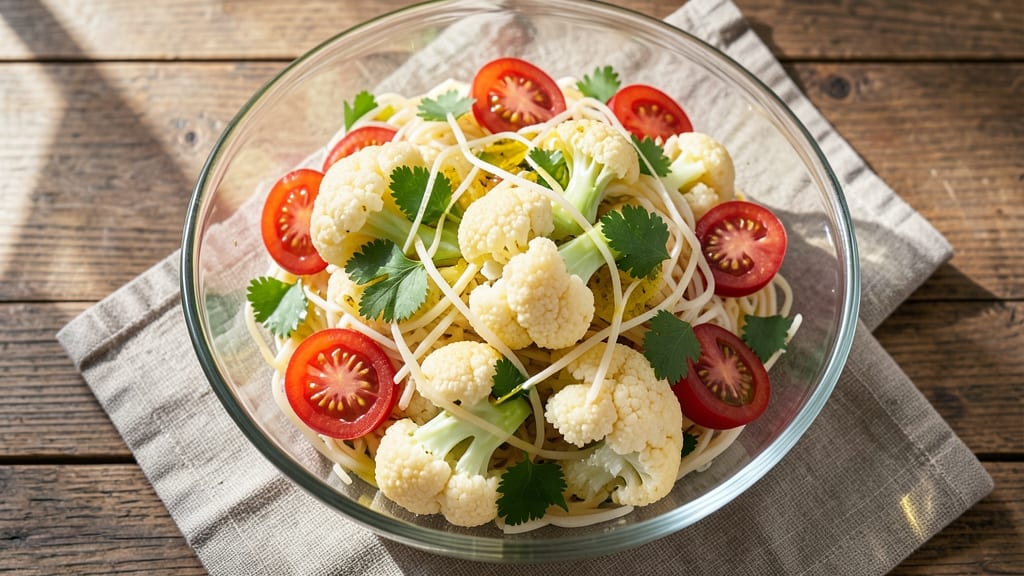
This cauliflower tomato salad recipe transforms humble ingredients into a vibrant, restaurant-worthy dish that’s as satisfying as it is refreshing. The secret lies in balancing crispy roasted cauliflower with juicy tomatoes, bright herbs, and the satisfying crunch of rice noodles—a combination that delivers both texture and flavor in every bite. What makes this salad special is how effortlessly it comes together, yet feels anything but basic.
The foundation is simple: tender cauliflower florets roasted until golden, juicy tomatoes halved for natural sweetness, and rice noodles cooked just until they hold their shape. A zesty lemon-herb dressing ties everything together, while fresh parsley and basil add layers of freshness that elevate the dish beyond a simple side.
This salad is the perfect balance of hearty and light, making it ideal for a weeknight dinner or a summer potluck.
What you’ll end up with is a dish that’s bursting with color and flavor—crispy edges on the cauliflower, juicy bursts from the tomatoes, and a dressing that’s tangy yet light enough to let the vegetables shine.
The rice noodles add a satisfying chew, while the herbs keep the flavors bright and fresh. It’s the kind of salad that feels indulgent yet remains light enough for any meal.
Serve it as a main dish with grilled chicken or fish, or enjoy it on its own as a refreshing vegetarian plate. The beauty of this recipe is its flexibility—swap in different herbs, add avocado for creaminess, or keep it simple with just the essentials.
Here’s how to make it perfect every time.
Ingredients for cauliflower tomato salad
Bright vegetables, zesty dressing, and satisfying textures come together for this vibrant salad.
| Ingredient | Amount | Notes |
|---|---|---|
| Fresh Cauliflower 🥬 | 1 whole | Cut into even florets |
| Medium Tomatoes 🍅 | 4 whole | Roma or vine-ripened preferred |
| Rice Noodles 🍜 | 8 oz | Thin or medium width |
| Extra-Virgin Olive Oil 🫒 | ½ cup | High-quality, fruity variety |
| Fresh Lemon Juice 🍋 | 3 tbsp | Freshly squeezed |
| Fresh Flat-Leaf Parsley 🌿 | ⅓ cup | Chopped, stems removed |
| Fresh Basil Leaves 🌿 | ¼ cup | Torn, not chopped |
| Garlic Cloves 🧄 | 3 cloves | Minced, not powdered |
| Diamond Crystal Kosher Salt 🧂 | 1 ½ tsp | Adjust to taste |
| Freshly Ground Black Pepper 🌶️ | ½ tsp | Coarsely ground |
| Avocado (Optional) 🥑 | 1 whole | Pitted, sliced for creaminess |
| Toasted Almond Slices 🌰 | ¼ cup | For added crunch |
The cauliflower is the star here—look for heads with tight florets and vibrant green color. Trader Joe's or Whole Foods carry excellent organic options, but any fresh cauliflower works. For tomatoes, vine-ripened varieties like heirlooms or Roma deliver the best sweetness and texture. If using heirlooms, handle them gently to avoid bruising. The rice noodles should be labeled 'vermicelli' or 'thin' for the perfect balance of chew and flexibility. Martini's brand is my go-to for consistent quality, but any rice noodle will work if it's labeled 'rice' and not wheat-based.
No fresh herbs? Dried parsley at one-third the amount works in a pinch, though fresh delivers superior brightness. Swap basil for cilantro or mint if you prefer different herbal notes. The avocado is optional but adds luxurious creaminess—use Hass variety when in season. For extra crunch, toasted pecans or pumpkin seeds are excellent alternatives to almonds. The dressing ratio is key: if you prefer more tang, increase lemon juice by 1/2 tbsp increments. For a nutty depth, add 1 tsp toasted sesame oil to the dressing.
Fresh cauliflower keeps 5-7 days in the fridge, while tomatoes last 3-5 days when stored stem-side down. Cooked rice noodles should be tossed with a little oil to prevent sticking and stored in an airtight container for up to 3 days. The dressing can be made 1 day ahead—just stir before using. For meal prep, assemble the salad 1 hour before serving to let flavors meld, but hold off on adding avocado until serving to prevent browning. This salad reheats poorly, so enjoy it fresh.
Why You'll Love This Recipe
- No-Cook Crunch: I swear by this when I’m too hot to turn on the stove—just toss raw cauliflower florets, halved tomatoes, and those chewy rice noodles with olive oil and lemon. The texture contrast? Chef’s kiss—no cooking required, just assembly.
- Bright & Tangy: That lemon juice cuts through the richness of the olive oil like a summer breeze, while the cauliflower’s natural nuttiness plays off the tomatoes’ sweetness. It’s the kind of dish that tastes fresh even if you make it at noon.
- Lunchbox Legend: Between us, this is my go-to for packed lunches—holds up for days in the fridge, no soggy noodles in sight. The rice noodles stay firm, the veggies don’t wilt, and honestly? My kids actually eat their veggies this way.
- Budget Bright Spot: Cauliflower and tomatoes are cheap, and rice noodles stretch farther than pasta. I make this for four people for under $10, and leftovers? They’re even better the next day—if there are any.
Step-by-step instructions for cauliflower tomato salad with herbs and rice noodles
This vibrant salad combines crisp cauliflower, juicy tomatoes, and delicate rice noodles in a bright herb-infused dressing.
Blanch and Shock the Cauliflower Florets
Bring a large pot of water to a rolling boil. While waiting, cut the 1 whole fresh cauliflower into even florets, about 2 inches in size. Once boiling, add the florets and cook for exactly 2 minutes—they should remain crisp with just a hint of tenderness. Immediately drain and transfer to a large bowl filled with ice water for 3 minutes to stop the cooking process and preserve their vibrant color.
This blanching technique ensures the cauliflower stays crisp-tender rather than turning mushy. Drain well and pat dry with paper towels, then set aside. The florets should look bright white with no signs of wilting—this is your visual cue they're ready for the next step.
Prepare the Herb-Lemon Dressing
In a small bowl, whisk together the 0.5 cup extra-virgin olive oil, 3 tablespoons fresh lemon juice, 3 cloves minced garlic, 1.5 teaspoons diamond crystal kosher salt, and 0.5 teaspoon freshly ground black pepper. This forms the base of your dressing. In a separate bowl, combine the 0.33 cup chopped fresh flat-leaf parsley and 0.25 cup torn fresh basil leaves, then gently fold these herbs into the dressing.
The dressing should have a vibrant green hue and a citrusy aroma that immediately brightens the room. Taste and adjust seasoning—you want a balance of saltiness, acidity, and herbal freshness. This dressing will transform the simple vegetables into a restaurant-worthy dish.
Cook the Rice Noodles Al Dente
Bring a separate pot of water to a gentle boil and add the 8 ounces rice noodles. Cook for 2 minutes less than the package instructions specify—these noodles continue cooking as they absorb the dressing. Drain immediately in a colander and rinse under cold water for 10 seconds to stop the cooking process. This prevents the noodles from becoming gummy and ensures they maintain their delicate texture.
The noodles should be tender but still hold their shape when drained. Spread them on a clean kitchen towel to absorb any excess moisture. The right texture is crucial—overcooked noodles will make the salad soggy, while undercooked ones will be chewy.
Assemble the Salad Components
In a large mixing bowl, combine the blanched cauliflower florets, 4 whole medium tomatoes (cut into wedges), and the cooked rice noodles. Gently toss everything together, then pour the herb-lemon dressing over the top. Use your hands to gently massage the dressing into each component, ensuring even distribution. Add the 0.25 cup toasted almond slices at this stage for that satisfying crunch.
The salad should look vibrant with pops of green, red, and white throughout. If using the optional 1 whole avocado, slice it and add it last to prevent browning. The textures should contrast beautifully—crisp florets, tender noodles, juicy tomatoes, and creamy avocado.
Rest and Serve for Maximum Freshness
Cover the salad bowl and let it rest at room temperature for 10 minutes before serving. This allows the flavors to meld together and the dressing to fully coat all the components. Taste again before serving and adjust seasoning if needed—sometimes the flavors develop more after resting.
Serve immediately while the cauliflower remains crisp and the tomatoes are juicy. This salad holds well for 2 hours in the refrigerator if stored properly in an airtight container, but it's best enjoyed fresh. The contrast of textures and bright flavors makes this an excellent light lunch or side dish for any meal.
Pro Tips For Making Cauliflower Tomato Salad
- ROAST CAULIFLOWER UNTIL TENDER: Skip the microwave shortcut—roast the florets at 425°F (220°C) for 20-25 minutes until the edges are golden and they yield slightly when pierced. I learned this the hard way: undercooked cauliflower turns to mush in the salad, and overcooking dries it out. Flip them halfway and use a baking sheet, not a crowded tray.
- CUT TOMATOES LAST MINUTE: Halve or quarter tomatoes right before tossing with the salad. Their juices release quickly, turning the noodles soggy if you prep them too early. Keep them whole until the very end—this keeps the texture crisp and the dressing from diluting into a sad, watery mess.
- SOAK NOODLES JUST LONG ENOUGH: Rice noodles cook fast—3-4 minutes in hot water (not boiling) is all they need. Drain immediately and rinse with cold water to stop cooking. Over-soaking makes them gummy, and under-soaking leaves them chewy. Trust the clock, not the package’s "up to 10 minutes" claim.
- DRESS WITH LEMON AFTER TOSSING: Toss the warm cauliflower, tomatoes, and noodles first, then drizzle with olive oil and lemon juice. The residual heat helps the dressing cling better, and adding it early makes the tomatoes release too much liquid. A squeeze of lemon at the end also brightens the flavors—no need to overcomplicate it.
Troubleshooting your cauliflower tomato salad
Cauliflower Too Soft
If your cauliflower florets turn out mushy instead of crisp-tender, you likely overcooked them during blanching. Stick to exactly 2 minutes in boiling water—I promise it’s enough!
For extra insurance, shock them in ice water for 3 minutes immediately after draining. This stops the cooking process and preserves that perfect texture. 🥬
Tomatoes Too Watery
Juicy tomatoes can make your salad soggy if not handled properly. Pat them dry with a paper towel before adding to the bowl, and only add them to the salad 5 minutes before serving.
If using heirloom tomatoes, remove the seeds to reduce excess moisture. For extra stability, sprinkle 1/2 teaspoon of cornstarch on the cut sides before assembling.
Dressing Too Thin
A dressing that’s too thin will make your salad watery. If this happens, whisk in 1 teaspoon of Dijon mustard or 1 tablespoon of Greek yogurt to thicken it slightly.
For a richer texture, reduce the lemon juice by 1/2 tablespoon and add 1/2 teaspoon of honey to balance the flavors. Always taste as you go—adjust gradually!
Noodles Overcooked
Rice noodles continue cooking even after draining, so they often turn mushy if left too long. Cook them 2 minutes less than package instructions and rinse in cold water for 10 seconds to stop the cooking.
Spread them on a towel to dry completely before adding to the salad. For extra insurance, toss them with 1 tablespoon of olive oil before mixing with other ingredients.
Herbs Lose Brightness
Fresh herbs can wilt if added too early or if the salad sits too long. Fold them into the dressing right before tossing with the salad, and serve immediately. If prepping ahead, store herbs separately in an airtight container with a damp paper towel.
For extra vibrancy, add 1/2 teaspoon of apple cider vinegar to the dressing—it preserves color beautifully. ✨
Salad Too Bland
If your salad tastes flat, it’s likely missing acidity or salt. Boost the dressing with an extra 1/2 teaspoon of lemon juice or 1/4 teaspoon of red pepper flakes for heat.
For umami depth, add 1/2 teaspoon of fish sauce or 1/4 teaspoon of soy sauce to the dressing. Always taste before serving—seasoning builds flavor!
Nutrition facts
Frequently asked questions
Can I use raw cauliflower instead of blanched?
Raw cauliflower works but loses that satisfying crisp-tender texture. For best results, stick with the blanching method—it takes just 2 minutes of boiling followed by an ice bath. If you prefer raw, cut the florets very thinly and massage them with 1 tablespoon of olive oil and 1/2 teaspoon of salt for 5 minutes before assembling to soften slightly.
How can I make this salad gluten-free?
This recipe is naturally gluten-free as long as you use certified gluten-free rice noodles. Double-check the package label—some brands process their noodles in shared facilities. For extra caution, look for brands labeled "gluten-free" like Rice Noodle Kitchen or Banza. The dressing and all other ingredients are already safe.
What's the best way to store leftovers?
Store the salad in an airtight container with parchment paper between layers to prevent sogginess. Keep it refrigerated for up to 2 days, but omit the avocado until serving to preserve freshness. For longer storage, keep the dressing and vegetables separate—combine just before eating. The rice noodles will soften further when reheated, so enjoy this salad chilled.
Can I substitute quinoa for rice noodles?
Yes! Cook 1 cup quinoa according to package instructions and let it cool completely before adding to the salad. Quinoa adds a heartier texture and extra protein. For a lighter version, use 1/2 cup cooked quinoa and 4 ounces rice noodles for a 50/50 blend. The salad will hold together better and stay firmer longer.
Why does my dressing separate?
Dressing separates when oil and water-based ingredients aren't properly emulsified. Whisk vigorously or use a blender for 10 seconds to combine. For a more stable dressing, add 1/2 teaspoon of Dijon mustard or 1 tablespoon of Greek yogurt when whisking. Always add lemon juice gradually while whisking to prevent separation.