
Salads
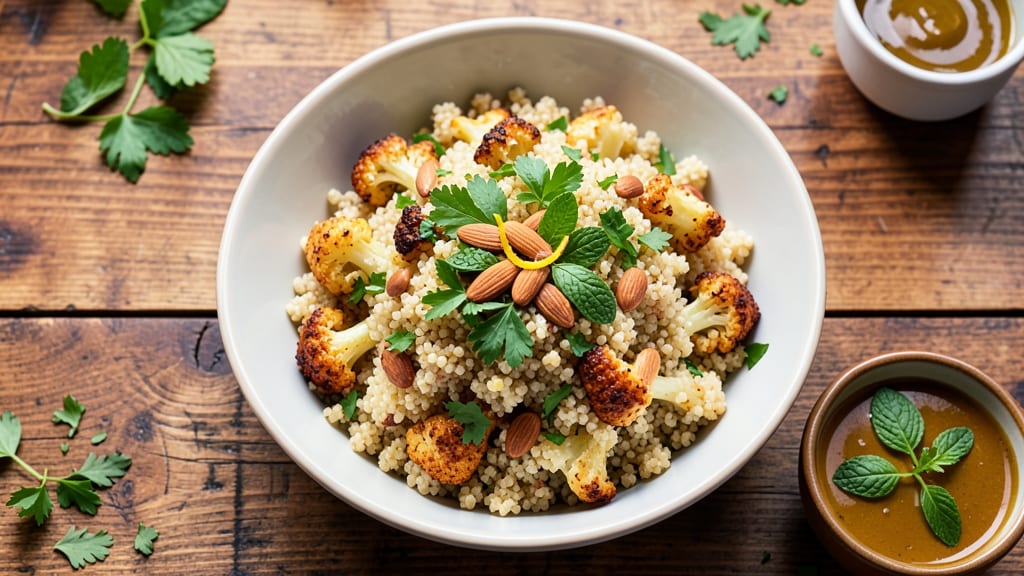
This cauliflower couscous salad recipe transforms simple ingredients into a vibrant, protein-packed dish that’s perfect for meal prep or summer gatherings. The star is riced cauliflower—steamed just until tender—mixed with fluffy couscous, fresh herbs, and a bright lemon-tahini dressing that keeps everything fresh.
What sets this apart is the toasted almond crunch, adding texture that turns a basic salad into something restaurant-worthy.
The beauty of this recipe lies in its flexibility: it’s vegan-friendly, packed with nutrients, and ready in 30 minutes. No fancy techniques required—just steam, mix, and toss. The dressing, made with tahini, lemon, and garlic, cuts through the earthiness of the cauliflower while enhancing the natural sweetness.
Plus, the herbs (parsley, mint, or cilantro) add a bright herb zing that makes every bite feel fresh and satisfying.
By the time you’re done, you’ll have a salad that’s crisp, creamy, and crunchy all at once—ideal for lunches, potlucks, or as a side dish. The cauliflower holds its shape, the couscous stays fluffy, and the almonds add a satisfying bite.
It’s the kind of dish that tastes even better the next day, making it perfect for meal preppers.
Serve it chilled or at room temperature, and don’t forget the extra herbs and almonds on top for that restaurant-quality finish. Ready to make it? Let’s get started.
Ingredients for cauliflower couscous salad
Transform simple ingredients into a vibrant, protein-packed vegan salad with restaurant-worthy texture contrast.
| Ingredient | Amount | Notes |
|---|---|---|
| Fresh Cauliflower 🥬 | 1 lb | Cut into florets, stems removed |
| Whole Wheat Couscous 🌾 | 1 cup | Uncooked, whole grain preferred |
| Fresh Parsley 🌿 | ½ cup | Chopped, leaves only |
| Fresh Mint Leaves 🍃 | ¼ cup | Chopped, stems removed |
| Raw Almonds 🥜 | ½ cup | Sliced or slivered, skin-on |
| Extra-Virgin Olive Oil 🫒 | ¼ cup | Light, fruity variety |
| Tahini 🥛 | ¼ cup | Sesame paste, unsweetened |
| Fresh Garlic Cloves 🧄 | 3 cloves | Peeled, minced |
| Lemon Juice 🍋 | 3 tbsp | Freshly squeezed |
| Water 💧 | 1 ½ cups | For couscous cooking |
| Sea Salt 🧂 | 1 ½ tsp | Fine grain, Diamond Crystal preferred |
| Ground Black Pepper 🌶️ | ½ tsp | Freshly ground |
| Maple Syrup 🍯 | 1 tbsp | Pure, grade A |
The cauliflower needs to be fresh and firm—look for heads with tight florets and no yellowing. Whole Foods or local farmers' markets carry the best quality, but any grocery store's organic section will work. For the couscous, whole wheat adds fiber and texture, though regular couscous works in a pinch. The herbs are non-negotiable for that bright herb zing—fresh parsley and mint create the perfect balance. If you can't find fresh mint, dried mint at one-third the amount will suffice, though the flavor won't be as vibrant. The almonds should be raw and skin-on for that perfect toasted crunch—Trader Joe's sells them pre-sliced for convenience.
No tahini? Substitute with equal parts olive oil and a pinch of sesame seeds, though the flavor will differ slightly. The maple syrup adds subtle sweetness—if you prefer something less sweet, reduce to 1 teaspoon or omit entirely. For the garlic, fresh is essential—powdered or jarred garlic lacks the depth needed to complement the tahini. If you're short on time, pre-minced garlic from the refrigerated section works, but fresh minced is superior. The lemon juice should be freshly squeezed; bottled lemon juice lacks the bright acidity that cuts through the richness of the tahini and olive oil.
Store the dressing separately in an airtight container for up to 5 days in the fridge—it keeps beautifully. The salad itself holds up well for 3-4 days, though the almonds may lose some crunch. For meal prep, assemble the salad just before serving to maintain that crisp, creamy, and crunchy texture. If you're making this ahead, toast the almonds fresh and store them separately to preserve their crunch. The couscous and cauliflower can be prepped and refrigerated for 2 days before tossing with the dressing.
Why You'll Love This Recipe
- No-Chop Trick: The cauliflower florets stay big and satisfying—no tedious chopping. I just cut them into 2-inch chunks, roast until golden, and let the oven do the work while I toast the almonds. That’s it. (Yes, even on a Tuesday night.)
- Herb-Packed Punch: The parsley and mint hit like a fresh breeze—bright, zesty, and just enough to cut through the nutty couscous. Between us, the raw almonds add that crunchy texture that makes every bite feel like a little celebration.
- Lunchbox Hero: This salad keeps beautifully for four days, so I pack it for work or school lunches without a second thought. The couscous stays fluffy, the veggies crisp, and the flavors only get better as it sits. (My kids actually eat their greens now.)
- Budget Brightener: Whole wheat couscous and cauliflower stretch my dollar further than any grain bowl I’ve tried. Plus, I can swap in whatever herbs or nuts I have on hand—no wasted ingredients here. It’s my go-to when I need a filling, flavorful meal without breaking the bank.
Step-by-step instructions for cauliflower couscous salad
Here's how to create a vibrant, nutrient-packed salad with perfect texture contrast.
Roast the Cauliflower Until Caramelized
Preheat your oven to 425°F and line a baking sheet with parchment paper. Toss the 1 lb fresh cauliflower florets with 2 tablespoons of the extra-virgin olive oil, 1 teaspoon of sea salt, and ¼ teaspoon of the ground black pepper. Spread them in a single layer, ensuring they don't overlap.
Roast for 25-30 minutes until the edges turn deep golden brown and the florets are tender when pierced with a fork. The cauliflower should smell nutty and caramelized—this is your cue it's ready. Let it cool slightly before handling, as it will be very hot.
Toast the Almonds for Nutty Crunch
While the cauliflower roasts, pulse the 0.5 cup raw almonds in a food processor until they're finely chopped but not powdered. Transfer them to a dry skillet over medium heat and toast for 3-4 minutes, stirring constantly, until they turn a light golden brown and release an aromatic toasted scent.
Remove from heat immediately to prevent burning. Let them cool for 2 minutes before transferring to a small bowl. This quick toasting enhances their natural sweetness and adds a satisfying crunch to the salad. Don't walk away—they can go from perfect to burnt in seconds.
Prepare the Tahini-Lemon Dressing
In a medium bowl, whisk together the 0.25 cup tahini, 3 tablespoons lemon juice, 1 tablespoon maple syrup, the 3 minced garlic cloves, and 1 tablespoon of the remaining extra-virgin olive oil. Thin the mixture with 2-3 tablespoons of water until it reaches a pourable consistency—it should coat the back of a spoon smoothly.
Taste and adjust seasoning with additional sea salt or lemon juice as needed. The dressing should balance sweet, tangy, and nutty flavors. If it thickens while you work, simply whisk in more water. This dressing is the heart of the salad, so take your time getting it just right.
Cook the Whole Wheat Couscous
Bring 1.5 cups water to a boil in a small saucepan. Add the 1 cup whole wheat couscous and ½ teaspoon sea salt, then immediately remove from heat. Cover with a lid and let it sit for 5 minutes—the residual heat will cook the couscous perfectly.
Fluff the couscous with a fork and let it cool to room temperature. The grains should be tender but still hold their shape. If any water remains, drain it through a fine-mesh strainer. This step is crucial for achieving the ideal texture—neither mushy nor undercooked.
Assemble and Garnish the Salad
In a large bowl, combine the cooled cauliflower, couscous, 0.5 cup chopped parsley, and 0.25 cup chopped mint leaves. Drizzle with the prepared tahini-lemon dressing and toss gently to coat evenly. The salad should look vibrant with bright green herbs and golden cauliflower.
Sprinkle the toasted almonds over the top and serve immediately. The contrast of crispy almonds, tender cauliflower, and fluffy couscous creates a satisfying texture profile. For extra brightness, add a squeeze of fresh lemon juice just before serving. This salad holds well for 2 hours in the refrigerator, making it perfect for meal prep.
Pro Tips For Making Cauliflower Couscous Salad
- Boil Cauliflower Whole: I learned this the hard way—cutting cauliflower into florets before boiling makes them turn mushy. Keep the head intact, drop it in boiling salted water for 8-10 minutes, then shock in ice water. The whole head stays crisp, and you can pull off perfect florets after.
- Toast Almonds Low and Slow: High heat burns them fast. Spread raw almonds on a dry baking sheet and toast at 325°F (not 350°F) for 8-10 minutes, stirring once. They’ll brown evenly without that bitter aftertaste—trust me, your salad will taste better.
- Rinse Couscous Twice: That extra starch is the enemy of fluffy couscous. After boiling, drain it, then rinse under cold water twice, shaking off excess. This step cuts the gummy texture that ruins the salad’s lightness—no one wants a gluey bite.
- Chop Herbs at the Last Minute: Parsley and mint lose their brightness fast. Wait until you’re tossing everything together to chop them—even 10 minutes early dulls their flavor. Fresh herbs should sing, not whisper, in your salad.
Dietary considerations for cauliflower couscous salad
Vegan-Friendly Base
This salad is naturally vegan thanks to its plant-based ingredients—cauliflower, couscous, tahini, and almonds provide all the protein and texture without any animal products. The tahini-lemon dressing replaces dairy-based options, while the whole wheat couscous adds fiber and heartiness.
For extra protein, consider adding ½ cup cooked chickpeas or ¼ cup pumpkin seeds—both blend seamlessly into the mix. 💚
Gluten-Free Adaptation
To make this salad gluten-free, simply swap the whole wheat couscous for quinoa or certified gluten-free couscous (like Bob's Red Mill or Barilla GF). Quinoa adds a nutty flavor and extra protein, while gluten-free couscous cooks similarly to regular.
Always check labels, as some couscous brands process in gluten-containing facilities. The rest of the recipe remains unchanged.
Low-Carb Option
For a low-carb version, reduce the couscous to ½ cup and increase the cauliflower to 1.5 lbs (or add ½ cup shredded cabbage). The extra cauliflower adds volume and nutrients while keeping carbs in check.
The tahini dressing naturally fits low-carb diets, but watch the maple syrup—reduce to ½ tablespoon or use sugar-free syrup if needed. The salad stays satisfying with the almond crunch and herb zing.
Nut-Free Swap
If you need to avoid nuts, replace the almonds with ½ cup toasted pumpkin seeds or sunflower seeds for a similar crunch. Toast them in the same way—3-4 minutes over medium heat—until fragrant.
For extra flavor, sprinkle with ½ teaspoon smoked paprika before toasting. The seeds add a different texture but keep the salad hearty and nutritious.
Allergen-Friendly Tips
This salad is soy-free and dairy-free as written, but always double-check tahini labels for cross-contamination warnings. For a sesame-free version, substitute tahini with olive oil + 1 teaspoon ground flaxseed (for omega-3s).
The salad remains vibrant and packed with flavor—just ensure all ingredients align with dietary restrictions. When in doubt, opt for certified allergen-free brands like Annie's for couscous or 365 Organic for tahini.
Nutrition facts
Frequently asked questions
Can I use regular couscous instead of whole wheat?
Yes, you can substitute regular couscous for the whole wheat version—it'll still create a fluffy base for your salad. The texture and flavor will be slightly milder, but the dish will remain delicious. Just follow the same cooking instructions (boil water, add couscous, cover for 5 minutes). For extra nutrition, consider mixing half regular and half whole wheat couscous.
How do I prevent the cauliflower from getting mushy?
Roasting is key! Cut the florets evenly and spread them in a single layer on the baking sheet. Roast at 425°F for 25-30 minutes until golden brown and tender when pierced. Avoid overcrowding the pan, and let them cool slightly before mixing with other ingredients. The residual heat will finish cooking them gently in the salad.
What if I don't have tahini for the dressing?
No problem! Mix ¼ cup olive oil with 1 teaspoon ground flaxseed (for omega-3s) and ½ teaspoon sesame seeds (for flavor). Add the same amount of lemon juice, garlic, and maple syrup. The texture will be slightly thinner, but the bright, tangy flavor remains. For a richer option, try cashew cream (blend soaked cashews with water) as a substitute.
Can I make this salad ahead of time?
Prepare the roasted cauliflower, cooked couscous, and dressing separately, then store them in airtight containers in the fridge for up to 3 days. When ready to serve, toss everything together and garnish with fresh herbs and toasted almonds. The almonds stay crispy if kept separate until serving, and the dressing can be made 5 days ahead.
What herbs can I use if I don't have parsley or mint?
Fresh cilantro, dill, or basil work beautifully! Use the same quantity (0.5 cup total) and adjust to taste. For a Mediterranean twist, try ½ cup chopped dill with ¼ cup chopped basil. If you prefer stronger flavors, add 1 teaspoon dried oregano along with the fresh herbs. The key is balancing the earthy cauliflower with bright, fresh flavors.