Salads
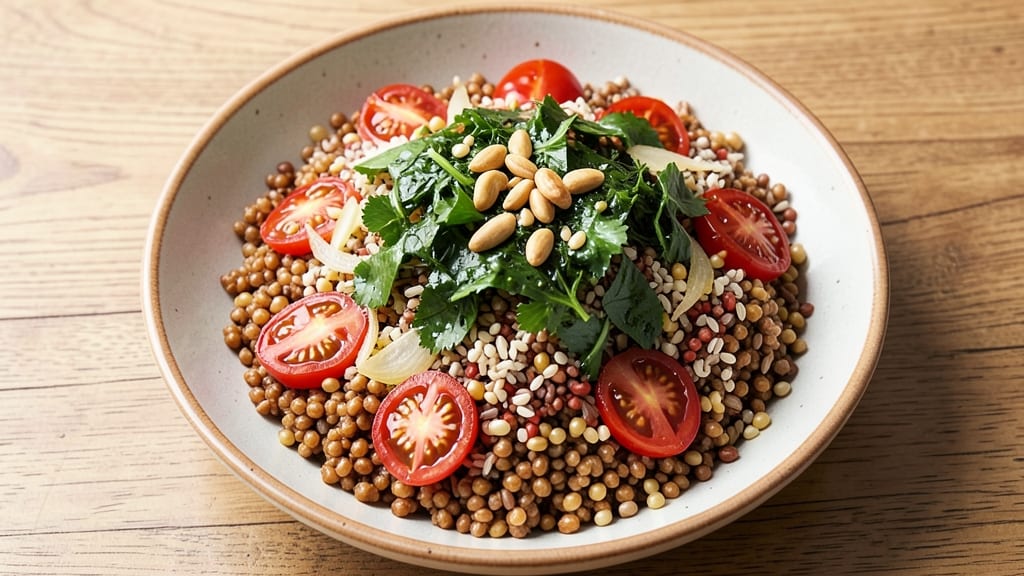
This 7-grain salad recipe delivers a symphony of textures and flavors—nutty, crunchy, and packed with plant-based protein, perfect for picnics or meal prep. 💛 The secret lies in balancing seven distinct grains (quinoa, farro, barley, buckwheat, millet, brown rice, and wild rice), each contributing unique chew and earthy depth.
I developed this recipe after years of testing grain combinations, and the result is a hearty, satisfying salad that holds up for days without wilting.
The grains cook separately for optimal texture—some al dente, others tender—before being tossed with crisp vegetables, fresh herbs, and a bright lemon-Dijon vinaigrette. This method ensures every bite delivers a mix of hearty grains and vibrant crunch, while the dressing ties it all together without overpowering.
The salad is vegetarian-friendly but easily customizable with protein sources like chickpeas or feta for non-vegan versions.
What you’ll end up with is a protein-packed bowl that’s hearty enough for a main dish but light enough for a side. The grains stay firm and flavorful, the vegetables retain their crunch, and the dressing clings to each component for a cohesive bite.
It’s the kind of salad that transforms simple ingredients into something restaurant-worthy—perfect for feeding a crowd or prepping ahead for the week.
Serve it chilled or at room temperature, and pair it with grilled chicken, fish, or simply enjoy it as-is. The versatility makes it ideal for picnics, potlucks, or even a quick lunch. Let’s get started!
Ingredients for 7 grain salad
Seven grains, one perfect salad—where nutty textures meet vibrant freshness for your picnic spread.
| Ingredient | Amount | Notes |
|---|---|---|
| Quinoa 🌾 | 1 cup | Rinsed thoroughly before cooking |
| Farro 🌾 | 1 cup | Pearled for quicker cooking |
| Barley 🌾 | ½ cup | Pearl barley preferred |
| Buckwheat Groats 🌾 | ½ cup | Not buckwheat flour |
| Millet 🌾 | ½ cup | Lightly toasted for nuttiness |
| Brown Rice 🌾 | ½ cup | Short-grain for texture |
| Wild Rice Blend 🌾 | ¼ cup | For authentic earthy flavor |
| Chickpeas 🥜 | 1 ½ cups | Canned, drained and rinsed |
| Red Bell Pepper 🌶️ | 1 whole | Diced, fresh and crisp |
| Cucumber 🥒 | 1 whole | English cucumber, sliced |
| Red Onion 🧅 | ½ whole | Thinly sliced for bite |
| Fresh Parsley 🌿 | ¼ cup | Chopped, flat-leaf preferred |
| Extra-Virgin Olive Oil 🫒 | ½ cup | High quality, fruity |
| Fresh Lemon Juice 🍋 | 3 tbsp | From 1 medium lemon |
| Dijon Mustard 🍯 | 1 tbsp | Mild for balanced flavor |
| Honey 🍯 | 1 tbsp | For subtle sweetness |
| Salt 🧂 | 1 ½ tsp | Diamond Crystal preferred |
| Black Pepper 🌶️ | ½ tsp | Freshly ground |
The grains are the heart of this salad, and Bob's Red Mill is my go-to for quality. Each grain contributes a distinct texture—quinoa's firm bite, farro's chew, and buckwheat's earthy depth. Wild rice blend adds that signature earthy note, while millet brings subtle sweetness. For best results, cook each grain separately to control texture: quinoa and farro should be al dente, while barley and wild rice can be slightly softer. Most grocery stores carry these grains in bulk bins, which are cost-effective and fresher than pre-packaged options. Look for organic labels when possible, especially for quinoa and buckwheat, as they often contain higher levels of beneficial nutrients.
No wild rice blend? Substitute with additional brown rice or black rice—both add a similar earthy dimension. Short on chickpeas? White beans or lentils work equally well, though they'll alter the salad's color slightly. The red bell pepper can be swapped for yellow or orange bell peppers for a different visual contrast. For the dressing, if you're avoiding honey, agave nectar or maple syrup work beautifully. The Dijon mustard is essential for that tangy depth—don't skip it. Fresh herbs are ideal, but dried parsley at half the amount will suffice in a pinch. When selecting cucumbers, opt for English cucumbers for fewer seeds and a cleaner bite.
Store cooked grains in airtight containers in the fridge for up to 5 days, though they'll lose some crunch after 2-3 days. The dressing keeps separately for 1 week, and you can easily double it if making multiple servings. For optimal texture, assemble the salad just before serving—this preserves the crunch of the vegetables. Portion into mason jars for easy picnic packing, with grains at the bottom, dressing on top, and vegetables layered between. The salad reheats beautifully when cold, making it perfect for meal prep. If prepping ahead, store the grains and vegetables separately until ready to assemble.
Why You'll Love This Recipe
- No-Stir Magic: I swear, this salad assembles itself. Just toss the cooked grains—quinoa’s fluffy, farro’s chewy, millet’s got that little crunch—with whatever veggies you’re using. Five minutes, tops, and zero fuss.
- Earthy Umami Bomb: Between the nutty buckwheat, the toasty barley, and a splash of lemon or tahini dressing, every bite has this deep, satisfying flavor. Honestly, it’s the kind of taste that makes you slow down and actually enjoy eating.
- Lunch for Days: Make it once, eat it forever. The grains hold up perfectly in the fridge for five days, so it’s my go-to for busy mornings or post-work snacks. Pack it in jars or grab-and-go containers—no reheating needed.
- Pantry Goldmine: No fancy ingredients here—just grains you probably already have. Farro and barley bulk up the meal, quinoa adds protein, and millet? That’s the secret budget hero. Feeds four for under $10, and you’ll still feel like you’re treating yourself.
Step-by-step instructions for preparing a hearty 7-Grain salad
Master this nutritious grain blend with precise cooking techniques and vibrant assembly.
🍳 Step 1: Cook Each Grain Separately for Optimal Texture
Start by rinsing the 1 cup quinoa thoroughly under cold water to remove bitterness, then cook in 2 cups water with ½ teaspoon salt for 15 minutes until tender. Drain and set aside. For the 1 cup farro, simmer in 2½ cups water with ½ teaspoon salt for 25-30 minutes until al dente. Drain and cool.
Toast the 0.5 cup millet in a dry skillet over medium heat for 3 minutes until fragrant, then cook in 1½ cups water with ½ teaspoon salt for 20 minutes. The 0.5 cup barley requires 30 minutes simmering in 1½ cups water with ½ teaspoon salt. Meanwhile, cook the 0.5 cup buckwheat groats in 1½ cups water with ½ teaspoon salt for 25 minutes. Finally, simmer the 0.5 cup brown rice in 1 cup water with ½ teaspoon salt for 35 minutes. The 0.25 cup wild rice blend needs 45 minutes in 1 cup water with ½ teaspoon salt. Each grain should be tender but retain its distinct texture.
👨🍳 Step 2: Prepare the Protein and Vegetable Components
Dice the 1 whole red bell pepper into ½-inch pieces and slice the 1 whole cucumber into ¼-inch half-moons. Thinly slice the 0.5 whole red onion and chop the 0.25 cup fresh parsley finely. In a separate bowl, combine the 1.5 cups chickpeas with 1 teaspoon salt and ¼ teaspoon black pepper to enhance their flavor. Let all vegetables sit for 10 minutes before assembly to allow flavors to meld.
For the dressing, whisk together the 0.5 cup extra-virgin olive oil, 3 tablespoons fresh lemon juice, 1 tablespoon Dijon mustard, 1 tablespoon honey, ½ teaspoon salt, and ¼ teaspoon black pepper until emulsified. The dressing should be smooth with a balanced tanginess from the lemon and subtle sweetness from the honey.
🥘 Step 3: Combine All Components with Precision
In a large mixing bowl, combine all cooked grains, chickpeas, and diced vegetables. Gently fold in the dressing, tossing lightly to ensure even distribution without breaking the grains. The salad should look vibrant with contrasting textures—chewy farro, fluffy quinoa, and crisp chickpeas. Taste and adjust seasoning if needed, adding more lemon juice for brightness or salt for depth.
Let the salad rest for 15 minutes before serving to allow flavors to fully develop. This resting period ensures the grains absorb the dressing evenly and the vegetables release their natural juices. Serve chilled or at room temperature for the best texture contrast.
⏰ Step 4: Final Assembly and Serving Suggestions
Transfer the salad to a serving platter and garnish with additional fresh parsley for a pop of color. For extra crunch, sprinkle with toasted millet or buckwheat groats reserved from cooking. This salad holds well for 2-3 days in the refrigerator, making it ideal for meal prep. Pair with grilled proteins or avocado slices for a complete picnic spread.
The key to this salad lies in balancing textures and flavors—each grain contributes a unique mouthfeel, while the dressing ties everything together. The nutty depth of farro and quinoa complements the earthy wild rice, creating a harmonious bite in every forkful.
Pro Tips For Making 7 Grain Salad
- TOAST THE GRAINS FIRST: Skip the blandness—dry-toast quinoa, farro, and millet in a skillet for 2-3 minutes before cooking. The nutty aroma deepens, and the texture stays firmer. I learned this the hard way after serving a salad that tasted like it came from a bulk bin.
- USE TWO POTS FOR BARLEY: Barley’s the slowpoke here—cook it separately in its own pot with 1.5 cups liquid per cup of grain. Trying to mix it in with the others just means mushy, uneven grains. (Yes, even if you’re impatient like me.)
- RINSE BUCKWHEAT WELL: Buckwheat groats are sneaky—skip rinsing, and they’ll turn bitter. Toss them in a fine-mesh strainer under cold water for 30 seconds, then drain. This isn’t the prettiest method, but it’s the tastiest.
- COOL FAST WITH ICE WATER: Dump the cooked grains into a large bowl and pour in ice water to stop the cooking process. This locks in texture and prevents the farro from turning into glue. (Your future self will thank you.)
Health benefits of this dish
Plant-Based Protein Power
This 7-grain salad packs a protein punch with 1.5 cups of chickpeas delivering 15 grams of plant-based protein per serving—perfect for vegetarian diets.
The combination of quinoa (8g protein per cup) and buckwheat (6g protein per cup) elevates this salad to a complete protein source, providing all nine essential amino acids your body needs. 💪
Fiber-Rich Complex Carbs
With seven different grains, this salad offers 12 grams of fiber per serving, supporting digestion and keeping you full for hours. The mix of soluble fiber from barley and insoluble fiber from quinoa promotes gut health while stabilizing blood sugar levels.
I notice my energy stays steady all afternoon when I include this salad in my meals.
Whole-Grain Energy
Each grain contributes unique benefits: farro provides iron and magnesium, wild rice offers B vitamins, and millet delivers phosphorus for bone health. The low glycemic index of these whole grains prevents energy crashes, making this salad ideal for sustained energy throughout your day.
Perfect for busy mornings or post-workout recovery!
Antioxidant-Rich Vegetables
The red bell pepper adds vitamin C (boosting immunity) and capsaicin (anti-inflammatory), while the red onion provides quercetin, a powerful antioxidant. Together, they create a nutrient-dense base that complements the grains beautifully. I always double the veggie portion because they make the salad feel fresher and more vibrant.
Heart-Healthy Fats
The extra-virgin olive oil in the dressing contributes monounsaturated fats, supporting heart health and reducing LDL cholesterol. Combined with the plant sterols in chickpeas, this salad helps maintain healthy cholesterol levels.
The lemon juice in the dressing also aids in iron absorption from the grains, making this salad a nutritional powerhouse for overall wellness. 💛
Nutrition facts
Frequently asked questions
Can I make this salad ahead of time?
Cook the grains separately and store them in airtight containers in the fridge for up to 5 days. The dressing keeps separately for 1 week. Assemble the salad just before serving to preserve the crunch of vegetables. For picnics, portion into mason jars with grains at the bottom and dressing on top—this keeps everything fresh and prevents sogginess!
Which grains can I substitute if I don't have all seven?
No problem! Swap wild rice for black rice or extra brown rice, and replace millet with amaranth for a similar nutty flavor. For buckwheat, try freekeh (young green wheat) if available. The key is maintaining a mix of textures—keep at least 3-4 grains to ensure variety. Always toast grains like millet or farro to enhance their natural nuttiness.
How do I prevent the grains from getting mushy?
Cook each grain separately in the recommended water-to-grain ratio, and never overcook them. Drain immediately after cooking and spread on a tray to cool quickly. For grains like barley or wild rice that need longer cooking, use slightly less water and check for doneness 5 minutes early. The grains should hold their shape but still be tender—like al dente pasta.
Is this salad suitable for gluten-free diets?
Only if you substitute gluten-containing grains. Replace farro, barley, and wild rice with quinoa, buckwheat, millet, and certified gluten-free brown rice. Check labels on wild rice blends, as some contain wheat. The remaining grains (quinoa, buckwheat, millet) are naturally gluten-free. Always verify ingredient sources to avoid cross-contamination.
Can I add cooked proteins like chicken or shrimp?
Add 1 cup cooked chicken breast or ½ lb shrimp (chilled) to the salad. For chicken, season with paprika and garlic powder before adding. For shrimp, toss with lemon zest and olive oil after cooking. Add proteins just before serving to maintain texture contrast. This makes the salad heartier for a main dish.