Salads
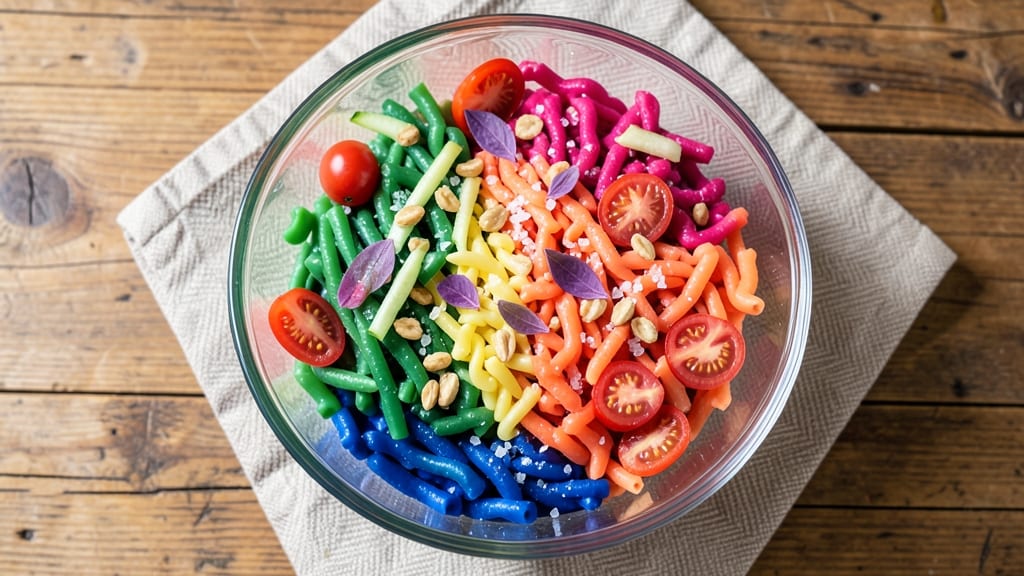
This colored pasta salad recipe transforms simple ingredients into a vibrant, no-cook meal that’s perfect for meal prep and summer gatherings. The key? Using food coloring to create a rainbow effect while keeping flavors bright and fresh.
I’ve perfected this dish to stay crisp, flavorful, and visually stunning—no soggy textures here.
The beauty of this recipe lies in its versatility—you can customize colors with natural dyes or food coloring, and the dressing (a zesty lemon-herb vinaigrette) keeps everything fresh.
It’s foolproof for beginners but impressive enough for potlucks, with ingredients you likely already have on hand. The best part? No oven required.
What you’ll end up with is a bold, rainbow pasta salad that’s as delicious as it is eye-catching. The colors pop against the creamy dressing, while crunchy veggies (like bell peppers and cherry tomatoes) add texture. It’s the kind of dish that makes healthy eating feel special—without sacrificing flavor.
Whether you’re prepping for the week or bringing a side to a picnic, this salad delivers restaurant-quality presentation with minimal effort. Let’s get started—your plate (and Instagram feed) will thank you.
Ingredients for colored pasta salad
Simple pasta, vibrant colors, and fresh veggies create a stunning no-cook meal prep masterpiece.
| Ingredient | Amount | Notes |
|---|---|---|
| Short Pasta (Rotini or Fusilli) 🍝 | 12 oz | Uncooked, al dente texture preferred |
| Red Food Coloring Gel 🎨 | ½ tsp | For vibrant red layer |
| Orange Food Coloring Gel 🎨 | ½ tsp | For bright orange layer |
| Yellow Food Coloring Gel 🎨 | ½ tsp | For sunny yellow layer |
| Green Food Coloring Gel 🎨 | ½ tsp | For fresh green layer |
| Blue Food Coloring Gel 🎨 | ½ tsp | For striking blue layer |
| Purple Food Coloring Gel 🎨 | ½ tsp | For regal purple layer |
| Extra-Virgin Olive Oil 🫒 | ½ cup | For tossing and creaminess |
| Fresh Lemon Juice 🍋 | ¼ cup | Freshly squeezed for brightness |
| Dijon Mustard 🥫 | 1 tbsp | For depth and tang |
| Honey 🍯 | 1 tbsp | For subtle sweetness |
| Diamond Crystal Kosher Salt 🧂 | ½ tsp | For seasoning |
| Freshly Ground Black Pepper 🌶️ | ¼ tsp | For subtle heat |
| Red Bell Pepper 🌶️ | 1 whole | Diced for crunch and color |
| Yellow Bell Pepper 🌶️ | 1 whole | Diced for crunch and color |
| Cherry Tomatoes 🍅 | 1 cup | Halved for freshness |
| Fresh Cucumber 🥒 | 1 whole | Diced, seeds removed |
| Red Onion 🧅 | ¼ whole | Thinly sliced for sharpness |
| Fresh Parsley 🌿 | ¼ cup | Chopped for fresh finish |
| Fresh Basil 🌿 | ¼ cup | Chopped for herbal note |
Food coloring is the secret weapon here—gel versions (like Wilton or ChefMaster) give the most vibrant hues without watering down your dressing. Trader Joe's and Walmart carry them affordably, and they last for months in a cool, dark cabinet. For natural dyes, swap in beet juice (red), turmeric (yellow), or spirulina (green)—just know the colors will be more muted. The pasta? Rotini or fusilli cling to the dressing best, but any short pasta works. Cook it al dente so it stays firm in the salad. Pro tip: rinse the pasta under cold water after cooking to stop the cooking process and remove excess starch—this keeps your salad crisp.
No food coloring? Natural dyes work but require extra prep—think beet juice, turmeric, or even paprika for reds. Short on bell peppers? Substitute with cherry tomatoes or snap peas for crunch. The dressing is the star—Dijon mustard adds tang, honey balances it, and fresh lemon juice keeps everything bright. Trader Joe's has the best pre-sliced bell peppers if you're short on time, but fresh is always better. For extra creaminess, add 1/4 cup of crumbled feta or vegan cheese—just omit it if keeping it strictly vegetarian. The herbs? Fresh parsley and basil make all the difference, but dried works in a pinch (use half the amount).
This salad stays fresh for 4-5 days in the fridge if stored in an airtight container with parchment paper between layers to keep colors vibrant. For meal prep, divide into portion-sized containers—each layer will stay distinct. The colors fade slightly over time, but the flavors only get better. To serve, simply toss everything together right before eating so the veggies stay crisp. Freezing isn’t recommended—colors and textures won’t hold up. If you’re serving at a picnic, pack the dressing separately and toss just before serving to avoid soggy pasta.
Why You'll Love This Recipe
- No Boiling Fuss: I swear by this trick—toss the dry pasta with oil first, then add the colored water (just boil a little, mix in the gel, and pour over the pasta). No overcooked mush, no straining, just vibrant strands ready in 10 minutes. My kids think it’s magic.
- Rainbow Without Sacrifice: Honestly, the food coloring doesn’t change the taste at all. The base is still bright, herby, and tangy from lemon and olive oil—just prettier. It’s like getting a dessert-like presentation without the sugar crash.
- Party in a Box: This is my go-to for picnics, potlucks, or even kids’ birthday tables. The colors pop against any spread, and since it’s just pasta, dressing, and veggies, it’s always a crowd-pleaser. No one questions the leftovers either.
- Budget Brightness: A single tube of gel colors dozens of servings—way cheaper than buying pre-colored pasta. Plus, the ingredients cost pennies compared to fussy gourmet salads. My wallet and my lunchbox both win.
Step-by-step instructions for rainbow pasta salad
Let's create a vibrant, no-cook pasta salad that's as colorful as it is delicious.
Cook the Pasta to Al Dente Perfection
Bring a large pot of water to a rolling boil and add the 12 oz short pasta (rotini or fusilli). Cook according to package instructions until al dente—about 1 minute less than recommended. This ensures the pasta holds its shape when tossed with the dressing and vegetables. Drain immediately in a colander and rinse under cold water to stop the cooking process and remove excess starch.
I like to divide the drained pasta into six equal portions right away. This makes it easier to distribute the food coloring gels evenly later. Spread each portion on a separate plate or in individual bowls for the next step. The pasta should be completely cool before adding the coloring to prevent the gels from melting unevenly.
Create the Rainbow Effect with Food Coloring Gels
Here's where the magic happens. Take one portion of the cooled pasta and add 0.5 tsp red food coloring gel. Gently toss with a fork until the color is evenly distributed and the pasta is uniformly coated. Repeat this process with the remaining portions, using 0.5 tsp orange, yellow, green, blue, and purple food coloring gels respectively. Each portion should be a distinct, vibrant color—almost like a tie-dye effect.
I recommend working quickly but carefully. The gels are concentrated, so a little goes a long way. If you notice any streaks, simply toss that portion again until uniform. Once colored, set each portion aside in separate containers or bowls. The colors will intensify as they sit, so resist the urge to mix them yet—patience is key for that perfect rainbow presentation.
Prepare the Vibrant Dressing
In a medium bowl, whisk together the 0.5 cup extra-virgin olive oil, 0.25 cup fresh lemon juice, 1 tbsp Dijon mustard, 1 tbsp honey, 0.5 tsp Diamond Crystal kosher salt, and 0.25 tsp freshly ground black pepper. The dressing should be emulsified and smooth—if it looks separated, whisk vigorously for another 30 seconds until it comes together. This dressing is the backbone of the salad, balancing the freshness of the vegetables with a tangy, slightly sweet flavor.
Taste the dressing before proceeding. If it needs more brightness, add a splash of additional lemon juice. If it's too sharp, a tiny drizzle of honey can help mellow the flavors. The dressing should complement the colors without overpowering them, so aim for a harmonious balance of acidity, richness, and sweetness.
Prep and Combine the Fresh Vegetables
While the dressing rests, prepare the vegetables. Dice the 1 whole red bell pepper and 1 whole yellow bell pepper into small, even pieces—about 1/4-inch cubes. Halve the 1 cup cherry tomatoes and remove the seeds from the 1 whole fresh cucumber, then dice it into 1/4-inch pieces as well. Thinly slice the 0.25 whole red onion for a subtle sharpness that cuts through the richness of the dressing.
Chop the 0.25 cup fresh parsley and 0.25 cup fresh basil finely—this ensures the herbs are evenly distributed throughout the salad. Place all the prepared vegetables in a large mixing bowl. They should look fresh, colorful, and ready to brighten up the pasta. The vegetables add crunch, freshness, and a variety of textures that make this salad so satisfying.
Assemble and Chill the Rainbow Pasta Salad
Now, it's time to bring everything together. Add the six portions of colored pasta to the bowl with the vegetables. Pour the dressing over the top and toss gently but thoroughly to coat every strand of pasta and piece of vegetable evenly. The colors should start to blend slightly, creating a stunning gradient effect as the pasta mixes.
Transfer the salad to a serving dish or individual bowls if serving immediately. For the best flavor and texture, cover and refrigerate for at least 30 minutes before serving. This allows the flavors to meld and the pasta to absorb the dressing fully. The longer it chills, the more vibrant and delicious it becomes—trust me, it's worth the wait. Serve chilled and enjoy the rainbow!
Pro Tips For Making Colored Pasta Salad
- COOK PASTA AL DENTE: Pasta salad turns mushy when overcooked—test a piece at the earliest you’d normally pull it. Rotini should have a tiny bite, not a gummy center. Rinse immediately in cold water to stop cooking, or the colors will bleed into a muddy mess.
- MIX COLORS IN BATCHES: Divide the pasta into equal portions before adding dye—this keeps the colors vibrant. I learned this the hard way: dumping all the red gel into one pot turns it pinkish. Use ½ teaspoon gel per pound of pasta, no more, or you’ll end up with neon.
- TUMBLE DRY PASTA: Skip the towel—toss the dyed pasta in a clean kitchen towel, then shake it in a colander for 30 seconds. This chases off excess moisture faster than air-drying, so the salad stays crisp. Wet pasta makes the dressing slide off instead of cling.
- CHILL BEFORE DRESSING: Wait 15 minutes after rinsing before mixing in dressing. Cold pasta absorbs flavors better and won’t turn to glue. I used to dump everything together hot, and the colors would bleed into a sad, watery gray. Patience here makes all the difference.
Wine and beer pairings for this recipe
Crisp White Wine
For this bright, colorful salad, I reach for a dry Italian white wine like Pinot Grigio or Vermentino. The crisp acidity mirrors the lemon in the dressing while cutting through the richness of the olive oil.
A glass of Sancerre from France also works beautifully—its mineral notes complement the fresh herbs and vegetables. Serve chilled to enhance the salad's refreshing qualities. 🍷
Light Beer Pairings
A crisp lager like Peroni or Heineken balances the salad's tangy dressing without overpowering its delicate flavors. For something more adventurous, try a Belgian witbier such as Hoegaarden, which adds a subtle citrusy note that harmonizes with the lemon.
Avoid heavy beers—they'll make the salad taste flat by comparison. 🍺
Sparkling Options
If you're celebrating, a dry sparkling wine like Prosecco or Cava adds effervescence that cleanses the palate between bites. The bubbles also make the salad's colors pop even more. For a non-alcoholic option, sparkling apple cider (like Martinelli's) provides the same refreshing contrast without the alcohol. 🥂
Bold Red Wine
While whites and beers are ideal, a light-bodied red like Chianti or Beaujolais can work if you prefer red wine. These wines have enough acidity to stand up to the salad's lemony dressing. Opt for a young vintage with bright fruit notes rather than an aged, tannic option. 🍇
Herbal Infusions
For a unique twist, try an herbal-infused wine like Sauvignon Blanc with basil or a rosé with thyme. These subtle herbal notes echo the fresh basil and parsley in the salad, creating a cohesive flavor experience.
Look for wines labeled "herb-infused" or make your own by adding fresh herbs to a bottle of white wine and letting it sit for a few hours. 🌿
Nutrition facts
Frequently asked questions
Can I use natural food dyes instead of artificial coloring?
For natural red, blend beet juice or paprika with a little water. Try turmeric for yellow, spinach puree for green, and blue spirulina powder mixed with olive oil for blue. Just note the colors will be softer than artificial gels. The purple layer is trickiest—try blackberries or red cabbage juice for a muted effect.
How do I keep the colors from bleeding together?
Work quickly when coloring each pasta portion and use separate bowls to store them until assembly. For extra separation, place parchment paper between layers in your serving dish. Chill the salad for at least 30 minutes before serving—this helps the colors set. If colors start blending too much, serve immediately with the dressing on the side.
What's the best pasta shape for this recipe?
Rotini or fusilli work best because their twists and curves hold the dressing beautifully. Other good options include farfalle (bowtie) or penne. Avoid long pasta like spaghetti—it tends to clump and lose its shape. Always cook pasta al dente so it stays firm in the salad.
Can I make this ahead for meal prep?
Yes! Store the colored pasta portions separately in an airtight container with parchment between layers. Keep the dressing and veggies in separate containers. Assemble just before eating to maintain crispness. This salad stays fresh for 4-5 days in the fridge. For picnics, pack dressing separately and toss right before serving.
What if I don't have all the rainbow colors?
No problem! Start with just 3-4 colors for a simpler effect. The key is contrast—try red, green, and yellow for a bright summer look. You can also use white pasta as a neutral base. The dressing and veggies will still make it visually appealing. The colors will blend slightly when mixed, creating natural gradients.