
Salads
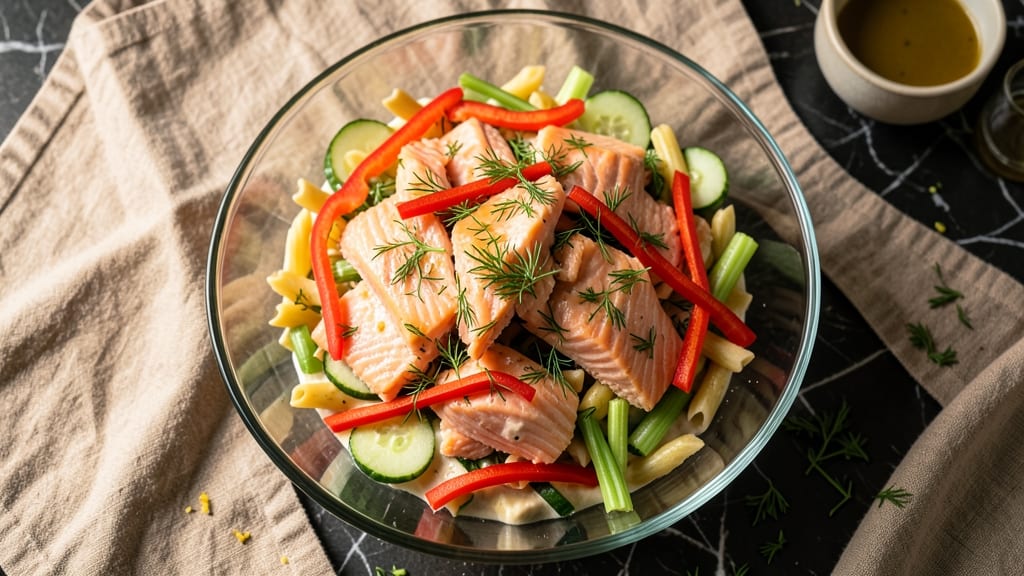
This cold salmon pasta salad recipe transforms flaky salmon and al dente pasta into a refreshing, protein-packed dish perfect for picnics or meal prep. The secret lies in perfectly poached salmon that flakes into tender, bite-sized pieces and a bright lemon-dill dressing that keeps everything fresh.
I developed this recipe after realizing how quickly store-bought versions wilted—this version stays vibrant for days.
What sets this salad apart is the balance of textures: tender salmon, crisp vegetables, and al dente pasta all coated in a tangy dressing that won't turn soggy. The salmon is poached just until opaque, then flaked gently to maintain its delicate texture, while the pasta cooks to perfect firmness.
Fresh herbs and a touch of Dijon mustard in the dressing elevate each bite without overpowering the salmon's natural flavor.
Assembling this salad is straightforward—simply combine the cooled components and toss with dressing right before serving to prevent the pasta from absorbing too much liquid. The result is a visually appealing dish with layers of color and texture that holds up beautifully in the fridge.
It's ideal for lunchboxes, potlucks, or a light summer dinner when you crave something fresh but satisfying.
One of the best features of this recipe is its make-ahead versatility. The components can be prepped separately and stored in the refrigerator for up to three days, making it perfect for busy weeks.
When ready to serve, simply combine everything and adjust the dressing to taste. This salad proves that cold dishes can be just as impressive as hot meals—with minimal effort and maximum flavor.
Ingredients for cold salmon pasta salad
Here's what you'll need to create this refreshing, protein-packed cold salmon pasta salad.
| Ingredient | Amount | Notes |
|---|---|---|
| Wild-Caught Salmon Fillet 🐟 | 1 lb | Skin removed, center-cut preferred |
| Short Pasta 🍝 | 10 oz | Farfalle or penne works best |
| English Cucumber 🥒 | 1 whole | Seedless preferred, peeled |
| Red Bell Pepper 🌶️ | 1 whole | Medium size, diced |
| Celery Stalks 🧅 | 3 whole | Fresh, stringy parts removed |
| Fresh Dill 🌿 | ½ cup | Chopped, stems removed |
| Fresh Lemon 🍋 | 1 whole | Juiced, zest optional |
| Extra-Virgin Olive Oil 🫒 | ½ cup | High quality, fruity |
| Dijon Mustard 🍯 | 1 tbsp | Mild variety preferred |
| White Wine Vinegar 🍷 | 2 tbsp | Dry variety recommended |
| Kosher Salt 🧂 | 1 ½ tsp | Diamond Crystal preferred |
| Freshly Ground Black Pepper 🌶️ | ½ tsp | Just before serving |
| Capers 🍋 | 1 tbsp | Chopped, optional for tang |
| Fresh Chives 🌿 | 2 tbsp | Chopped, for garnish |
The salmon makes this dish shine—wild-caught center-cut stays moist and flakes beautifully. Trader Joe's or Whole Foods usually carry high-quality fillets, but any reputable seafood counter works. Look for bright pink color and firm texture—if it smells fishy, walk away. For the pasta, short shapes like farfalle or penne hold dressing best without getting mushy. Cook it al dente—this salad reheats poorly, so perfect texture upfront matters. The cucumber should be crisp; if it feels soft, skip it and add extra bell pepper for crunch.
No fresh dill? Dried dill at one-third the amount works, but fresh is ideal—it brightens the whole dish. Short on capers? Extra lemon juice or a pinch of red pepper flakes adds similar tang. The olive oil is non-negotiable—use something fruity and peppery (like California Early Harvest) instead of mild supermarket brands. For the dressing, taste as you go: need more acid? Add another splash of vinegar. Need richness? Stir in a teaspoon of Greek yogurt or vegan mayo. The bell pepper and celery can be prepped ahead—they keep well in the fridge for 5 days if stored separately.
This salad gets better as it sits—2-3 hours in the fridge lets flavors meld perfectly. Store components separately: pasta and veggies in one container, salmon and dressing in another. When ready to serve, toss everything together and let sit 10 minutes before eating—the dressing will cling better. Leftovers keep for 3 days in the fridge, though I rarely have any. For meal prep, double the recipe and portion into containers—lunch is sorted for the week.
Why You'll Love This Recipe
- No-Cook Salmon Prep: I swear by the flake-test method—just poach the salmon ahead of time, then shred it with a fork. No chopping, no stress, and it keeps beautifully in the fridge for days.
- Crunchy Creamy Balance: That mix of cool cucumber, bell pepper crunch, and tender celery? It’s like a fresh, bright hug for your taste buds. The lemon-dill dressing ties it all together—no heavy mayo here.
- Lunchbox Hero: Pack it in jars or containers for work lunches that actually feel gourmet. Honestly, my kids ask for this more than their sandwiches, and it’s way easier to assemble than a PB&J.
- Budget-Friendly Luxury: Wild salmon feels fancy, but buying it on sale and prepping extra means you’re eating well without breaking the bank. Leftovers? They’re my secret weapon for lazy evenings.
Step-by-step instructions for cold salmon pasta salad
This refreshing dish comes together in minutes with flaky salmon and crisp veggies.
🍳 Step 1: Poach the Salmon to Perfect Tenderness
Fill a large skillet with 2 inches of water and bring to a gentle simmer over medium heat. Add the 1 lb wild-caught salmon fillet (skin removed) and cook for 4-5 minutes per side until the internal temperature reaches 145°F and the flesh flakes easily with a fork. The water should barely bubble—too vigorous heat will dry out the salmon.
Transfer the salmon to a cutting board and let it cool completely before handling. This resting period prevents the fish from breaking apart when you cut it. While it cools, I like to prepare the vegetables—it keeps everything moving efficiently.
👨🍳 Step 2: Prepare the Vegetable Medley
Peel and dice the 1 whole English cucumber into ½-inch pieces, then slice the 1 whole red bell pepper into thin strips. Cut the 3 whole celery stalks into ¼-inch rounds and remove any stringy parts. Place all vegetables in a large mixing bowl and toss with 1.5 tsp kosher salt—this draws out moisture and crisps up the veggies.
Let the vegetables sit for 10 minutes while you cook the pasta. This salting step is crucial—it prevents a soggy salad later. After resting, pat the vegetables dry with paper towels to remove excess moisture.
🍳 Step 3: Cook the Pasta Al Dente
Bring a large pot of water to a rolling boil and add 10 oz short pasta (farfalle or penne). Cook until 1 minute before the package instructions for al dente—you want it slightly firm. Drain immediately and rinse under cold water to stop the cooking process. This chilling step prevents the pasta from becoming mushy when mixed with the cold dressing.
Add the drained pasta to the prepared vegetables in the mixing bowl. Give everything a gentle toss to distribute evenly. The pasta should be completely coated with the vegetables—this ensures each bite has balanced texture and flavor.
🥘 Step 4: Make the Zesty Lemon-Dill Dressing
In a small bowl, whisk together the 0.5 cup extra-virgin olive oil, 1 tbsp Dijon mustard, 2 tbsp white wine vinegar, juice of 1 whole fresh lemon, 0.5 cup chopped fresh dill, 1 tbsp chopped capers, 0.5 tsp freshly ground black pepper, and ½ tsp additional kosher salt. The dressing should be emulsified—if it separates, whisk vigorously until smooth.
Taste and adjust seasoning. I usually add a pinch more salt or a squeeze of lemon to balance the flavors. The capers add a nice briny tang that complements the salmon beautifully. This dressing is the secret to keeping everything fresh and vibrant.
🥘 Step 5: Combine and Chill for Maximum Freshness
Add the lemon-dill dressing to the pasta and vegetable mixture, tossing gently but thoroughly to coat everything evenly. Flake the cooled salmon into bite-sized chunks and fold it into the salad. The fish should be distributed throughout—each forkful should have a perfect balance of pasta, vegetables, and salmon.
Cover the bowl and refrigerate for at least 1 hour (or up to 4 hours) before serving. This chilling time allows the flavors to meld perfectly. When ready to serve, garnish with the 2 tbsp chopped fresh chives for a pop of color and freshness. The salad keeps well in the fridge for 2 days, making it perfect for meal prep.
Pro Tips For Making Cold Salmon Pasta Salad
- Cook Salmon Rare: Wild-caught salmon stays moist and flavorful when cooked just 3-4 minutes per side over medium heat—no need to overcook it. I used to push it to medium-well, and it’d turn dry in the salad. Trust the thermometer: 120°F internal is perfect for cold dishes.
- Dice Celery Small: Tiny, even celery pieces (1/8-inch dice) disappear into the salad without leaving awkward textures. I learned this the hard way—big chunks make the dish look sloppy. Use a sharp knife and don’t rush it; precision matters more than speed here.
- Toss Pasta Dry: Drain the pasta, rinse it under cold water, and toss it with a splash of olive oil immediately. This prevents the salad from turning soggy later. I skip this step sometimes, and by lunch, the pasta is mushy—don’t let that happen.
- Add Dressing Last: Mix the dressing separately and fold it into the salad just before serving. The acid in lemon or vinegar will soften the salmon and cucumber over time, so waiting keeps everything crisp. Yes, it’s an extra step, but the texture difference is worth it.
Best sauces and condiments for this dish
Classic Lemon-Dill Dressing
The signature dressing here balances the rich salmon with bright acidity and herbal notes. I use 0.5 cup extra-virgin olive oil (like California Early Harvest) for its fruity depth, combined with 1 tbsp Dijon mustard to emulsify the mixture.
The 2 tbsp white wine vinegar and juice of 1 whole fresh lemon create that signature tang, while 0.5 cup chopped fresh dill adds an aromatic finish. 🍋
For extra depth, I always include 1 tbsp chopped capers—their briny punch cuts through the richness of the salmon. If you prefer a smoother texture, blend the dressing ingredients briefly for a silky consistency.
This dressing keeps beautifully in the fridge for 5 days, so you can prep it ahead of time.
Creamy Greek Yogurt Twist
For a richer variation, stir 2 tbsp plain Greek yogurt into the dressing just before serving. The yogurt adds protein and a velvety texture that pairs perfectly with the flaky salmon.
I recommend Fage 0% for its tangy flavor and smooth consistency. This version works especially well if you're serving the salad to a crowd—it feels more substantial. 🥛
Spicy Harissa Kick
Want some heat? Swap 1 tbsp harissa paste for the Dijon mustard in the dressing. The smoky, spicy harissa adds complexity that complements the salmon beautifully.
Start with ½ tsp and adjust to taste—harissa can be intense! This variation works especially well with wild-caught salmon that has a stronger flavor profile. 🌶️
Herb-Infused Olive Oil
For a lighter option, infuse 0.3 cup extra-virgin olive oil with 1 tbsp fresh dill, 1 tbsp fresh parsley, and 1 garlic clove (lightly crushed) by heating gently for 5 minutes.
Strain and use this infused oil in place of plain olive oil in the dressing. The herbs add an extra layer of freshness that makes the salad taste even brighter. 🌿
Sweet and Tangy Honey-Lime
For a sweeter contrast, replace the white wine vinegar with 1 tbsp honey and add 1 tsp lime zest to the dressing. The honey balances the acidity while the lime zest adds a citrusy brightness. This version pairs wonderfully with farfalle pasta and works especially well for summer gatherings. 🍯
Nutrition facts
Frequently asked questions
Can I use canned salmon instead of fresh?
Canned salmon works perfectly—just drain it well and flake it into bite-sized pieces. For best texture, choose high-quality wild-caught salmon packed in water (not oil). You may need to reduce the lemon juice slightly since canned salmon is often pre-seasoned.
How do I prevent the pasta from getting soggy?
Cook the pasta al dente and rinse it under cold water immediately after draining. Then, pat it dry with a clean kitchen towel before mixing with other ingredients. Adding the dressing right before serving also helps maintain crispness. The 10-minute salt-and-rest for veggies is key too!
Can I make this ahead of time?
Yes! Prep all components separately and store them in the fridge for up to 3 days. Keep the dressing and salmon in one container, and the pasta/veggies in another. Toss everything together just before serving to keep the texture perfect. The flavors actually improve after 2-3 hours of chilling!
What's the best pasta shape for this salad?
Short pasta shapes like farfalle, penne, or fusilli work best—they hold dressing well without getting mushy. Avoid long strands or delicate shapes that might break apart. Cook them 1 minute less than package instructions for perfect al dente texture.
How do I keep the salmon from drying out?
Poach the salmon gently in barely simmering water for 4-5 minutes per side until it reaches 145°F. Let it cool completely on a cutting board before flaking. Never overcook—salmon should be just opaque and flake easily. The poaching method keeps it moist and tender.