
Salads
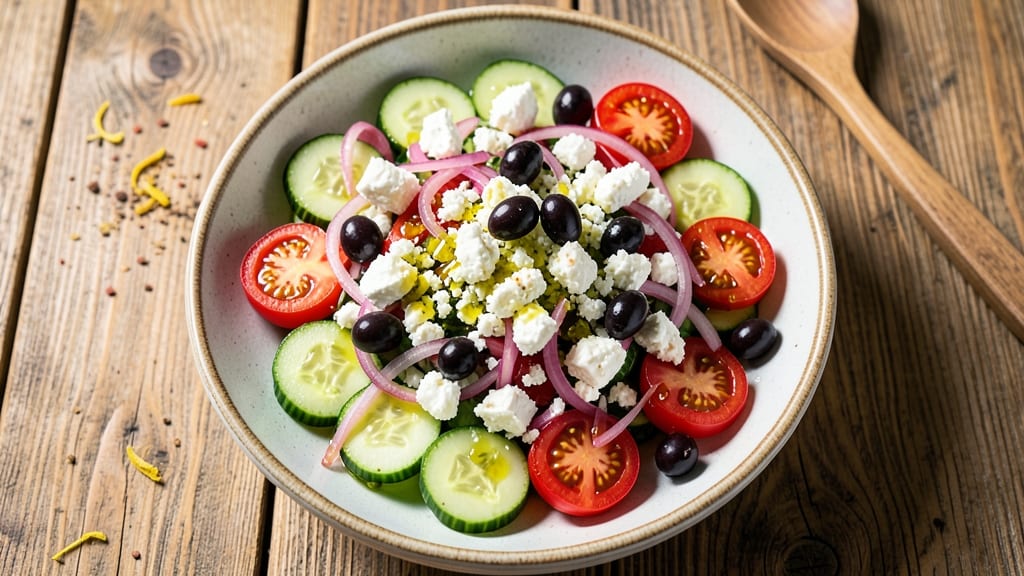
This classic Greek salad recipe with feta cheese brings the sun-drenched flavors of Greece to your table in just 15 minutes. The perfect balance of crisp cucumbers, juicy tomatoes, briny olives, and salty feta creates a dish that's as refreshing as it is iconic.
I've perfected this recipe over years of summer gatherings, where it always disappears first.
The secret to an authentic Greek salad lies in the quality of ingredients and proper assembly. Fresh, vine-ripened tomatoes and crisp cucumbers form the base, while Kalamata olives and red onion add depth.
The feta cheese—traditionally aged and brined—should be cut into cubes rather than crumbled for that signature presentation. A drizzle of extra-virgin olive oil and a sprinkle of dried oregano complete the ensemble.
What makes this salad truly special is its ability to transport you to a Greek taverna with every bite. The combination of textures—crunchy vegetables, creamy feta, and tender olives—paired with the bright, tangy flavors creates a symphony of tastes.
It's the kind of dish that's equally impressive served at summer picnics or elegant dinner parties.
For best results, assemble the salad just before serving to maintain crispness. Pair it with grilled meats, crusty bread, or serve it as a light main course. The classic Greek salad isn't just food—it's a celebration of Mediterranean flavors that bring people together.
Ingredients for classic greek salad recipe with feta cheese
Fresh, vibrant ingredients create this iconic Greek salad in minutes.
| Ingredient | Amount | Notes |
|---|---|---|
| Persian Cucumbers 🥒 | 2 large | Sliced into half-moons |
| Vine-Ripened Tomatoes 🍅 | 3 medium | Diced, seeds removed |
| Red Onion 🧅 | 1 medium | Thinly sliced |
| Kalamata Olives 🫒 | ½ cup | Pitted, sliced in half |
| Feta Cheese 🧀 | 8 oz | Cubed, traditional aged |
| Extra-Virgin Olive Oil 🫒 | ¼ cup | High quality, fruity |
| Dried Oregano 🌿 | 1 tsp | Crumbled, not ground |
| Fresh Kalamata Olives 🫒 | ¼ cup | For garnish |
| Lemon Juice 🍋 | 2 tbsp | Freshly squeezed |
| Salt 🧂 | ½ tsp | Diamond Crystal preferred |
| Black Pepper 🌶️ | ¼ tsp | Freshly ground |
| Crusty Bread 🍞 | 1 baguette | For serving |
The feta cheese is non-negotiable—look for traditionally aged, brined blocks at specialty markets or the deli section. Kalamata olives should be plump and dark purple, not shriveled. For tomatoes, vine-ripened makes all the difference—skip the pale, watery ones. Persian cucumbers are ideal for their crispness, but regular cucumbers work in a pinch. The extra-virgin olive oil should have a peppery finish and be stored in a cool, dark place after opening.
No Kalamata olives? Green olives at half the amount will work, though they lack the same depth. Fresh oregano is ideal, but dried works at one-third the quantity. The red onion can be swapped for shallots if you prefer a milder bite. For extra tang, add 1 tsp red wine vinegar. If your feta is too salty, rinse the cubes briefly in cold water before adding. The crusty bread? Any baguette or sourdough will do—just toast it lightly for serving.
Assemble the salad just before serving to keep the vegetables crisp. Store feta in its brine in the fridge for up to 2 weeks. Olives last 6 months unopened, but once opened, transfer to an airtight container. The dressing components keep for 1 week separately. For best texture, slice cucumbers and tomatoes last—this salad truly shines when everything is fresh.
Why You'll Love This Recipe
- No-Chop Nightmare: Honestly, the only knife work is slicing the cucumbers into half-moons and quartering the tomatoes—no dicing, no mincing. Those Persian cucumbers stay crisp without even a soak, and the onions? Just thin slices that take 30 seconds. The olives and feta? Grab-and-go. I’ve made this salad while scrolling through emails—it’s that unfussy.
- Feta’s Magic Touch: That salty, briny feta crumbling into the mix? It’s the star. The vine-ripened tomatoes burst with juice, the olives add a peppery bite, and the red onion brings just enough sharpness to cut through the richness. No dressing needed—sometimes I skip it entirely and let the feta’s tang do all the work. (Yes, even on a Tuesday night.)
- Lunch for Days: Between us, this salad keeps for three days in the fridge—better than most greens. I pack it in jars for work lunches (tomatoes and cucumbers on the bottom, feta on top so it doesn’t get soggy) and it’s still fresh by Friday. Plus, it’s the ultimate side for grilled chicken, lamb, or even just toasted pita. My roommate’s a skeptic, but he’s been asking for “the Greek bowl” for weeks now.
- Budget Bright Spot: Red onions, seasonal tomatoes, and a block of feta stretch farther than you’d think. I buy olives in bulk and use them in salads, pasta, and even on toast—no waste. And if I forget to buy feta? A sprinkle of salt and a handful of crumbled halloumi works in a pinch. It’s the kind of recipe that makes groceries feel less stressful, not more.
Step-by-step instructions for classic Greek salad
This is the authentic method that captures the perfect balance of textures and flavors.
Prepare the Vegetable Components
Begin by washing the 2 large Persian cucumbers thoroughly and slicing them into half-moons. I like to remove the seeds if they're large, as they can make the salad watery. Arrange them on a large platter or salad bowl.
Next, cut the 3 medium vine-ripened tomatoes into diced pieces, removing the seeds and any tough cores. Thinly slice the 1 medium red onion, keeping the rings intact for visual appeal. The onions should be translucent when sliced properly - this indicates they're ready for the salad.
Assemble the Base Ingredients
Arrange the cucumber half-moons in an even layer across the bottom of your serving dish. This creates a sturdy foundation that won't get lost under other ingredients. Scatter the diced tomatoes evenly over the cucumbers, followed by the thinly sliced red onion.
Add the 0.5 cup of pitted, halved Kalamata olives, distributing them throughout the salad. Their briny flavor will complement the fresh vegetables beautifully. At this stage, resist the urge to mix everything together - we want to maintain the distinct presentation of each component.
Add the Feta and Seasonings
Place the 8 oz of cubed feta cheese on top of the vegetables, arranging the cubes in an attractive pattern. Use a spoon to gently press them slightly into the salad, ensuring they make contact with the vegetables below. This helps distribute their salty flavor throughout.
Sprinkle the 1 tsp of crumbled dried oregano evenly over the salad, followed by the 0.5 tsp of salt and 0.25 tsp of freshly ground black pepper. The oregano should be distributed in small clusters rather than a uniform layer - this creates visual interest and prevents overpowering any single bite.
Dress and Garnish
In a small bowl, whisk together the 0.25 cup of extra-virgin olive oil and 2 tbsp of freshly squeezed lemon juice. Pour this dressing gently over the salad, allowing it to seep into the vegetables. The oil should glisten slightly on the surface, indicating proper distribution.
Finally, scatter the 0.25 cup of fresh Kalamata olives over the top as garnish. Their dark color provides a striking contrast to the lighter salad components. Serve immediately with the 1 baguette crusty bread on the side for dipping or as a complementary accompaniment.
Pro Tips For Making Classic Greek Salad Recipe With Feta Cheese
- Slice Onions Thinly: Use a sharp knife and cut the red onion paper-thin—about 1/16-inch slices. Thick rings turn bitter and soggy fast, especially when mixed with tomatoes. I used to rush this and ended up with a salad that tasted more like onion water.
- Drain Feta Properly: Press the feta between paper towels for 10 minutes before adding it to the salad. This removes excess brine and keeps the cheese from turning the dressing into a sad, watery mess. Trust me, your salad will thank you—no one wants a soggy feta disaster.
- Toss Last Minute: Combine everything except the feta and olives, then fold them in just before serving. The olives release brine over time, and the feta softens if left too long. Wait until the last 30 seconds to mix—this keeps the texture crisp and the flavors bright.
- Use Room-Temp Tomatoes: Take the vine-ripened tomatoes out of the fridge 30 minutes before chopping. Cold tomatoes release less juice and stay mealy, while room-temp ones burst with flavor and hold their shape. I learned this after serving a salad where the tomatoes tasted like they’d been microwaved.
Flavor customization for this recipe
Spicy Greek Twist
Add a kick by tossing in 1 tbsp finely chopped fresh mint and ½ tsp crushed red pepper flakes with the oregano. The mint brightens the flavors while the red pepper flakes add a subtle heat that pairs perfectly with the feta's saltiness.
I like to sprinkle this combination right before serving so the flavors stay vibrant. 🌶️
Mediterranean Herb Blend
Swap the oregano for a mix of ½ tsp dried thyme, ½ tsp dried basil, and ¼ tsp dried rosemary for a more complex herb profile. This blend gives the salad a fragrant, earthy depth that works beautifully with the olive oil and lemon.
I recommend crushing the herbs lightly between your fingers before sprinkling for maximum aroma. 🌿
Citrus Infusion
Boost the brightness by adding 1 tbsp freshly grated orange zest to the dressing along with the lemon juice. The citrus notes complement the tomatoes and olives while adding a refreshing twist.
For extra zing, include 1 tsp orange juice in the dressing. This variation is perfect for summer gatherings when you want to keep things light and vibrant. 🍊
Vegetarian Protein Boost
For a heartier salad, add ½ cup cooked chickpeas or ¼ cup crumbled halloumi cheese alongside the feta. The chickpeas add fiber and plant-based protein, while halloumi offers a firmer, slightly sweet contrast to the tangy feta. Both options work well when warmed briefly before adding to the salad. 💪
Sweet & Savory Contrast
Introduce a touch of sweetness by adding ¼ cup diced red bell pepper or 2 tbsp chopped Kalamata olives stuffed with pitted green olives. The natural sweetness of the bell pepper balances the salad's acidity, while the stuffed olives add a fun, unexpected texture.
I often serve this version at summer potlucks where guests love the playful presentation. 🍉
Herbed Feta Variation
Infuse the feta cubes with flavor by soaking them in 2 tbsp olive oil, 1 tsp dried oregano, and ½ tsp black pepper for 15 minutes before adding to the salad.
This creates a more aromatic cheese that carries the dressing's flavors beautifully. For extra richness, add a pinch of garlic powder to the marinade. 🧀
Nutrition facts
Frequently asked questions
Why is feta cheese cut into cubes instead of crumbled in Greek salad?
Traditional Greek salad presents feta cubes to showcase its texture and maintain the dish's visual appeal. Cubes create a striking contrast against the vegetables and allow each bite to include both the creamy cheese and fresh ingredients. Crumbled feta blends too quickly, losing the salad's signature layered look.
Can I make this salad ahead of time?
Assemble the salad just before serving to keep the vegetables crisp. However, you can prep components separately: chop vegetables and store in airtight containers for 24 hours in the fridge. Keep the feta and dressing separate until ready to serve. The dressing should be made fresh to prevent sogginess.
What's the best way to store leftover Greek salad?
Store leftovers in an airtight container with a paper towel on top to absorb excess moisture. Keep the feta and dressing separate. The salad will stay fresh for 1-2 days in the refrigerator. When reheating, gently warm the dressing separately and toss with the salad just before serving to restore crispness.
How do I adjust the saltiness of very salty feta?
Rinse the feta cubes briefly in cold water before adding to the salad, then pat dry with paper towels. For extra control, soak the cubes in 1 cup water for 10 minutes, changing the water once, then drain well. This reduces saltiness while preserving the cheese's texture. Always taste before serving!
What makes this salad authentically Greek?
The authenticity comes from four key elements: traditional aged feta, Kalamata olives, extra-virgin olive oil, and proper assembly. The presentation—with distinct layers of ingredients—reflects Greek taverna style. Using fresh, seasonal produce (like vine-ripened tomatoes) and avoiding heavy dressings completes the authentic experience.