Salads
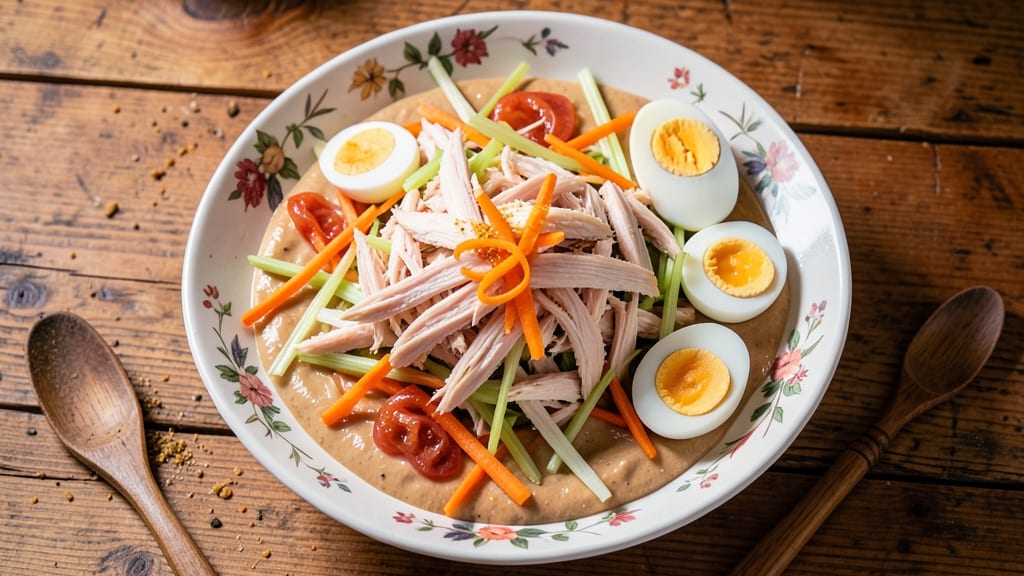
This Filipino-style chicken salad transforms ordinary chicken into a vibrant, textured dish with bold flavors that balance sweet, tangy, and nutty notes. The secret lies in poaching chicken until tender, then combining it with crunchy hard-boiled eggs, atchara (pickled papaya), and a silky peanut dressing that elevates every bite.
Unlike traditional chicken salad, this version incorporates classic Filipino ingredients for a dish that feels both nostalgic and innovative.
The recipe begins with perfectly poached chicken—juicy yet tender—then adds crisp vegetables and pickled papaya for that signature tang. A peanut-based dressing replaces mayo, creating a velvety texture with depth from soy sauce, vinegar, and a touch of sugar.
This approach ensures the salad stays moist while delivering layers of flavor that linger.
What sets this dish apart is the crunchy egg and peanut dressing combination, which adds both texture and richness without overpowering the chicken. The atchara brings a bright acidity that cuts through the creaminess, while the carrots and celery add freshness.
It’s a salad that feels hearty enough for a main course yet light enough for a refreshing lunch.
Serve it chilled or at room temperature, garnished with extra atchara or chopped peanuts for added crunch. Perfect for potlucks, picnics, or a satisfying weeknight meal, this Filipino-style chicken salad proves that comfort food can be both bold and balanced. Let’s get started!
Ingredients for chicken salad filipino style
Nine essential ingredients create this vibrant Filipino-style chicken salad with bold flavors and satisfying textures.
| Ingredient | Amount | Notes |
|---|---|---|
| Boneless, Skinless Chicken Breast 🍗 | 1 ½ lb | Poached until tender |
| Large Eggs 🥚 | 4 whole | Hard-boiled for crunch |
| Peanut Butter 🥜 | ¾ cup | Natural, unsweetened preferred |
| Atchara (Pickled Papaya) 🍈 | 1 cup | Drained, chopped fine |
| Carrots 🥕 | 2 medium | Shredded, not sliced |
| Celery Stalk 🧅 | 2 whole | Finely diced, not chopped |
| Yellow Onion 🧅 | ½ medium | Finely diced |
| Soy Sauce 🍶 | 2 tbsp | Light or regular |
| Cane Vinegar 🍶 | 1 ½ tbsp | White or apple cider |
| Granulated Sugar 🍚 | 1 tbsp | White or brown |
| Vegetable Oil 🫒 | ¼ cup | For poaching chicken |
| Salt 🧂 | 1 tsp | Kosher or sea salt |
| Black Pepper 🌶️ | ½ tsp | Freshly ground |
| Roasted Peanuts 🥜 | ¼ cup | Chopped, for garnish |
| Fresh Cilantro 🌿 | ¼ cup | Chopped, optional garnish |
The chicken is the foundation—boneless, skinless breasts poach perfectly in vegetable oil and water. Look for fresh, plump breasts with good marbling for juiciness. Costco or local butchers often have the best quality at reasonable prices. For the eggs, organic or free-range yields richer yolks that hold up better when hard-boiled. The atchara adds that signature tang—Filipino markets or Asian grocery stores carry the best jars, but check for minimal additives. If you can't find it, pickled ginger or mango works in a pinch, though the flavor won't be identical.
Peanut butter is non-negotiable here—natural, unsweetened varieties (like Smucker's or Crazy Richard's) give the best flavor without added sugar. No peanut butter? Almond butter or tahini can substitute, though the texture will differ slightly. The shredded carrots should be fine, not coarse—a box grater works best. For the celery, avoid the stringy ends and chop finely for that classic salad texture. The soy sauce matters too—Kikkoman or Pearl River Bridge are reliable choices. Want extra crunch? Add a handful of crushed peanuts to the salad before serving, but don't skip the chopped ones in the dressing.
Poached chicken keeps 3-4 days in the fridge, but the salad itself lasts 2 days—the dressing separates slightly after that. Store components separately: chicken and veggies in one container, dressing in another. Freeze the dressing for up to 3 months if you won't use it soon. For best texture, assemble the salad just before serving. Garnish with extra atchara or chopped peanuts right before eating—that's when it tastes freshest. The flavors actually improve overnight, so leftovers make great lunches.
Why You'll Love This Recipe
- No-Cook Magic: I swear by this when I’m too tired to chop—just shred the chicken, mix in the peanut butter and atchara, and boom. That tangy-sweet papaya and creamy peanut balance makes it taste like you slaved over it.
- Sweet-Savory Crunch: The atchara’s bright acidity cuts through the peanut butter’s richness, while the shredded carrots add just enough bite. Honestly, the first bite always makes me think, “Why don’t I do this more often?”
- Lunchbox Legend: Pack it in wraps for work or slice it into pinwheels for kids’ lunches—it holds up perfectly for days. My son actually eats his carrots now because they’re hidden in this salad.
- Budget Win: Chicken breast and eggs are cheap staples, and peanut butter stretches like crazy. I’ve made this for $3 per serving, and it’s still the star of potlucks where fancier dishes cost twice as much.
Step-by-step instructions for Filipino-style chicken salad with crunchy eggs
Here's how to create a vibrant, textured chicken salad with a silky peanut dressing and bright Filipino flavors.
Poach the Chicken Breast Until Fork-Tender
Combine the 0.25 cup vegetable oil, 1.5 lb boneless, skinless chicken breast, 1 tsp salt, and 0.5 tsp black pepper in a large pot. Add enough cold water to cover the chicken by 2 inches. Bring to a gentle simmer over medium heat—you'll see small bubbles break the surface but not a rolling boil. This controlled temperature keeps the chicken moist.
Poach for 12-15 minutes until the chicken reaches 165°F internally and a knife slides in smoothly with no resistance. Remove the chicken and let it rest on a cutting board for 10 minutes before shredding. The resting period ensures even texture when you slice it against the grain later.
Hard-Boil Eggs for Crunchy Texture
Place the 4 whole large eggs in a small saucepan and cover them with 1 inch of cold water. Bring to a rolling boil over high heat, then immediately reduce to low heat and simmer for 9 minutes. This shorter boil prevents overcooking the yolks while ensuring they're fully set.
Transfer the eggs to an ice bath for 10 minutes to stop the cooking process. Peel the eggs under cool running water and chop them into small, even pieces. Set aside—they'll add a satisfying crunch to every bite of your salad.
Prepare the Peanut Dressing Base
In a mixing bowl, combine the 0.75 cup peanut butter, 2 tbsp soy sauce, 1.5 tbsp cane vinegar, and 1 tbsp granulated sugar. Whisk vigorously until smooth—this creates the foundation of your dressing. The peanut butter should be fully incorporated with no lumps remaining.
Gradually add 2 tablespoons of warm water (from the poaching liquid) while whisking continuously. This thins the mixture to a pourable consistency while maintaining its rich, velvety texture. Taste and adjust seasoning if needed—this is where you can balance the sweetness and tang.
Shred and Mix All Ingredients
Shred the poached chicken breast using two forks, pulling it into fine, even strands. In a large bowl, combine the chicken with the chopped eggs, 1 cup drained and finely chopped atchara (pickled papaya), 2 medium shredded carrots, 2 whole finely diced celery stalks, and 0.5 medium finely diced yellow onion. Mix gently to distribute all ingredients evenly.
Pour the peanut dressing over the chicken mixture and toss carefully to coat everything evenly. The dressing should cling to the chicken and vegetables without making the salad soggy. If needed, add 1 more tablespoon of warm water to reach your desired consistency.
Garnish and Serve Immediately
Transfer the chicken salad to a serving bowl and top with 0.25 cup chopped roasted peanuts and 0.25 cup chopped fresh cilantro. The peanuts add an extra crunch while the cilantro provides a fresh contrast to the rich peanut dressing.
Serve immediately while the chicken is still warm and the dressing maintains its silky texture. This salad is best enjoyed fresh, as the flavors meld beautifully when everything is at room temperature. Pair with warm rice or crusty bread for a complete Filipino-inspired meal.
Pro Tips For Making Chicken Salad Filipino Style
- POACH CHICKEN LOW AND SLOW: I learned this the hard way—boiling chicken breast turns it rubbery, and this salad needs tender, flaky meat. Use a gentle simmer (just small bubbles) for 12-15 minutes, then shock it in ice water to stop cooking. The texture stays perfect for shredding, and the peanut butter sauce won’t turn grainy later.
- DRAIN ATCHARA WELL: Skip the soggy salad—drain atchara in a colander for 5 minutes, then blot it with a paper towel. The excess vinegar makes the peanut butter dressing separate, and you’ll end up with a watery mess. Trust me, your taste buds will notice the difference.
- WHISK PEANUT BUTTER FIRST: Don’t just toss peanut butter in cold—mix it with a splash of vinegar or lemon juice first, then whisk until smooth. Cold peanut butter clumps like glue, and you’ll have to force it into the salad. A few seconds of whisking saves you from scraping out lumps later.
- SHRED COLD, NOT HOT: Let the chicken cool completely before shredding—hot meat pulls apart into uneven chunks. Cold chicken shreds cleanly, mixes evenly with eggs and veggies, and keeps the peanut butter from melting into a greasy blob. Patience here makes the salad look (and taste) restaurant-worthy.
Troubleshooting great chicken salad filipino style
Poached Chicken Too Dry
If your poached chicken turns out dry, the issue is likely overcooking or insufficient liquid. Always maintain a gentle simmer (small bubbles, not a rolling boil) and cover the chicken with at least 2 inches of water.
I recommend using a meat thermometer to check for 165°F internal temperature—never go by time alone. For extra moisture, add 1 bay leaf or 1 tsp lemon juice to the poaching liquid. 🌡️
Eggs Too Soft or Rubbery
Overcooked eggs become rubbery, while undercooked ones stay too soft. For perfect 9-minute hard-boiled eggs, use room-temperature eggs and start with cold water. Shock them immediately in ice water after boiling to stop cooking.
If your eggs are still runny, try boiling them for 1 extra minute next time. For extra insurance, use older eggs (they peel easier and cook more evenly).
Dressing Too Thick or Separating
The peanut dressing needs proper thinning to avoid clumping. Use warm water (not cold) from the poaching liquid to gradually thin it while whisking continuously. If it still separates, whisk in 1 tsp cornstarch mixed with 1 tsp water to stabilize it.
For extra richness, add 1 tbsp coconut milk to the dressing base before thinning. Store-bought peanut butter with added oils can make the dressing too thin—stick to 100% natural peanut butter for best results. 🥜
Salad Too Watery or Soggy
Excess moisture comes from over-dressing or using wet ingredients. Drain all liquid from the atchara and pat dry the shredded carrots and celery with a paper towel. When mixing, add the dressing gradually and toss gently—just enough to coat the ingredients.
If it's still too wet, add 1-2 tbsp chopped peanuts to absorb excess moisture. For extra insurance, chill the salad for 30 minutes before serving to help the dressing set slightly. 🥗
Lack of Crunch in Eggs
Freshly boiled eggs lose crunch quickly. To maintain texture, peel them right before adding to the salad and store them separately until the last minute. For extra crunch, sprinkle the chopped eggs with ½ tsp cornstarch before mixing into the salad.
If your eggs are still too soft, try boiling them for 10 minutes next time. Another trick: chill the salad for 15 minutes before serving to help the eggs hold their shape. 🥚
Flavor Too Mild or Bland
Balancing the peanut dressing is key. Taste as you go and adjust with extra soy sauce for saltiness, more vinegar for tang, or additional sugar for sweetness. For depth, add ½ tsp grated ginger or 1 minced garlic clove to the dressing.
If the salad tastes flat, try adding 1 tbsp fish sauce (a Filipino staple) to the dressing. Fresh herbs like cilantro or Thai basil can also brighten the flavors. 🌶️
Nutrition facts
Frequently asked questions
Can I substitute atchara if I can't find it?
Yes! If you can't find atchara (pickled papaya), try using pickled ginger or pickled mango for a similar tangy crunch. For a different flavor profile, diced dill pickles or pickled red onions work well too. Just adjust the amount to taste—start with ½ cup and add more if needed. The acidity is key to balancing the peanut dressing!
How long does this chicken salad keep?
The poached chicken stays fresh for 3-4 days in the fridge, but the full salad is best enjoyed within 2 days for optimal texture. Store the dressing and chicken/veggie mix separately to prevent sogginess. For longer storage, freeze the dressing alone for up to 3 months. Assemble the salad fresh before serving for the best crunch and flavor!
Can I make this salad ahead of time?
Prepare all components 1 day ahead—poach and shred the chicken, hard-boil the eggs, and make the dressing. Store them separately in airtight containers. When ready to serve, mix everything together and chill for 30 minutes before garnishing. This actually lets the flavors meld beautifully. Just add fresh garnishes (peanuts, cilantro) right before eating for maximum crunch!
What's the best way to serve this Filipino chicken salad?
This salad is versatile! Serve it as a main dish with warm rice or crusty bread, or as a side for grilled meats. For a Filipino touch, pair it with garlic fried rice or lumpia. It also makes a great potluck dish—just pack the components separately to maintain texture. Garnish with extra peanuts and cilantro right before serving for freshness!
Why does your recipe use peanut butter instead of mayo?
The peanut dressing creates a richer, more complex flavor with natural sweetness and depth from soy sauce and vinegar. Unlike mayo, it adds protein and healthy fats while keeping the salad lighter. The peanut butter also gives that signature Filipino umami-sweet balance you find in many Filipino dishes. For a mayo version, replace the peanut butter with ½ cup mayo plus 1 tbsp soy sauce, but you'll lose that authentic Filipino twist!