Salads
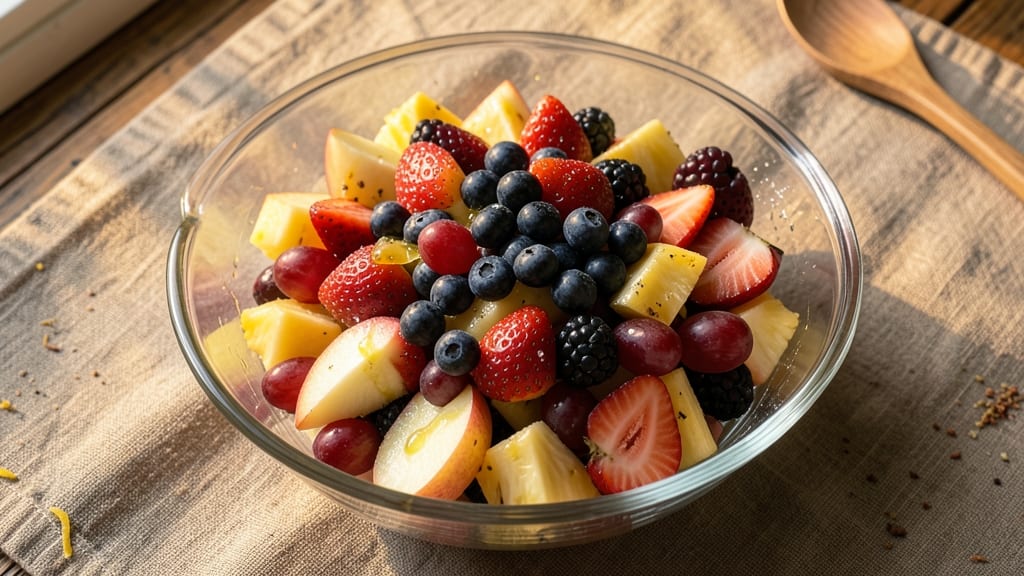
This 7-cup fruit salad recipe transforms simple fruit into a vibrant, layered masterpiece that brightens any table. The secret lies in balancing textures—juicy pineapple, crisp apples, and tender berries—while keeping prep under 15 minutes.
Every bite delivers a mix of sweet, tangy, and refreshing flavors that make summer feel endless. The key to success is strategic cutting: dice firm fruits like apples and pears into even pieces, while leaving delicate berries whole for visual appeal.
A light citrus dressing (optional but recommended) ties everything together without overpowering the natural sweetness. The result? A salad so striking it could be a centerpiece. What sets this apart is the colorful layering technique—arrange fruits in horizontal stripes for a restaurant-worthy presentation.
Serve immediately for peak freshness, or chill for 30 minutes to let flavors meld. Perfect for picnics, potlucks, or a light lunch that feels indulgent. For variations, swap seasonal fruits—mango and kiwi in summer, pomegranate and persimmon in winter.
Store in an airtight container for up to 2 days, though it rarely lasts that long. Here’s how to build it step by step.
Ingredients for 7 cup fruit salad
Seven vibrant ingredients create a summer masterpiece—juicy, crisp, and perfectly balanced.
| Ingredient | Amount | Notes |
|---|---|---|
| Fresh Pineapple 🍍 | 2 cups | Diced, firm and ripe |
| Honeycrisp Apples 🍎 | 1 ½ cups | Diced, skin on |
| Strawberries 🍓 | 1 cup | Hulled, quartered |
| Blueberries 🫐 | 1 cup | Whole, rinsed |
| Red Seedless Grapes 🍇 | 1 cup | Halved, stems removed |
| Fresh Blackberries 🫐 | ½ cup | Whole, rinsed |
| Fresh Lemon Juice 🍋 | 1 tbsp | Freshly squeezed |
| Granulated Sugar 🍚 | 1 tbsp | Or honey for variation |
| Extra-Virgin Olive Oil 🫒 | 1 tbsp | Light drizzle only |
| Fresh Mint Leaves 🌿 | ¼ cup | Chopped, optional garnish |
| Fresh Cilantro Leaves 🌿 | ¼ cup | Chopped, optional garnish |
| Ice Cold Water 💧 | ¼ cup | For citrus dressing |
The fruit selection is critical for texture contrast. Honeycrisp apples provide the crispest bite, while pineapple from Trader Joe's delivers ideal sweetness and acidity. For berries, organic blueberries and blackberries from the grocery store's refrigerated section stay fresher longer. Grapes should be seedless and firm—red seedless from the bulk bins work perfectly. Avoid overripe fruit, which can make the salad soggy. If you're short on time, pre-cut fruit mixes from the salad bar section can save 10 minutes, though fresh-cut always tastes better.
No pineapple? Mango or papaya works beautifully as a substitute, especially in summer. For a winter twist, swap grapes and apples for pomegranate seeds and persimmon. The citrus dressing can be adjusted—agave nectar instead of sugar adds a subtle floral note. If you prefer a sweeter salad, increase the sugar to 2 tablespoons, but trust me, the natural fruit sweetness shines when balanced. For a tangier kick, add an extra tablespoon of lemon juice. The herbs are optional but add a sophisticated touch—fresh mint or basil both work well if you have them on hand.
This salad stays freshest when assembled just before serving, but if you must prep ahead, store each fruit component separately in airtight containers for up to 2 days. The dressing should be made fresh and added just before serving to prevent the fruit from becoming waterlogged. For maximum presentation, arrange the fruits in horizontal stripes in a clear glass bowl—the color contrast is stunning. If storing overnight, keep the dressing separate and mix only before serving. The salad keeps its best texture and flavor for 24 hours when properly stored, though it rarely lasts that long.
Why You'll Love This Recipe
- I swear by this trick: just tear the pineapple into chunks (no peeling, no coring) and halve the grapes—no knife skills required. The apples and strawberries are the only things that need a quick chop, and honestly? Ten minutes max.
- No-Cut Shortcuts: I swear by this trick: just tear the pineapple into chunks (no peeling, no coring) and halve the grapes—no knife skills required. The apples and strawberries are the only things that need a quick chop, and honestly? Ten minutes max.
- Sweet-Savory Balance: That Honeycrisp apple holds its shape while adding a crisp bite, the pineapple brings tropical tang, and the blueberries? Tiny bursts of jammy sweetness. It’s like a party in your mouth—no sugar crash, just pure flavor.
- Weeknight Meal Prep: Between us, this is my go-to for lunchboxes, potlucks, or when I’m too tired to cook. Toss it in a container, and it stays fresh for days. My kids grab it for school, and I sneak bites straight from the fridge—no judgment.
Step-by-step instructions for a vibrant 7-Cup fruit salad
Assemble this visually stunning fruit salad with precise layering for maximum freshness and presentation.
Prepare the Citrus Dressing
In a small bowl, whisk together the 1 tablespoon fresh lemon juice, 1 tablespoon granulated sugar, and 1 tablespoon extra-virgin olive oil until the sugar dissolves completely. This creates a delicate balance of tangy, sweet, and rich notes that will elevate the natural flavors of the fruit. Add the ¼ cup ice cold water and mix well—this keeps the dressing light and prevents it from making the fruit soggy.
The dressing should have a glossy sheen and be slightly syrupy in consistency. Taste it and adjust the sweetness if needed—you can add a pinch more sugar if the lemon juice feels too sharp. Set this aside while you prepare the fruit components.
Prep and Layer the Fruit Components
Begin by cutting the 2 cups fresh pineapple into ½-inch dice, removing any tough core. Next, dice the 1½ cups Honeycrisp apples into ¼-inch cubes, keeping the skin on for texture. Quarter the 1 cup strawberries, removing the green stems, and halve the 1 cup red seedless grapes, removing stems. Finally, rinse the 1 cup blueberries and ½ cup fresh blackberries to remove any dirt or debris.
Arrange the fruit in four separate bowls or sections of a large platter, keeping each type distinct. This separation prevents bruising and allows for even dressing application later. The pineapple and apples should go in one section, strawberries and grapes in another, and blueberries with blackberries in the final section.
Apply Dressing and Assemble the Salad
Working in batches, gently toss each fruit section with 1 tablespoon of the citrus dressing—just enough to lightly coat the surfaces without oversaturating. For the delicate berries, use a spoon to carefully fold the dressing rather than tossing to avoid crushing. The dressing should glisten on the fruit but not pool at the bottom.
Once all components are dressed, begin layering them in a clear glass bowl or serving dish. Start with the pineapple and apples at the bottom, followed by the strawberries and grapes, and finish with the blueberries and blackberries on top. This arrangement creates a visually appealing gradient from light to dark hues.
Garnish and Serve Immediately
Just before serving, sprinkle the ¼ cup fresh mint leaves and ¼ cup fresh cilantro leaves over the top, gently pressing them into the fruit. These herbs not only add a pop of color but also introduce a refreshing herbal note that complements the citrus dressing. The mint's bright green contrasts beautifully with the fruit's colors, while the cilantro adds a subtle earthiness.
Serve the fruit salad immediately to preserve its crisp texture and vibrant appearance. The salad will hold its structure for about 1 hour if refrigerated, but the flavors are best enjoyed fresh. For a presentation that rivals any restaurant dish, arrange the garnish in a circular pattern around the edge of the bowl.
Pro Tips For Making 7 Cup Fruit Salad
- Toss Last Thing: Wait until you’re ready to serve before mixing everything—especially the grapes and blueberries. Their skins bruise fast, and if you toss them in too early, they’ll turn mushy by the time you’re done chopping the apples or pineapple. I learned this the hard way when my fruit salad looked like a science experiment gone wrong.
- Core Those Apples: Honeycrisp apples brown fast—even faster than you’d expect. Core them first, then sprinkle with 1 teaspoon of lemon juice or vinegar while you prep the rest. It’s not just about taste; it’s about keeping those slices crisp and bright instead of sad and limp.
- Skip the Rinsing: Grapes and blueberries don’t need a rinse unless they’re covered in dirt. A quick wipe with a damp paper towel is enough—over-washing adds moisture, and your salad will get soggy before you even add dressing. Trust me, the grapes won’t judge you for a little stem residue.
- Cut Pineapple Properly: Don’t just hack at that pineapple with a knife—you’ll end up with a mushy mess. Use a sharp serrated knife to cut it into ½-inch chunks, then slice those into bite-sized pieces. Smaller bits = less juice pooling at the bottom, and your salad stays fresh longer. (Yes, it takes 2 minutes extra, but it’s worth it.)
Common mistakes when making perfect results
Over-Mixing the Dressing
One of the biggest mistakes is drowning your fruit in dressing. The citrus mixture should lightly coat each piece—think of it as a glaze, not a marinade. I’ve seen fruit salads turn into a soggy mess when too much dressing is added.
For this recipe, use just 1 tablespoon of dressing per fruit section, and always toss gently. 🌟
Using Overripe Fruit
Nothing ruins a fruit salad faster than mushy, overripe ingredients. Check your pineapple for soft spots and your apples for bruises before cutting. I always test berries by gently squeezing them—if they squish easily, they’re past their prime.
For this salad, stick to firm, ripe fruit that holds its shape. The texture contrast is what makes it special!
Skipping the Citrus Dressing
While the salad is delicious without it, the citrus dressing ties everything together. It balances sweetness, adds brightness, and prevents browning in apples and pears. If you’re short on time, at least squeeze a little lemon juice over the fruit before serving.
Trust me, the difference is noticeable—it’s like the missing piece of a puzzle. 🍋
Uneven Fruit Sizes
Inconsistent cutting leads to uneven bites and a less visually appealing dish. Use a sharp chef’s knife and cut all apples and pineapple into ¼-inch cubes for uniformity.
For grapes and berries, keep them whole or cut them similarly. This ensures every bite has the same texture experience and the salad looks polished. 🔪
Not Chilling Before Serving
While this salad is best eaten fresh, letting it sit in the fridge for 30 minutes before serving allows flavors to meld slightly. This is especially true for the apples and pineapple, which release more juice when chilled.
If you’re serving immediately, at least arrange the fruit in layers while it cools to the touch. Patience here makes all the difference!
Ignoring the Layering Technique
The secret to this salad’s restaurant-worthy look is the layering. Simply tossing all the fruit together hides the vibrant colors and textures. Instead, arrange the fruit in horizontal stripes—start with the lighter pineapple and apples, then strawberries and grapes, and finish with the deep blueberries and blackberries.
This creates a stunning visual effect that’s almost too pretty to eat. 🎨
Nutrition facts
Frequently asked questions
Can I make this fruit salad ahead of time?
For best results, assemble the salad just before serving to maintain crisp texture. However, you can prep fruit components separately in airtight containers up to 2 days ahead. Store the dressing separately and mix only before serving to prevent sogginess. The layered presentation works best when fresh, but flavors meld nicely after 30 minutes in the fridge.
What's the best way to store leftovers?
Transfer any remaining salad to an airtight container and refrigerate for up to 2 days. Keep the dressing separate until ready to serve. For maximum freshness, consume within 24 hours. The texture begins breaking down after this time, though the flavors remain pleasant. Never freeze fruit salads—they become waterlogged when thawed.
Can I substitute any of the fruits?
For summer, swap pineapple for mango or papaya. In winter, try pomegranate seeds and persimmon. The key is maintaining texture contrast—keep 1-2 firm fruits (like apples) and 1-2 soft fruits (like berries). Adjust the citrus dressing ratio if using more acidic fruits like kiwi or passion fruit.
How do I make this salad more kid-friendly?
Cut all fruit into bite-sized pieces (¼-inch or smaller) and arrange them in fun patterns using cookie cutters. Add a drizzle of honey instead of sugar in the dressing, and serve with vanilla yogurt for dipping. Let kids assemble their own mini salads for interactive fun. The colorful layers naturally appeal to children's visual preferences.
Is this salad suitable for meal prep?
While the texture degrades after 24 hours, this salad makes excellent meal prep for busy mornings. Prep all fruit components the night before and store separately. In the morning, simply assemble and add dressing. For added protein, pair with Greek yogurt or nuts. The vibrant colors also make it perfect for office lunches or school lunches.